
OCTOBER 17, 2026
Nickel Metals Market Stalls as Indonesia Smelter Freeze Talk Meets Weak DemandNickel steadies near recent lows as Indonesia smelter freeze talk is offset by weak stainless and battery demand signals.

© 1box.site 2026
OCTOBER 23, 2026
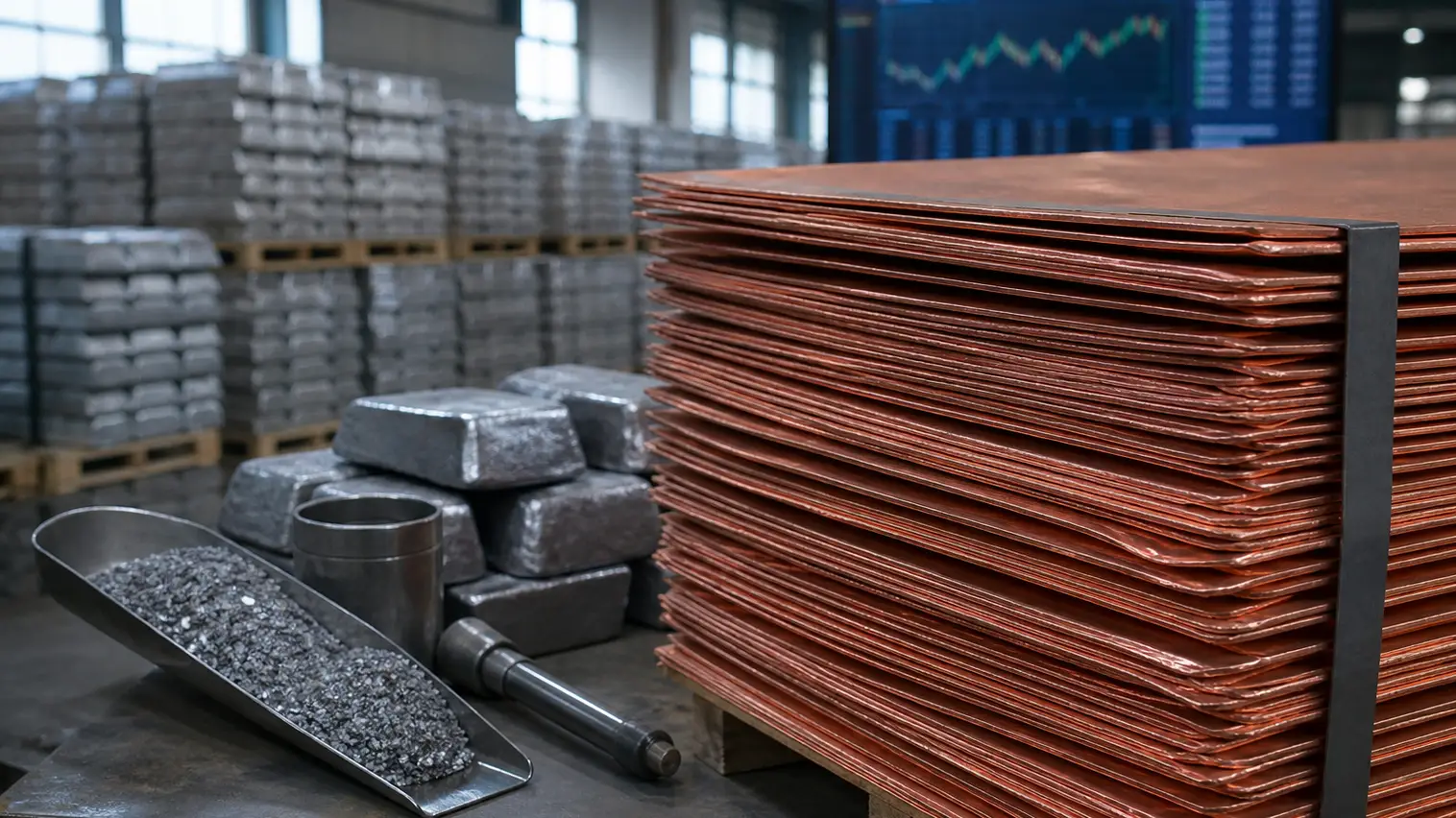
Copper moved back into positive territory on Friday, giving the metals market a firmer tone after a volatile week dominated by shifting risk appetite, US rate expectations and concern over whether recent inventory builds could cap rallies in industrial commodities.
Three-month copper on the London Metal Exchange traded around $14,190 a metric ton, up roughly 0.8% on the session, as a steadier equity backdrop encouraged some buyers to return to base metals. The rebound followed a softer overnight move, when selling across technology-linked assets weighed on cyclical commodities and prompted traders to reduce exposure to growth-sensitive metals.
The recovery was not broad enough to remove caution from the market. Nickel lagged the complex, falling toward $15,825 a ton as investors waited for clearer signals from Chinese producers operating in Indonesia, where discussions around coordinated output restraint have become a key focus for supply expectations.
Copper’s bounce reflected more than a simple technical rebound. Traders are balancing improved near-term sentiment against a still-heavy supply picture, especially after inventories and material held in the United States became a bigger talking point for the global market.
That US stockpile risk matters because metal accumulated during earlier tariff and logistics concerns could eventually be redirected into the wider market. If more copper is re-exported or made available outside the United States, it may soften the shortage narrative that helped support prices earlier in the year.
Even so, the longer-term demand story remains active. Electrification, grid investment, data-center construction and manufacturing demand continue to keep copper at the center of the metals market. For now, however, short-term price action is being shaped by macro signals, equity-market swings and the speed at which visible inventories change.
Nickel’s decline stood out because the market had recently drawn support from speculation that producers linked to Indonesian supply chains could consider coordinated output cuts. Indonesia remains critical to global nickel availability, and any credible reduction in supply would be closely watched by stainless steel and battery-material buyers.
The latest price action shows that traders are reluctant to price in a supply squeeze without firmer evidence. If cut discussions fail to translate into measurable production discipline, nickel may struggle to hold rallies, particularly while demand from battery materials remains uneven and stainless steel buyers continue to negotiate cautiously.
Other base metals were mixed, underscoring the selective nature of Friday’s rebound. Aluminum hovered near $3,007 a ton, zinc advanced toward $3,710, and lead was little changed around $1,898. The spread between stronger copper and weaker nickel suggests investors are still separating metals with resilient demand narratives from those facing more uncertain supply-policy signals.
The next test for the metals market is likely to come from the US macro calendar and Federal Reserve expectations. Softer Treasury yields can support industrial metals by reducing the opportunity cost of holding commodities and by easing pressure on global risk assets. A stronger US dollar, by contrast, can quickly weigh on dollar-priced metals by making them more expensive for overseas buyers.
For copper, the key near-term levels are less about a single price point and more about whether the market can absorb inventory pressure while maintaining confidence in demand. For nickel, traders need confirmation that potential Indonesian output restraint is more than a headline risk.
That leaves the metals market in a cautious rebound rather than a clean breakout. Copper’s recovery shows buyers are still willing to step in when risk conditions improve, but nickel’s weakness highlights that supply stories need hard evidence before they can reshape the broader base-metals trend.
OCTOBER 17, 2026
Nickel Metals Market Stalls as Indonesia Smelter Freeze Talk Meets Weak Demand
SEPTEMBER 23, 2026
Nickel Futures Hold Firm as Indonesia Drought Cuts Put Metals Market on Supply Watch
SEPTEMBER 17, 2026
Nickel Futures Slide as Indonesia Ore Price Reset Tests Metals Market
SEPTEMBER 9, 2026
Nickel Futures Rebound as Indonesia Supply Risk Jolts Metals Market
JULY 22, 2026
Nickel and Zinc Join Metals Rally as China Supply Signals Revive Risk Appetite
JUNE 26, 2026
Base Metals Reverse Early Rally as Copper, Nickel and Zinc Drag Metals Market Lower