OCTOBER 23, 2026
Copper Metals Market Rebounds as Nickel Slips on Indonesia Cut WatchCopper rebounds as risk appetite steadies, while nickel slips as traders await firmer signals on Indonesian output cuts.

© 1box.site 2026

AUGUST 27, 2026
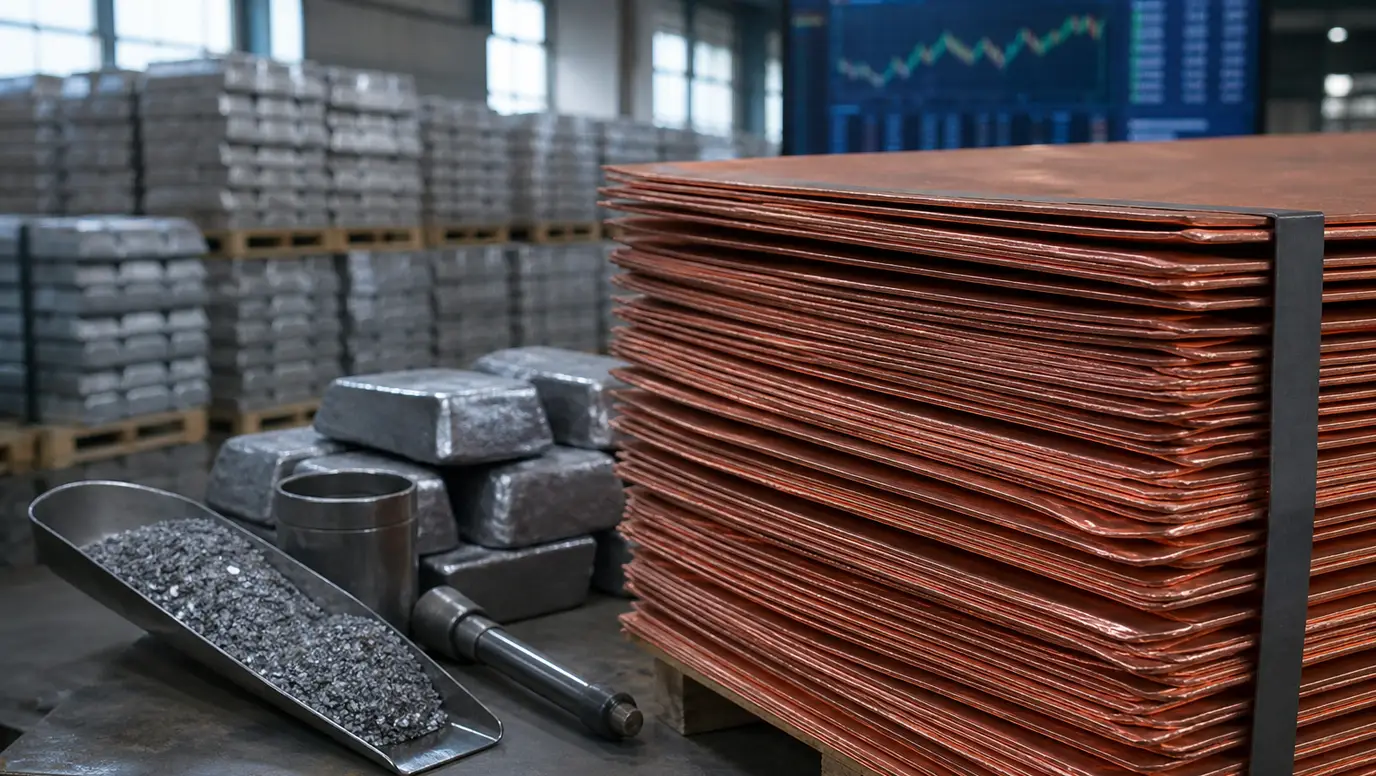
Copper is taking the spotlight in the metals market as traders weigh a tight nearby supply structure against a less supportive macro backdrop. The red metal remained near elevated levels on August 27, with futures holding around the mid-$6-per-pound area even as momentum looked uneven across the broader metals complex.
The key signal is backwardation, where nearby contracts trade above later-dated futures. That structure often points to stronger demand for immediate metal or limited deliverable supply. For copper, the condition suggests that prompt availability remains a concern, even though the latest price action has not produced a clean breakout.
That tension makes copper one of the more important metals to monitor into the next round of U.S. inflation, labor and Federal Reserve commentary. Higher Treasury yields and a firmer dollar can reduce appetite for non-yielding assets and cyclical commodities, while tight inventories and energy-transition demand can keep downside pressure limited.
The copper market is sending two different messages at once. On the physical side, backwardation signals that buyers still value immediate delivery. On the financial side, the futures curve has not yet translated that tightness into a forceful rally, implying that investors remain cautious about global growth and policy risk.
That matters because copper is heavily tied to industrial demand expectations. Construction, power grids, electric vehicles, data centers and manufacturing all feed into the long-term consumption story. However, short-term traders are also sensitive to shifts in China demand, U.S. rate expectations and the dollar, which can change the appetite for metals exposure quickly.
If copper can hold above recent support while backwardation persists, the market may treat dips as accumulation opportunities. If the dollar strengthens further or bond yields extend their climb, traders may instead focus on the risk that tight nearby supply is not enough to offset softer speculative demand.
The broader metals backdrop is not uniformly bullish. Gold and silver have eased from recent highs, suggesting that investors are trimming exposure after strong advances and waiting for a clearer Federal Reserve signal. That rotation leaves base metals, especially copper, carrying more of the burden for bullish commodity sentiment.
For gold, the main question is whether inflation concerns can outweigh pressure from yields. For silver, the issue is more complicated because it trades as both a precious metal and an industrial input. Copper’s current setup sits between those themes: it benefits from supply tightness and electrification demand, but it remains vulnerable to any downgrade in cyclical growth expectations.
This mix keeps the metals market in a selective phase. Traders are not treating every metal the same way. Instead, they are separating contracts with tight supply signals from those more exposed to rate-sensitive profit taking.
The next test for copper is whether backwardation remains pronounced while prices consolidate. A sustained tight curve would support the view that physical demand is still firm. A flattening curve, by contrast, could indicate that the supply stress is easing or that buyers are stepping back at current prices.
Currency and rates will also be critical. A softer dollar would make metals more affordable for non-U.S. buyers and could help copper recover upside momentum. A stronger dollar, combined with higher yields, would make it harder for the metal to extend gains unless inventory signals become more urgent.
For now, copper remains the cleanest metals-market story: tight enough to keep bulls interested, but not yet strong enough to ignore macro resistance. That balance puts the contract on supply stress alert as traders wait for confirmation from the curve, the dollar and the next round of U.S. policy signals.
OCTOBER 23, 2026
Copper Metals Market Rebounds as Nickel Slips on Indonesia Cut Watch
OCTOBER 21, 2026
Silver Metals Market Slips as US Dollar and Treasury Yields Revive Federal Reserve Risk
OCTOBER 19, 2026
Platinum and Palladium Metals Market Rallies as Federal Reserve Pause Bets Return
OCTOBER 18, 2026
Copper Metals Market Holds Near Record as Tight Stocks Offset Federal Reserve Shock
OCTOBER 16, 2026
Gold Metals Market Rebounds as US Dollar and Treasury Yields Ease Before Federal Reserve Decision
OCTOBER 15, 2026
Silver Metals Market Tests 2026 Low as Federal Reserve Rate Bets Lift US Dollar
OCTOBER 12, 2026
Copper Metals Market Rises as China Premium and Tight LME Stocks Challenge US Dollar
OCTOBER 11, 2026
Gold Metals Market Braces for Federal Reserve Test as US Dollar and Treasury Yields Bite
OCTOBER 6, 2026
Copper Futures Rally Puts Metals Market Focus on Smelter Squeeze
OCTOBER 4, 2026
Gold Metals Rebound Stalls as Treasury Yields Blunt Fed Pause Bets
OCTOBER 3, 2026
Palladium Rebound Attempt Puts Metals Market Focus on Auto Demand and Federal Reserve Risk
OCTOBER 2, 2026
Silver Holds Above $61 as Dollar and Treasury Yields Keep Metals Market on Payrolls Watch
OCTOBER 1, 2026
Aluminum Slumps to 12-Week Low as Strong Dollar Hits Metals Market
SEPTEMBER 30, 2026
Copper Futures Steady as Metals Market Weighs Dollar, Oil and Federal Reserve Risk
SEPTEMBER 27, 2026
Gold Futures Slip as Sticky Inflation and Fed Rate Bets Cap Metals Market Rebound
SEPTEMBER 26, 2026
Silver Futures Rebound as Treasury Yield Pause Tests Metals Market Bears
SEPTEMBER 25, 2026
Copper Futures Climb as China Tightness Puts Metals Market on Supply Watch
SEPTEMBER 22, 2026
Gold Holds Near $4,350 as Federal Reserve Rate Bets Cap Metals Market Rebound
SEPTEMBER 21, 2026
Silver Futures Hold Above $66 as Federal Reserve Hike Tests Metals Market Rally
SEPTEMBER 19, 2026
Copper Futures Rally Puts Metals Market on Federal Reserve and PMI Watch
SEPTEMBER 15, 2026
Gold Holds Near $4,300 as Federal Reserve Hike Bets Pressure Metals Market
SEPTEMBER 14, 2026
Silver Rebound Puts Metals Market on Federal Reserve Real-Yield Watch
SEPTEMBER 13, 2026
Copper Futures Pullback Puts Metals Market on Tariff Doubt Watch
SEPTEMBER 10, 2026
Gold Edges Higher as Soft Dollar Puts Metals Market on Federal Reserve Watch
SEPTEMBER 8, 2026
Copper Hits Record High as Tariff Risk Tightens Metals Market Supply
SEPTEMBER 7, 2026
Zinc Futures Defy Federal Reserve Pressure as Supply Squeeze Tightens Metals Market
SEPTEMBER 4, 2026
Gold Slides as Strong US Jobs Report Reprices Metals Market for Federal Reserve Risk
SEPTEMBER 2, 2026
Copper Pullback Hits Metals Market as Strong Dollar Revives Federal Reserve Rate Risk
AUGUST 30, 2026
Silver Breakout Failure Puts Metals Market on Federal Reserve Yield Watch
AUGUST 29, 2026
Gold Retreat Puts Metals Market on Federal Reserve Rate-Hike Watch