
OCTOBER 9, 2026
Silver Rebound Tests Metals Market as Treasury Yields Cap XAG DemandSilver rebounds above $60, but high Treasury yields and weak industrial signals keep the metals market cautious.

© 1box.site 2026

AUGUST 9, 2026
Silver is moving back into focus for metals traders as the market enters the new week with two competing forces: softer U.S. labor signals that have eased immediate rate-hike pressure, and a still-tight physical backdrop that continues to support dip-buying interest in the white metal.
The rebound follows a volatile summer for precious metals, with silver recently trading around the high-$50s per ounce after a sharp correction from the speculative highs reached earlier in 2026. That pullback has not removed the core bullish argument for the metal, but it has made macro data more important for short-term direction.
For the metals market, silver now sits at the intersection of monetary demand and industrial demand. Lower Treasury yields and a softer U.S. Dollar typically help non-yielding precious metals, while weak manufacturing signals can limit enthusiasm because silver is also consumed in electronics, solar equipment, vehicles, and power infrastructure.
The latest U.S. employment shock has shifted attention away from aggressive Federal Reserve tightening and toward whether policymakers can afford to wait before raising rates again. That matters for silver because the metal is highly sensitive to real yields, the dollar, and expectations for future liquidity.
The Federal Reserve left its benchmark rate unchanged at its late-July meeting, but the decision did not remove policy risk. Inflation remains above target, and several officials have signaled that price pressure is still a concern. For silver bulls, the key question is whether upcoming inflation and retail sales data confirm a softer economy or revive the case for another rate increase.
If yields continue to ease, silver could attract renewed investment demand from traders seeking a leveraged precious-metals exposure. If inflation data forces the market to price in tighter policy again, the rebound may struggle near technical resistance, especially after the metal’s extreme price swings earlier this year.
Beyond the Federal Reserve story, silver’s supply-demand balance remains a major support for the broader metals market narrative. Industry estimates continue to point to another annual deficit in 2026, even as high prices have encouraged users to reduce silver intensity in some applications.
Solar manufacturers remain central to that adjustment. Panel producers have been cutting the amount of silver used per cell, and substitution efforts are becoming more visible. Even so, total demand from electrification, grid equipment, automotive electronics, and investment products is keeping the market sensitive to any signs of mine-supply weakness or inventory drawdowns.
This creates a more complicated setup than a simple safe-haven trade. Silver can benefit when investors rotate into precious metals, but it can also be pressured when industrial growth expectations weaken. That dual identity is why the metal’s rebound is being watched closely by commodity desks rather than treated as a purely defensive move.
Near term, traders are likely to focus on whether silver can hold above recent support while challenging the $60 area that has become an important psychological marker. A sustained move through that zone would strengthen the case that the late-July recovery has momentum, while another rejection could keep the market range-bound.
The next catalyst is likely to come from U.S. inflation data, Treasury yield moves, and the tone of Federal Reserve commentary. For now, silver’s recovery gives the metals market a fresh focal point after recent attention centered on base-metal inventories and tariff-sensitive industrial metals.
The balance of risks remains two-sided, but the combination of a cooler labor backdrop and a persistent supply deficit means silver is likely to remain one of the most closely watched metals heading into the next trading week.
OCTOBER 9, 2026
Silver Rebound Tests Metals Market as Treasury Yields Cap XAG Demand
OCTOBER 2, 2026
Silver Holds Above $61 as Dollar and Treasury Yields Keep Metals Market on Payrolls Watch
SEPTEMBER 26, 2026
Silver Futures Rebound as Treasury Yield Pause Tests Metals Market Bears
SEPTEMBER 21, 2026
Silver Futures Hold Above $66 as Federal Reserve Hike Tests Metals Market Rally
SEPTEMBER 14, 2026
Silver Rebound Puts Metals Market on Federal Reserve Real-Yield Watch
AUGUST 30, 2026
Silver Breakout Failure Puts Metals Market on Federal Reserve Yield Watch
AUGUST 25, 2026
Silver Pullback Puts Metals Market on $70 Resistance Watch as Inflation Data Looms
AUGUST 18, 2026
Silver Pullback Keeps Metals Market Focus on Federal Reserve Minutes
AUGUST 1, 2026
Silver Slide Puts Metals Market on Fed Watch as US Dollar Reasserts Pressure
JULY 26, 2026
Gold and Silver Hold Firm as Metals Traders Brace for Federal Reserve Signal
JULY 20, 2026
Silver Leads Metals as Gold Stalls Near $4,000 on Oil-Driven Inflation Risk
JULY 19, 2026
Gold and Silver Enter Federal Reserve Week Under Pressure as US Dollar and Yields Bite
JULY 18, 2026
Copper Pullback Keeps Metals Market Defensive as Gold and Silver Watch Yields
JULY 16, 2026
Gold Holds Above $4,000 as Silver Slide Puts Metals Market on Federal Reserve Watch
JULY 14, 2026
Gold and Silver Jump as Cool CPI Pulls Metals Market Back Toward Real-Yield Trade
JULY 13, 2026
Silver Slides as Yield Shock Overpowers Haven Demand in Metals Market
JULY 11, 2026
Copper Premium Takes Center Stage as Metals Market Weighs Tariff Risk and Fed Headwinds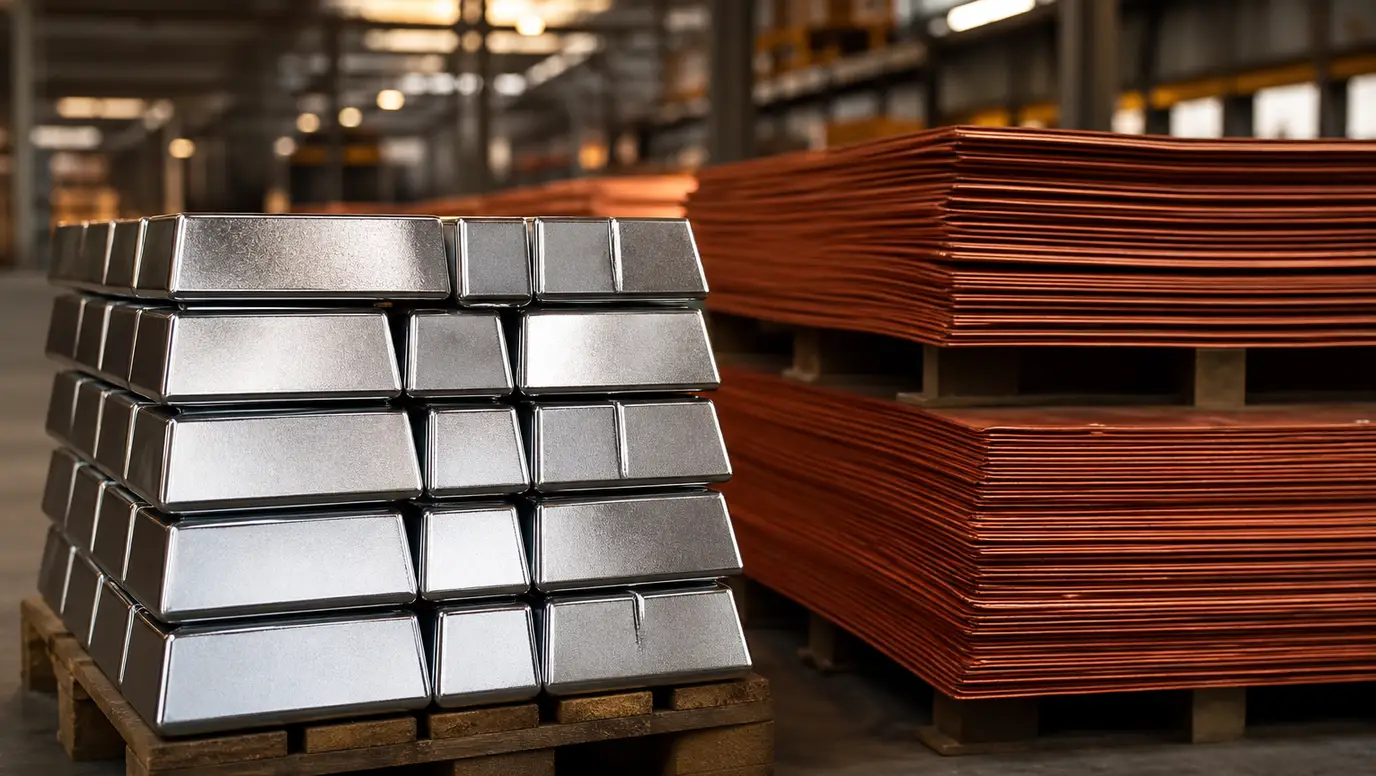
JULY 10, 2026
Silver and Copper Rebound as Softer US Dollar Revives Metals Market Bid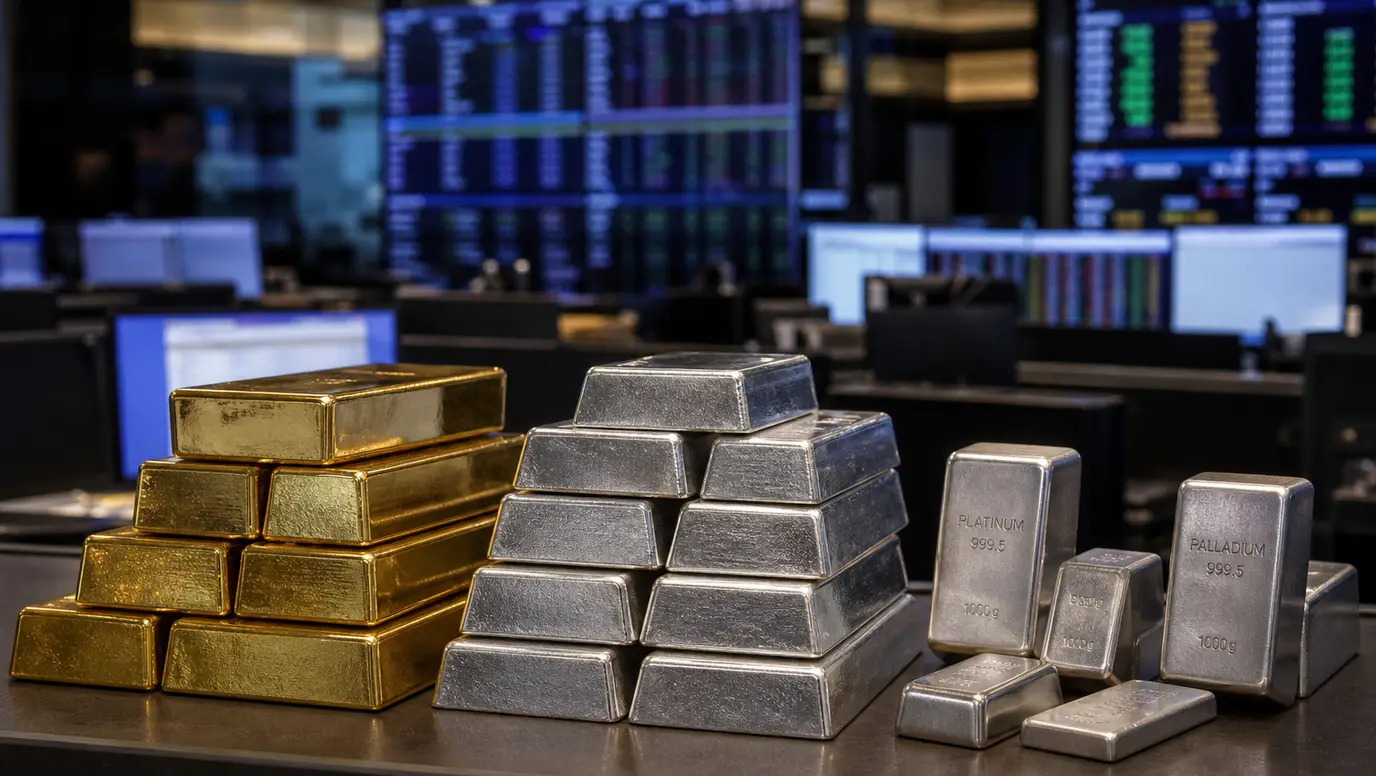
JULY 7, 2026
Platinum and Palladium Buck Gold Slide as Asia Bullion Moves Reshape Metals Market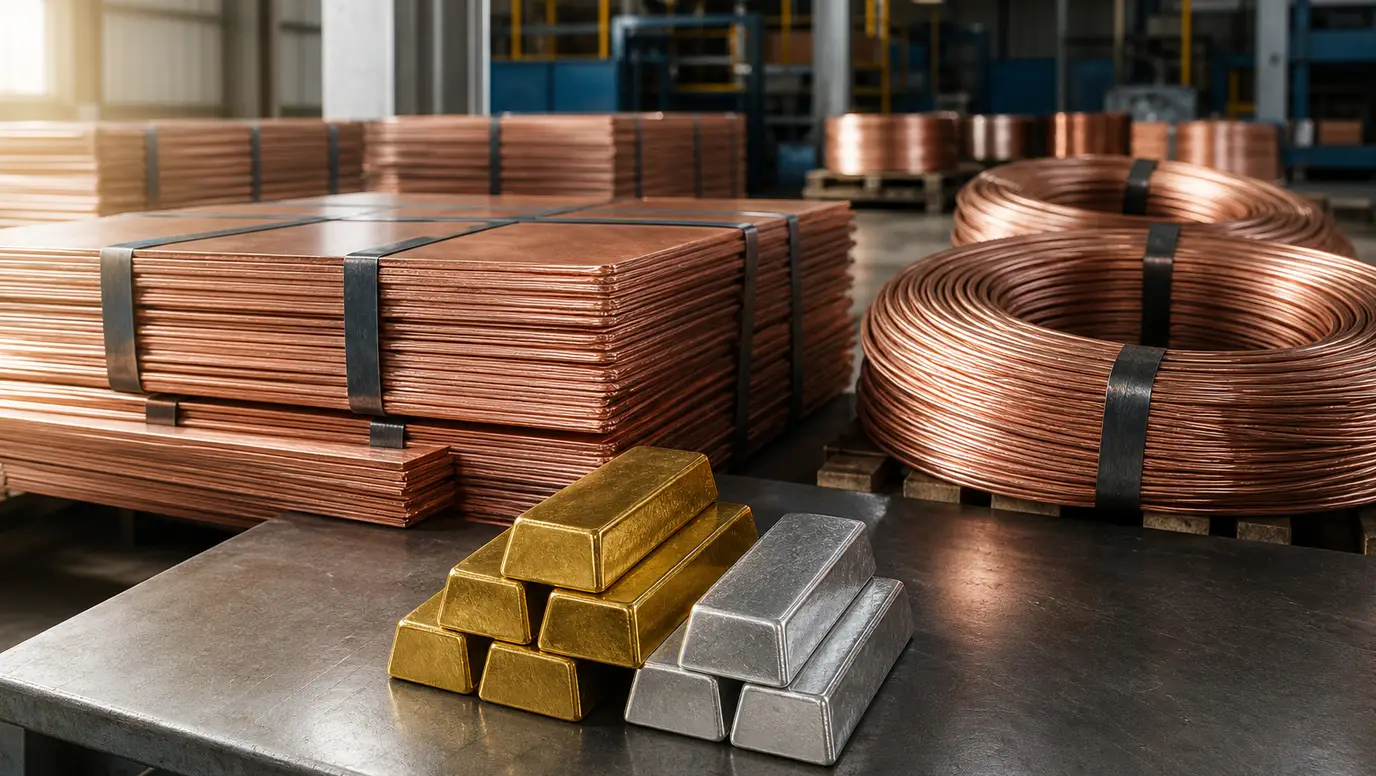
JULY 5, 2026
Copper Tariff Delay Keeps Metals Market on Edge as Gold Holds Jobs-Report Rebound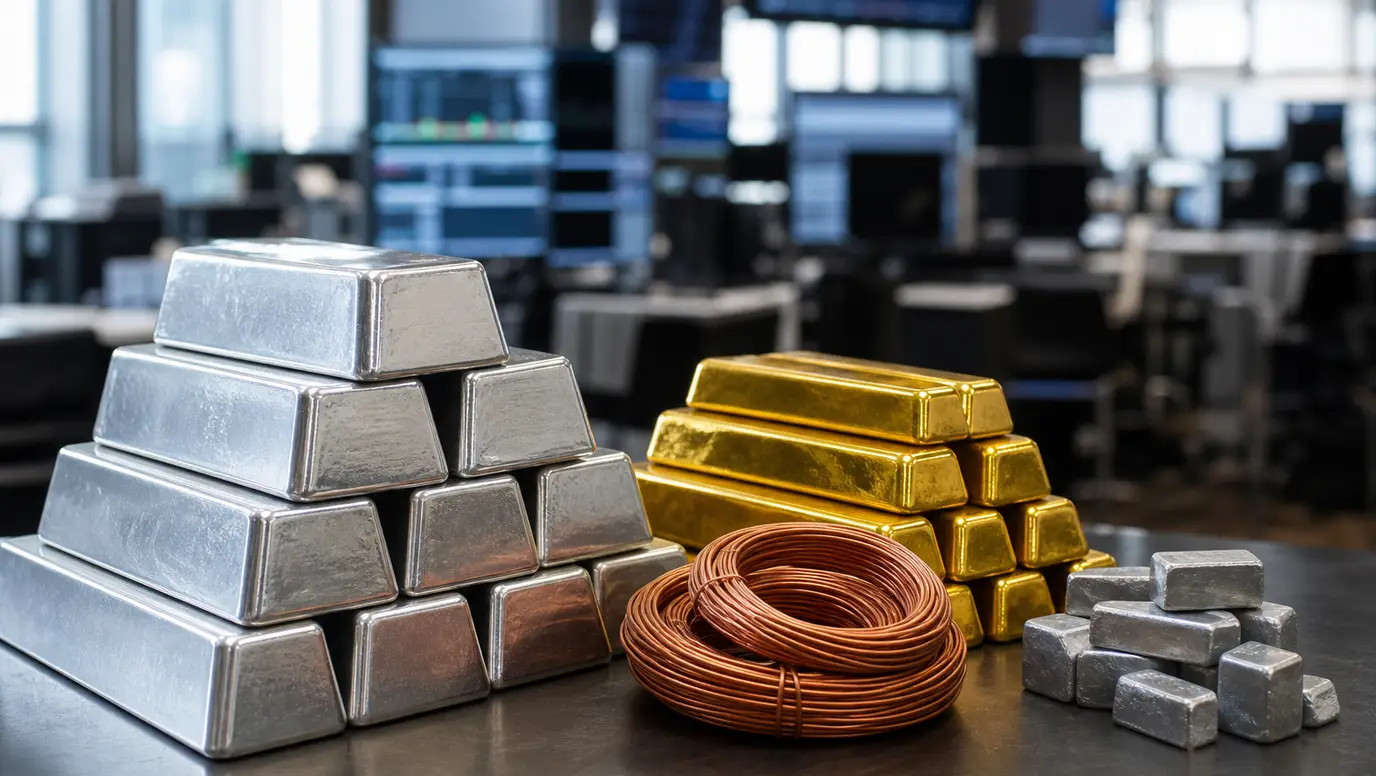
JULY 4, 2026
Silver and Zinc Lead Broad Metals Rally as Dollar Weakness Extends Holiday Bounce
JULY 2, 2026
Gold and Silver Regain Momentum as Softer Jobs Signals Pull Yields Lower
JUNE 30, 2026
Gold Nears Worst Quarter Since 2013 as Fed Bets Reprice Metals Market
JUNE 29, 2026
Silver Breaks Below $60 as Dollar Pressure Spills Into Copper