
OCTOBER 2, 2026
Silver Holds Above $61 as Dollar and Treasury Yields Keep Metals Market on Payrolls WatchSilver steadies above $61 as a firm US dollar, high Treasury yields and Federal Reserve rate risk keep metals traders focused on payrolls.

© 1box.site 2026

JULY 26, 2026
Gold and silver are entering the final week of July with a cautious bid, as metals traders balance safe-haven demand against the risk that the Federal Reserve keeps policy language firm. After a volatile month shaped by swings in the US dollar, energy prices and Treasury yields, precious metals are again trading less on physical demand headlines and more on the macro question that has dominated 2026: how long can real yields stay elevated before investors rebuild larger defensive positions?
The setup is especially sensitive because the market is moving into a Federal Reserve decision week with gold near the $4,050 an ounce area and silver close to the $58 an ounce zone after Friday’s trading. Those levels leave both metals below early-July highs but still high enough to keep momentum accounts engaged if the dollar weakens or rate-hike expectations are pared back. The result is a market that looks steady on the surface but remains vulnerable to sharp repricing once fresh policy guidance, inflation data and bond-market reaction arrive.
The core pressure point for bullion remains the same: a stronger dollar and higher Treasury yields raise the opportunity cost of holding non-yielding assets such as gold and silver. That relationship has repeatedly capped rallies this month, even when geopolitical risk or softer labor-market signals briefly improved demand for havens. Traders are therefore treating the coming Federal Reserve communication as a test of whether the July rebound in precious metals can extend or whether it fades into another yield-driven pullback.
A hawkish message would likely keep gold pinned near its recent support band, particularly if the 10-year Treasury yield rises and the dollar attracts fresh defensive inflows. Silver could face a sharper reaction because its investor flows are often more volatile and because industrial demand expectations can weaken when rate-sensitive growth assets come under pressure. By contrast, any sign that policymakers are becoming more cautious about additional tightening would improve the near-term case for both metals, giving gold a clearer safe-haven bid and allowing silver to rebuild momentum above recent resistance.
Market positioning also matters. Precious metals have not enjoyed a clean, one-direction rally in July. Gold has repeatedly found buyers on dips, but rallies have met selling when oil-driven inflation concerns pushed yields higher. Silver has shown stronger percentage swings, supported at times by its industrial profile, but it remains exposed to the same policy risk that is driving the broader metals complex. This makes the next policy signal less about the headline rate decision and more about how traders interpret the balance between inflation persistence and growth fatigue.
Silver is carrying a different risk profile from gold into the week. While gold is primarily trading as a monetary and reserve asset, silver must also respond to expectations for electronics, solar, battery and broader manufacturing demand. That dual role has helped silver outperform during short bursts of risk appetite, but it can also amplify losses when the market worries that tighter financial conditions will slow industrial consumption.
The silver-to-gold dynamic is therefore becoming an important signal for metals desks. If silver continues to hold up while yields remain firm, traders may read that as evidence that industrial demand expectations are still providing support beneath the market. If silver weakens faster than gold after the Federal Reserve update, it would suggest that investors are cutting cyclical metals exposure rather than simply reducing safe-haven allocations.
For gold, the most important short-term area is not a single price point but the broader ability to hold above the psychologically important $4,000 region. A sustained break below that zone would risk forcing momentum funds to reduce exposure, while a push back toward recent highs would suggest that the market is willing to look through firm policy language and focus instead on longer-term inflation protection. Silver faces a similar test around the high-$50s area, where buyers have appeared but where conviction remains dependent on the dollar and yields.
The metals market is also watching whether the US dollar can extend its recent strength. A firm dollar typically makes dollar-priced commodities more expensive for non-US buyers and can reduce speculative demand for precious metals. That pressure is especially important for silver, where futures flows can turn quickly when the currency market moves against the trade.
At the same time, the yield curve is shaping investor appetite for gold. If longer-dated Treasury yields climb because traders fear inflation will remain sticky, bullion may struggle even if geopolitical uncertainty stays elevated. If yields fall because the market reads the Federal Reserve as nearing the end of its tightening bias, gold could regain its role as the cleaner hedge against policy uncertainty and currency debasement concerns.
For now, the practical message for metals traders is patience. Gold and silver are not lacking catalysts; they are waiting for confirmation. The coming sessions should show whether precious metals can convert recent stability into a broader rally, or whether the Federal Reserve, the dollar and Treasury yields keep the market locked in a defensive consolidation. Until that signal arrives, dips may continue to attract strategic buyers, but rallies are likely to be tested quickly by macro traders looking for evidence that the rate outlook has truly shifted.
OCTOBER 2, 2026
Silver Holds Above $61 as Dollar and Treasury Yields Keep Metals Market on Payrolls Watch
SEPTEMBER 26, 2026
Silver Futures Rebound as Treasury Yield Pause Tests Metals Market Bears
SEPTEMBER 21, 2026
Silver Futures Hold Above $66 as Federal Reserve Hike Tests Metals Market Rally
SEPTEMBER 14, 2026
Silver Rebound Puts Metals Market on Federal Reserve Real-Yield Watch
AUGUST 30, 2026
Silver Breakout Failure Puts Metals Market on Federal Reserve Yield Watch
AUGUST 25, 2026
Silver Pullback Puts Metals Market on $70 Resistance Watch as Inflation Data Looms
AUGUST 18, 2026
Silver Pullback Keeps Metals Market Focus on Federal Reserve Minutes
AUGUST 9, 2026
Silver Rebound Puts Metals Market on Deficit Watch as Federal Reserve Risk Eases
AUGUST 1, 2026
Silver Slide Puts Metals Market on Fed Watch as US Dollar Reasserts Pressure
JULY 20, 2026
Silver Leads Metals as Gold Stalls Near $4,000 on Oil-Driven Inflation Risk
JULY 19, 2026
Gold and Silver Enter Federal Reserve Week Under Pressure as US Dollar and Yields Bite
JULY 18, 2026
Copper Pullback Keeps Metals Market Defensive as Gold and Silver Watch Yields
JULY 16, 2026
Gold Holds Above $4,000 as Silver Slide Puts Metals Market on Federal Reserve Watch
JULY 14, 2026
Gold and Silver Jump as Cool CPI Pulls Metals Market Back Toward Real-Yield Trade
JULY 13, 2026
Silver Slides as Yield Shock Overpowers Haven Demand in Metals Market
JULY 11, 2026
Copper Premium Takes Center Stage as Metals Market Weighs Tariff Risk and Fed Headwinds
JULY 10, 2026
Silver and Copper Rebound as Softer US Dollar Revives Metals Market Bid
JULY 7, 2026
Platinum and Palladium Buck Gold Slide as Asia Bullion Moves Reshape Metals Market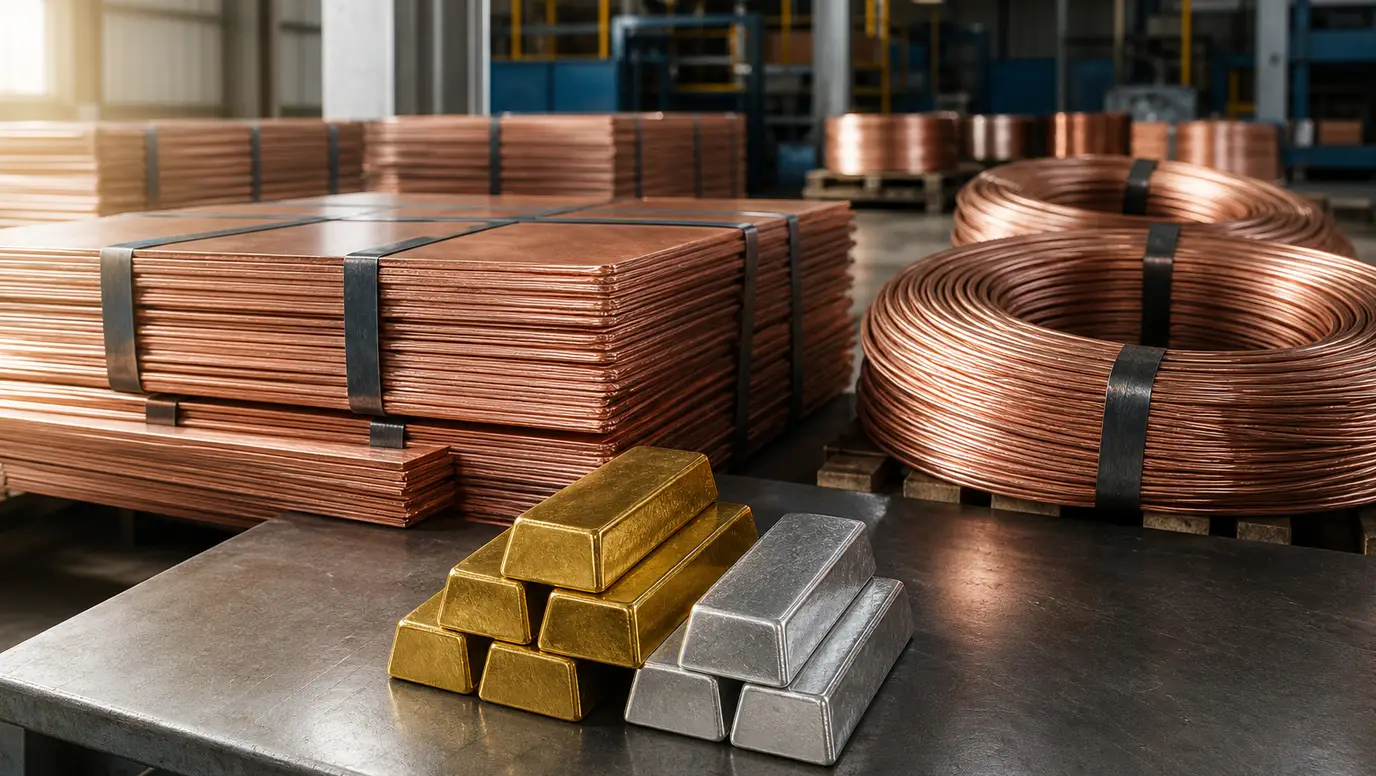
JULY 5, 2026
Copper Tariff Delay Keeps Metals Market on Edge as Gold Holds Jobs-Report Rebound
JULY 4, 2026
Silver and Zinc Lead Broad Metals Rally as Dollar Weakness Extends Holiday Bounce
JULY 2, 2026
Gold and Silver Regain Momentum as Softer Jobs Signals Pull Yields Lower
JUNE 30, 2026
Gold Nears Worst Quarter Since 2013 as Fed Bets Reprice Metals Market
JUNE 29, 2026
Silver Breaks Below $60 as Dollar Pressure Spills Into Copper