
OCTOBER 23, 2026
Swiss Franc Forex Firms as SNB Carry-Trade Signal Checks Dollar ReboundSwiss franc steadies as the SNB signals less need for intervention, leaving USD/CHF traders to weigh carry trades, oil risk and haven demand.

© 1box.site 2026
JULY 7, 2026
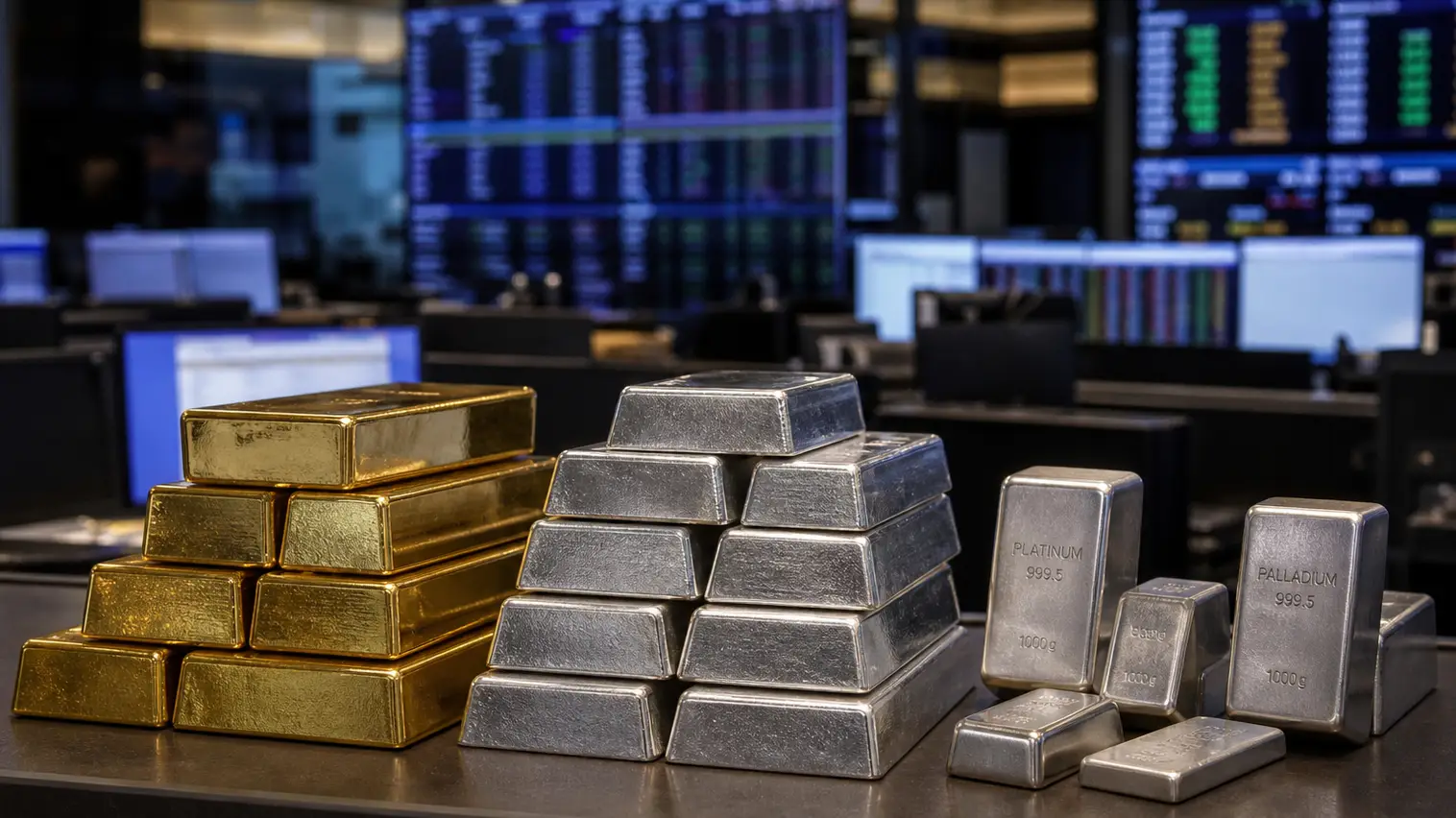
The metals market turned more selective on Tuesday, July 7, 2026, as gold and silver lost momentum while platinum and palladium moved higher. The split kept traders focused on whether last week’s precious-metals rebound was merely consolidating or beginning to fracture under renewed pressure from the US dollar and interest-rate expectations.
Spot gold fell 0.6% to about $4,140.56 an ounce by late European morning, while August gold futures eased to roughly $4,151.80. Silver saw a sharper pullback, slipping 1.9% to around $60.88 an ounce after its recent recovery run. By contrast, platinum gained 0.8% to about $1,644.07 and palladium rose 0.7% to around $1,277.29, giving the session a clear relative-strength signal in the smaller precious-metals contracts.
The immediate drag on bullion came from a firmer US dollar, which made dollar-denominated metals more expensive for many non-US buyers. Gold had risen more than 2% last week and ended a four-week losing streak after weaker labor-market signals encouraged investors to question how much more tightening the Federal Reserve can deliver.
That relief trade has now become more cautious. Market participants are waiting for the next set of Federal Reserve minutes for clues on inflation risks, labor-market resilience and the level of disagreement inside the policy committee. For gold, the key issue remains the opportunity cost of holding a non-yielding asset at a time when Treasury yields are still elevated and the market has not fully abandoned the possibility of another rate increase later this year.
Geopolitical risk in the Gulf added another layer to the trade. Higher energy prices can support safe-haven demand in short bursts, but they can also revive inflation concerns and strengthen the case for restrictive monetary policy. That two-sided dynamic helps explain why gold’s decline looked more like a pause than a broad liquidation, while silver’s higher volatility left it more exposed to profit-taking.
The gains in platinum and palladium stood out because they came during a softer session for gold and silver. Part of the move reflected rotation within the precious-metals complex, as traders looked for contracts with different supply-demand drivers and potentially less crowded positioning after the sharp swings in bullion.
Platinum has been supported by persistent attention to mine supply constraints, autocatalyst demand and substitution themes, while palladium remains sensitive to changes in vehicle production expectations and industrial restocking. Neither market is immune to macro pressure, but Tuesday’s price action suggested that investors were not treating precious metals as a single trade.
Base metals also showed a mixed tone in Asian and European trading. Copper and nickel were softer in several futures markets, while aluminum and zinc found modest support. The result was a metals session defined less by a single macro impulse and more by contract-specific positioning, supply signals and regional liquidity conditions.
Beyond the day’s price moves, traders were watching a notable development in Asia’s bullion market. Hong Kong began trial operations for a central gold clearing and settlement system on July 7, alongside efforts to deepen its gold trading ecosystem, expand related products and support liquidity in gold futures.
The launch matters because clearing, settlement and vaulting infrastructure can influence where physical metal is stored, financed and hedged. Over time, a deeper Hong Kong bullion hub could strengthen Asian price discovery and create additional channels between physical gold demand, futures trading and institutional allocation.
China’s official-sector demand also stayed in focus after its central bank extended its gold-buying streak in June. Reported reserves rose to 75.44 million fine troy ounces from 74.96 million a month earlier, the largest monthly increase of the current accumulation cycle. That buying does not prevent short-term price corrections, but it reinforces the longer-term theme of central banks using gold as a reserve diversification asset.
Near term, the metals market is likely to remain highly sensitive to the dollar, Treasury yields and the tone of incoming US policy signals. A softer rate outlook would help gold and silver stabilize, while a renewed push higher in yields could keep pressure on bullion even if geopolitical risks remain elevated.
For now, the more important signal may be the widening dispersion inside the precious-metals complex. Gold is still the macro anchor, silver remains the high-beta expression of the trade, and platinum and palladium are attracting attention for their more industrial supply-demand profiles. If that rotation continues, metals investors may need to track not only the direction of the dollar, but also which part of the complex is absorbing fresh capital.
OCTOBER 23, 2026
Swiss Franc Forex Firms as SNB Carry-Trade Signal Checks Dollar Rebound
OCTOBER 22, 2026
Euro Forex Stalls as French Bond Rout Blunts Softer US Dollar Before Central Bank Week
OCTOBER 21, 2026
Silver Metals Market Slips as US Dollar and Treasury Yields Revive Federal Reserve Risk
OCTOBER 20, 2026
Australian Dollar Forex Eyes 0.70 as China Growth and Fed Pause Bets Lift AUD/USD
OCTOBER 20, 2026
Tin Metals Market Holds Above $50,000 as Inventory Draws Offset Dollar Risk
OCTOBER 19, 2026
Japanese Yen Forex Holds Near 158 Per Dollar as Bank of Japan Signals Tightening
OCTOBER 18, 2026
Indonesia Rupiah Forex Slumps as Index Downgrade Risk Spurs Dollar Demand
OCTOBER 16, 2026
Gold Metals Market Rebounds as US Dollar and Treasury Yields Ease Before Federal Reserve Decision
OCTOBER 16, 2026
Canadian Dollar Forex Rebounds as US Dollar Retreat Sets Up Bank of Canada Test
OCTOBER 15, 2026
Swiss Franc Forex Rises as Treasury Yields Pull US Dollar From 18-Month High
OCTOBER 15, 2026
Silver Metals Market Tests 2026 Low as Federal Reserve Rate Bets Lift US Dollar
OCTOBER 14, 2026
Euro Forex Edges Higher as US Dollar Retreats Before Inflation Test
OCTOBER 13, 2026
Zinc Metals Market Falls as LME Stock Jump and US Dollar Pressure Base Metals
OCTOBER 13, 2026
Japanese Yen Forex Rebounds as Bank of Japan Price Data Checks US Dollar Rally
OCTOBER 12, 2026
Copper Metals Market Rises as China Premium and Tight LME Stocks Challenge US Dollar
OCTOBER 12, 2026
British Pound Forex Holds Steady as Bank of England Speakers and US Dollar Test Loom
OCTOBER 11, 2026
Gold Metals Market Braces for Federal Reserve Test as US Dollar and Treasury Yields Bite
OCTOBER 11, 2026
Australian Dollar Faces Reserve Bank of Australia Minutes Test as US Dollar Stays Near 18-Month High
OCTOBER 10, 2026
Iraqi Dinar Devaluation Puts Forex Market on Alert as US Dollar Premium Widens
OCTOBER 10, 2026
Palladium Metals Market Slips as Auto Demand and US Dollar Pressure Deepen Surplus Worries
OCTOBER 8, 2026
Euro Forex Slides as French Debt Stress and Treasury Yields Lift Dollar
OCTOBER 8, 2026
Zinc Metals Tightness Faces US Dollar and Treasury Yield Test
OCTOBER 7, 2026
Japanese Yen Forex Weakens as USD/JPY Tests 158 Before Fed Minutes
OCTOBER 7, 2026
Aluminum Rebound Tests Metals Market as Dollar Strength and China Lull Cap Buyers
OCTOBER 6, 2026
British Pound Forex Steadies as Firm US Dollar and Gilt Yields Cap GBP/USD Bounce
OCTOBER 5, 2026
Australian Dollar Forex Holds Below 70 Cents as Reserve Bank of Australia Hike Meets Firm US Dollar
OCTOBER 4, 2026
Canadian Dollar Forex Slips as U.S. Rate Gap and Flat GDP Keep USD/CAD Near Highs
OCTOBER 2, 2026
Silver Holds Above $61 as Dollar and Treasury Yields Keep Metals Market on Payrolls Watch
SEPTEMBER 30, 2026
Swiss Franc Forex Rebound Tests US Dollar Rally as Federal Reserve Inflation Gauge Cools
SEPTEMBER 22, 2026
Japanese Yen Slides as Dollar Strength and Bank of Japan Doubts Put Forex Market on Intervention Watch