OCTOBER 21, 2026
Silver Metals Market Slips as US Dollar and Treasury Yields Revive Federal Reserve RiskSilver stays under pressure near $57 as hotter US inflation, firmer yields and Fed rate risk test metals-market bulls.

© 1box.site 2026
OCTOBER 25, 2026
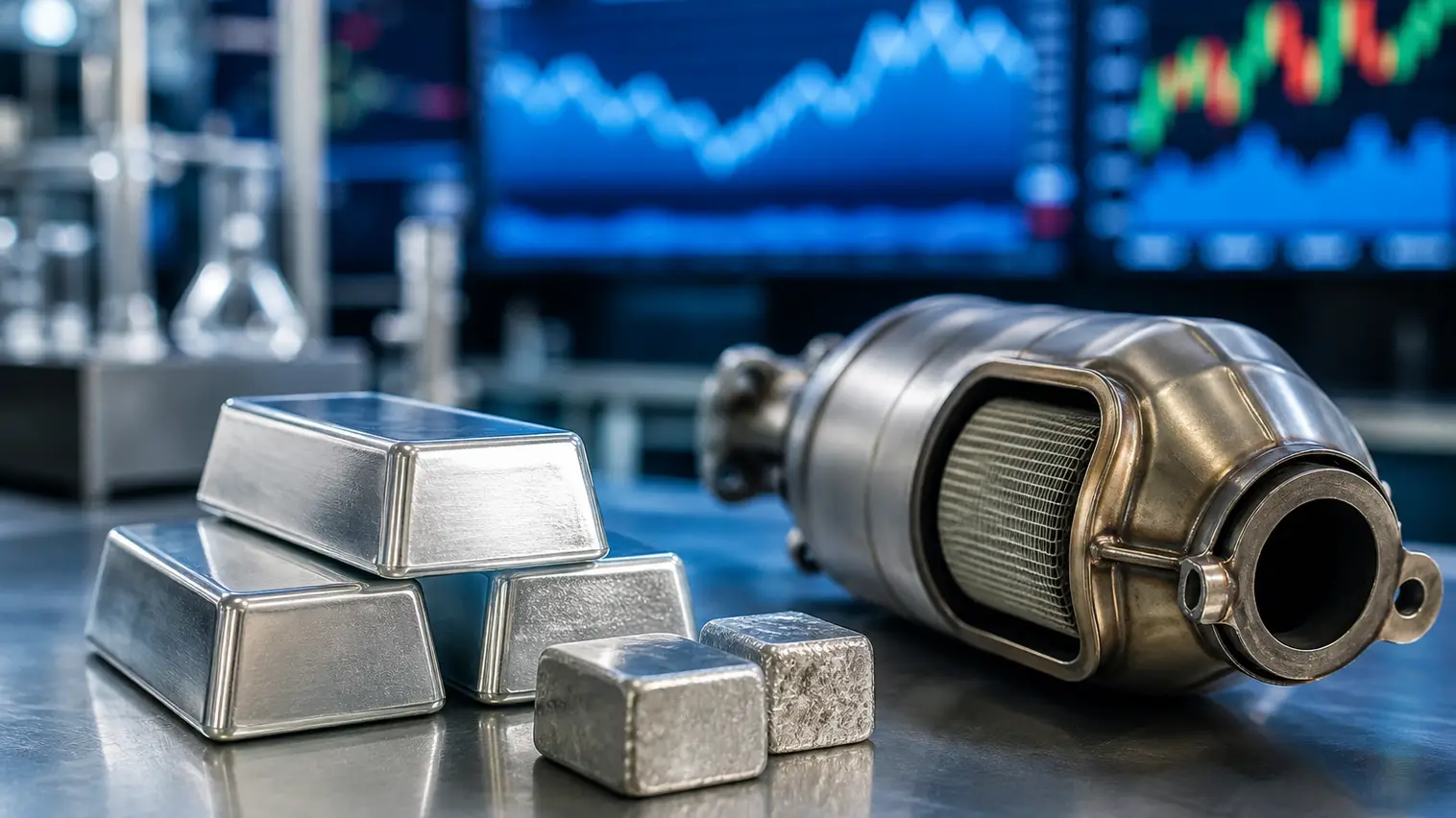
The metals market is entering the new week with palladium under pressure near the $1,050 area, while platinum continues to command a large premium as traders reassess autocatalyst demand, investment flows and the next Federal Reserve decision. Weekend indications showed palladium close to $1,040-$1,060 per ounce and platinum near the mid-$1,500s, leaving the spread between the two platinum-group metals wide enough to keep relative-value trading in focus.
The move is notable because palladium’s weakness is not simply a precious-metals story. Gold and silver have also softened as the US dollar and real yields remain firm, but palladium is carrying an additional demand question tied to the auto sector. The metal is still heavily linked to gasoline vehicle catalysts, and investors are weighing that exposure against slower internal-combustion demand growth, rising electric-vehicle penetration and ongoing substitution dynamics with platinum.
For metals traders, the immediate question is whether palladium can stabilize above the psychologically important $1,000 zone or whether the market needs a deeper washout before physical buying reappears. Thin liquidity can exaggerate moves in palladium, especially when macro funds reduce broad precious-metals exposure ahead of central bank events.
Platinum’s premium over palladium has become one of the clearest signals in the current platinum-group metals complex. Platinum has its own headwinds, including softer jewellery demand in China and investment outflows earlier this year, but its demand base is more diversified across industrial, automotive, hydrogen, medical, chemical and glass applications. That diversification is helping platinum hold up better than palladium even as the broader precious-metals market trades defensively.
Recent quarterly industry forecasts point to a modest platinum surplus in 2026 after several years of deficit, but the surplus is not being viewed as a large cushion. Above-ground stocks remain historically lean, and the market is still sensitive to disruptions in South African mining, Russian output and recycling flows. That keeps platinum from trading like a metal with abundant supply, even when investment demand cools.
Palladium, by contrast, faces a more concentrated set of questions. Its fabrication demand remains dominated by the auto industry, and that makes the metal more vulnerable to changes in vehicle production mix. Hybrids and larger gasoline vehicles still support catalyst loadings, but battery-electric vehicles do not use platinum-group metals in exhaust systems. As a result, investors are becoming more selective about rallies in palladium unless there is evidence of tighter physical supply or a stronger auto production cycle.
The timing of the latest pressure matters. Metals are moving into a Federal Reserve week in which traders are focused on whether policymakers push back against easing expectations or keep a higher-for-longer message in place. For non-yielding assets such as precious metals, the combination of a firm US dollar and elevated real yields can quickly reduce speculative appetite.
Palladium is especially exposed to that macro backdrop because it lacks the same safe-haven bid that often supports gold during stress periods. If the dollar strengthens further, short-term traders may continue to sell rallies in palladium and other industrially sensitive metals. If the Fed delivers a less restrictive message, however, the relief trade could be sharp because positioning in palladium already appears cautious.
Platinum could also benefit from a softer dollar, but its relative strength suggests investors may treat it as the higher-quality trade within the platinum-group metals basket. A sustained break higher in platinum would reinforce the premium over palladium and could encourage more substitution discussions in autocatalysts, although such industrial changes tend to unfold gradually rather than immediately.
The first technical level for palladium is the $1,050 area, followed by the $1,000 floor that has become an important sentiment marker. A decisive move below that zone would likely renew discussion of weaker automotive demand and surplus risk. Holding above it, especially alongside improving volumes, would suggest that physical buyers or short-covering accounts are starting to defend the market.
For platinum, the key test is whether the metal can maintain its premium while precious metals remain under macro pressure. If platinum stays resilient despite a firm dollar, it would point to underlying demand support and tight stock conditions. If it starts falling faster than palladium, the market may be shifting from a relative-value story back to a broad precious-metals liquidation.
Overall, the metals market is sending a cautious signal rather than a panic signal. Palladium is struggling because its demand narrative is narrower, while platinum is being supported by a broader industrial base and tighter longer-term inventory assumptions. The Federal Reserve decision, the US dollar and auto-demand indicators will decide whether that divergence widens further in the week ahead.
OCTOBER 21, 2026
Silver Metals Market Slips as US Dollar and Treasury Yields Revive Federal Reserve Risk
OCTOBER 19, 2026
Platinum and Palladium Metals Market Rallies as Federal Reserve Pause Bets Return
OCTOBER 18, 2026
Copper Metals Market Holds Near Record as Tight Stocks Offset Federal Reserve Shock
OCTOBER 16, 2026
Gold Metals Market Rebounds as US Dollar and Treasury Yields Ease Before Federal Reserve Decision
OCTOBER 15, 2026
Silver Metals Market Tests 2026 Low as Federal Reserve Rate Bets Lift US Dollar
OCTOBER 11, 2026
Gold Metals Market Braces for Federal Reserve Test as US Dollar and Treasury Yields Bite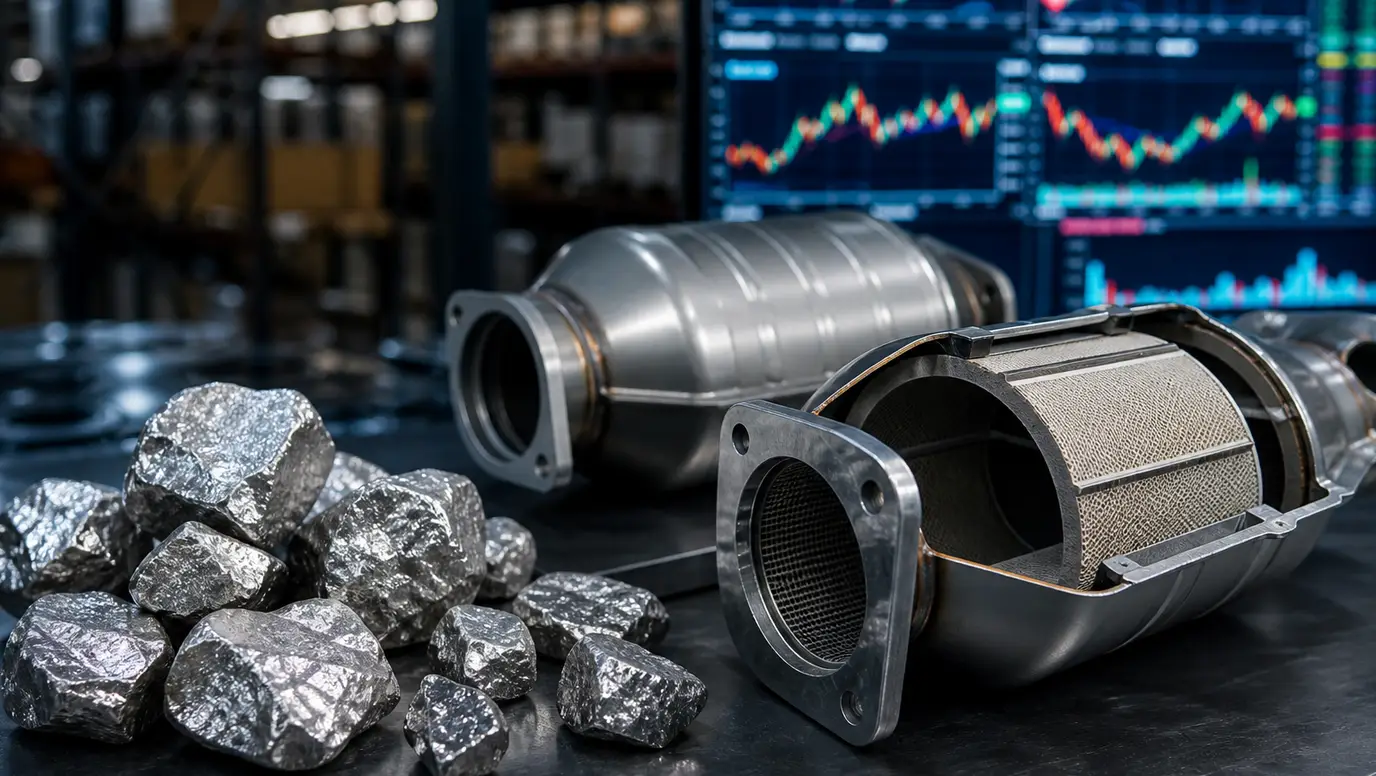
OCTOBER 10, 2026
Palladium Metals Market Slips as Auto Demand and US Dollar Pressure Deepen Surplus Worries
OCTOBER 4, 2026
Gold Metals Rebound Stalls as Treasury Yields Blunt Fed Pause Bets
OCTOBER 3, 2026
Palladium Rebound Attempt Puts Metals Market Focus on Auto Demand and Federal Reserve Risk
OCTOBER 2, 2026
Silver Holds Above $61 as Dollar and Treasury Yields Keep Metals Market on Payrolls Watch
OCTOBER 1, 2026
Aluminum Slumps to 12-Week Low as Strong Dollar Hits Metals Market
SEPTEMBER 30, 2026
Copper Futures Steady as Metals Market Weighs Dollar, Oil and Federal Reserve Risk
SEPTEMBER 28, 2026
Palladium and Platinum Slide as Dollar, Yields Pressure Metals Market
SEPTEMBER 27, 2026
Gold Futures Slip as Sticky Inflation and Fed Rate Bets Cap Metals Market Rebound
SEPTEMBER 26, 2026
Silver Futures Rebound as Treasury Yield Pause Tests Metals Market Bears
SEPTEMBER 22, 2026
Gold Holds Near $4,350 as Federal Reserve Rate Bets Cap Metals Market Rebound
SEPTEMBER 21, 2026
Silver Futures Hold Above $66 as Federal Reserve Hike Tests Metals Market Rally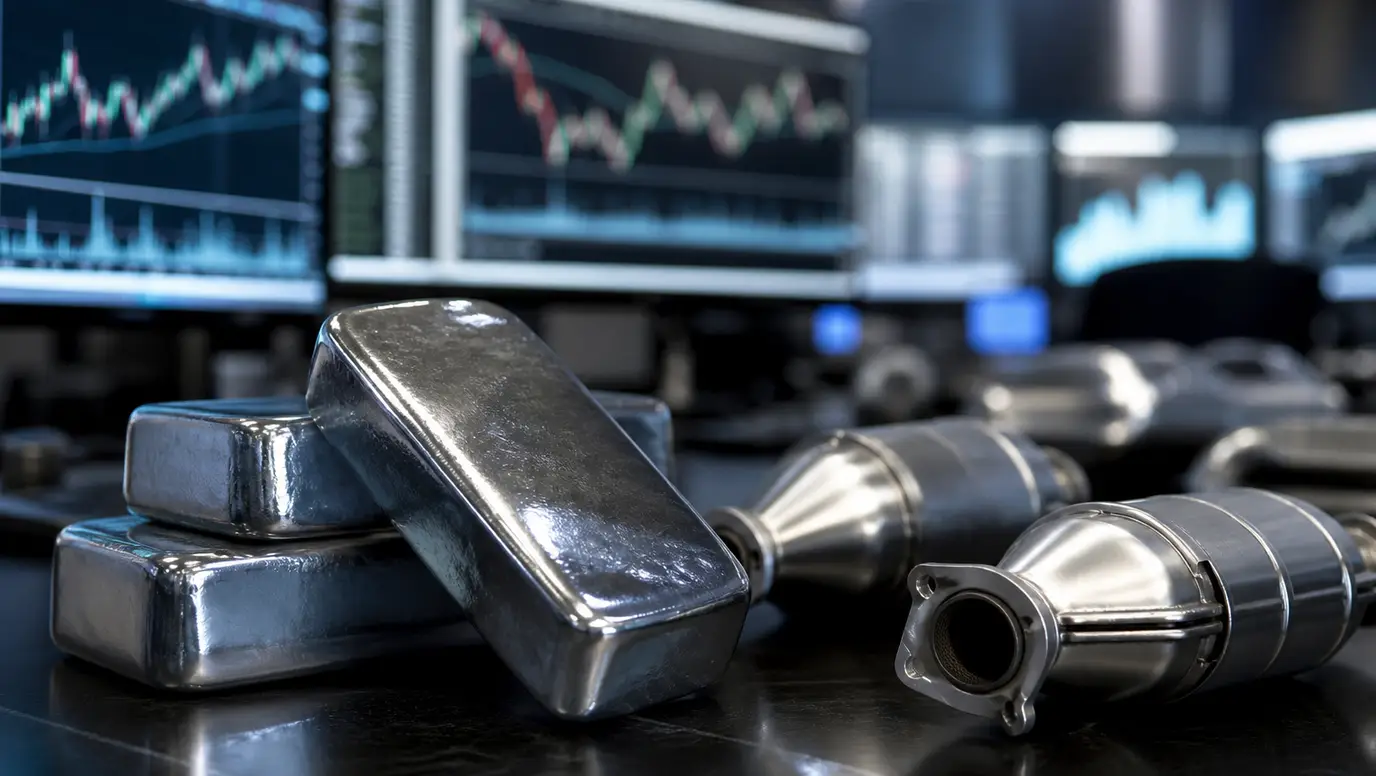
SEPTEMBER 20, 2026
Palladium Futures Rebound Puts Metals Market on Autocatalyst Supply Watch
SEPTEMBER 19, 2026
Copper Futures Rally Puts Metals Market on Federal Reserve and PMI Watch
SEPTEMBER 15, 2026
Gold Holds Near $4,300 as Federal Reserve Hike Bets Pressure Metals Market
SEPTEMBER 14, 2026
Silver Rebound Puts Metals Market on Federal Reserve Real-Yield Watch
SEPTEMBER 11, 2026
Palladium Futures Swing as Auto Demand Clouds Metals Market Outlook
SEPTEMBER 10, 2026
Gold Edges Higher as Soft Dollar Puts Metals Market on Federal Reserve Watch
SEPTEMBER 7, 2026
Zinc Futures Defy Federal Reserve Pressure as Supply Squeeze Tightens Metals Market
SEPTEMBER 4, 2026
Gold Slides as Strong US Jobs Report Reprices Metals Market for Federal Reserve Risk
SEPTEMBER 3, 2026
Platinum and Palladium Rebound as Softer Dollar Lifts Metals Before US Jobs Data
SEPTEMBER 2, 2026
Copper Pullback Hits Metals Market as Strong Dollar Revives Federal Reserve Rate Risk
AUGUST 30, 2026
Silver Breakout Failure Puts Metals Market on Federal Reserve Yield Watch
AUGUST 29, 2026
Gold Retreat Puts Metals Market on Federal Reserve Rate-Hike Watch
AUGUST 28, 2026
Palladium Jump Puts Metals Market on Federal Reserve Watch as Supply Risks Return