
JUNE 29, 2026
S&P 500 Rebound Lifts Index Market as Nasdaq Recovers and Russell 2000 LagsS&P 500 and Nasdaq rebound as investors rotate back into growth shares, but Russell 2000 weakness keeps index market breadth in focus.

© 1box.site 2026

JUNE 4, 2026
U.S. equity benchmarks turned sharply uneven on Thursday as investors rotated out of some of the market’s biggest artificial-intelligence winners while buying a broader mix of blue-chip and value-linked shares. The split left the index market with a very different tone beneath the surface: the Dow Jones Industrial Average pushed firmly higher, the Nasdaq Composite fell, and the S&P 500 hovered close to flat after recently pressing against record territory.
In morning trade, the Dow was up more than 700 points, or about 1.4%, while the Nasdaq Composite was lower by roughly 0.7%. The S&P 500 slipped around 0.1%, extending a pause after its latest move near all-time highs. The divergence suggests investors are not abandoning equities outright, but they are becoming more selective after a powerful rally concentrated in megacap technology and AI-linked shares.
The day’s action gives the index market a fresh leadership test. A rising Dow alongside a weaker Nasdaq typically points to defensive rotation, profit-taking in growth stocks, or both. For the S&P 500, the question is whether strength in industrials, financials, health care and consumer staples can offset pressure from the same technology giants that carried the benchmark through its recent advance.
The Nasdaq’s decline reflected renewed caution toward crowded AI trades. After weeks in which chipmakers, data-center suppliers and large platform companies helped pull major benchmarks to fresh highs, traders used Thursday’s session to lock in gains in some of the fastest-moving names. The move did not amount to a broad risk-off break, but it did expose how dependent the growth benchmarks have become on a narrow set of leaders.
For index investors, the key issue is concentration risk. When a handful of AI-linked companies rise together, the Nasdaq 100 and the S&P 500 can climb even if market breadth is mediocre. When that same leadership group stalls, the pressure can quickly show up in headline index performance. Thursday’s split therefore matters less as a one-day decline and more as a signal that the rally may need broader participation to remain durable.
Semiconductor and AI infrastructure names remain central to the market’s medium-term earnings story, but valuations have become more sensitive to small disappointments. Any slowdown in revenue guidance, margin commentary or capital spending expectations can now trigger an outsized reaction because investors have already priced in a long runway for AI demand. That makes the Nasdaq vulnerable to earnings revisions even when the broader economy is still expanding.
A drop in crude prices helped improve the tone for non-technology areas of the market. Brent crude fell nearly 3% to trade below $95 a barrel, easing some of the inflation anxiety that had returned earlier in the week. Lower oil prices can support transportation, consumer and industrial shares by reducing cost pressure and by limiting the risk that energy shocks feed into inflation expectations.
That relief was important for the Dow, whose composition gives it more exposure to mature industrial, financial, health-care and consumer businesses than the Nasdaq. Investors appeared willing to buy those areas as a hedge against excessive dependence on high-valuation growth shares. The rotation also suggests that portfolio managers are trying to stay invested while reducing exposure to the most extended parts of the market.
The S&P 500’s near-flat performance captured the balance between those two forces. On one side, easing energy prices and broader participation supported the benchmark. On the other, weakness in technology and AI leaders limited upside. That tug-of-war is likely to define the next phase of index trading unless a clear macro catalyst breaks the stalemate.
Attention now turns to the next labor-market update, which could determine whether Treasury yields stay contained or resume pressuring equity valuations. A softer jobs reading could reinforce expectations that interest rates have peaked, helping long-duration growth shares recover. A hotter report, however, could push yields higher and make it harder for the S&P 500 and Nasdaq to justify elevated multiples.
For the index market, the most constructive outcome would be a gradual cooling in hiring without a sharp deterioration in demand. That mix would support hopes for easier financial conditions while preserving the earnings outlook. A more volatile outcome would be one in which wage or payroll figures revive inflation concerns just as investors are questioning the durability of AI leadership.
Until then, the message from Thursday’s tape is one of rotation rather than retreat. The Dow’s advance shows that buyers remain active, but the Nasdaq’s weakness warns that the rally is becoming less forgiving. If broader sectors continue to absorb capital from crowded AI trades, the S&P 500 may be able to consolidate near record levels. If technology selling deepens and Treasury yields rise together, the index market could face a sharper test of support before the week is over.
JUNE 29, 2026
S&P 500 Rebound Lifts Index Market as Nasdaq Recovers and Russell 2000 Lags
JUNE 28, 2026
Yen Watch Dominates Forex Market as Quarter-End Flows Test Dollar Rally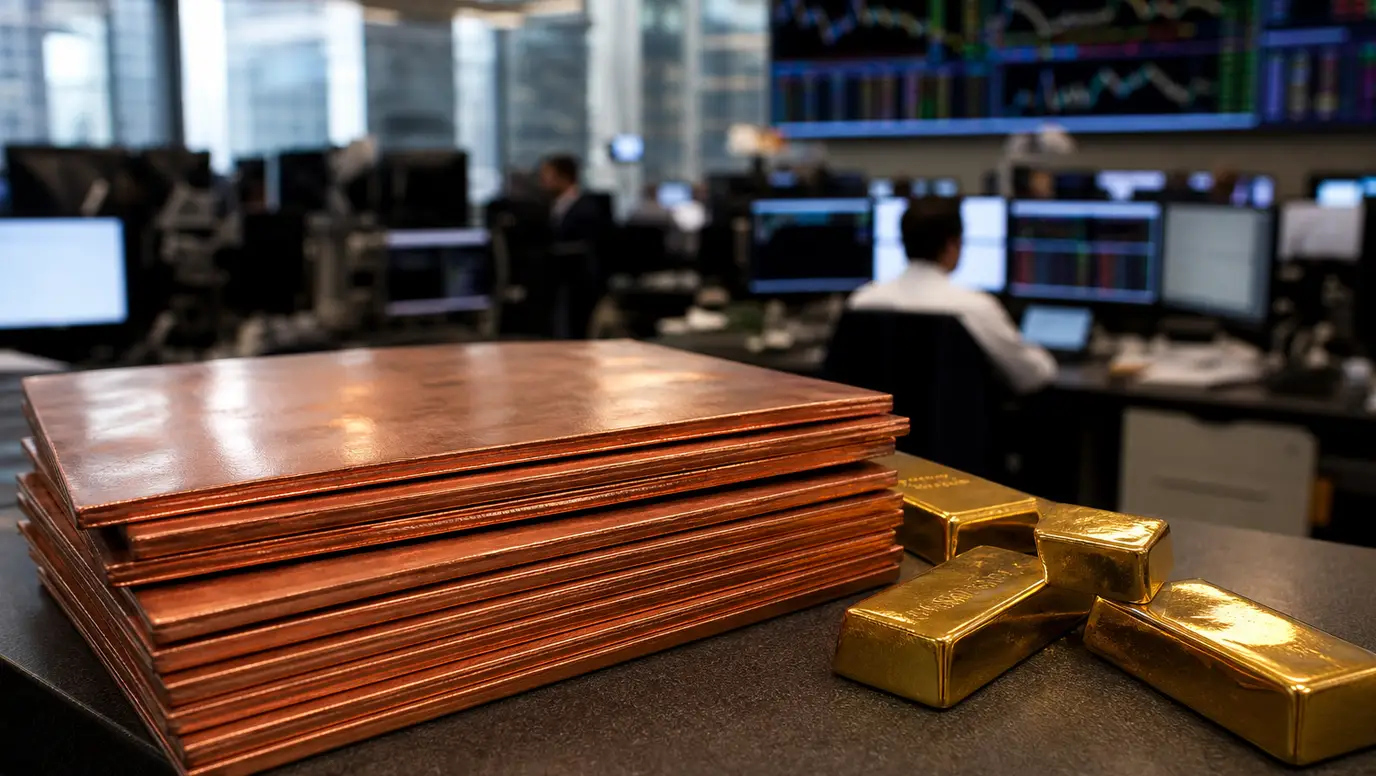
JUNE 28, 2026
Copper Tariff Deadline Overtakes Gold Rebound as Metals Market Enters Quarter-End
JUNE 28, 2026
AI Stocks Keep Wall Street on Defense as Oil Relief Meets Quarter-End Positioning
JUNE 27, 2026
S&P 500 Slips Despite Better Breadth as AI Drag Reshapes Index Market
JUNE 26, 2026
Yen Finds Weekend Bid as Dollar Pullback Shifts Forex Focus to Intervention Risk
JUNE 25, 2026
Gold Break Below $4,000 Keeps Metals Market on Dollar and Rate Alert
JUNE 25, 2026
Euro Slides Below $1.14 as PCE Relief Fails to Break Dollar’s Forex Grip
JUNE 25, 2026
Nasdaq Rebound Puts Index Market Breadth Back in Focus as Chip Rally Meets Rate Risk
JUNE 23, 2026
Dollar Firms as Pound Whipsaws and Euro Slips on Fed Rate Premium
JUNE 23, 2026
Nasdaq Slide Tests S&P 500 as Dow Resilience Highlights Index Rotation
JUNE 22, 2026
Copper Leads Metals Watch as Gold Waits for Dollar and Yield Break
JUNE 22, 2026
Yen Carry Trade Stays Hot as Dollar Bulls Test Tokyo’s Limits
JUNE 22, 2026
S&P 500 Stalls Near Record as Oil Relief Leaves Nasdaq Behind
JUNE 21, 2026
Dow Record Keeps Index Traders Defensive as Nasdaq Rally Faces Treasury Yield Test
JUNE 20, 2026
Gold and Silver Slide as Hawkish Fed Signal Puts Metals Back on Yield Watch
JUNE 20, 2026
Dollar Holds Breakout as Yen Weakness Puts Intervention Risk Back in Focus
JUNE 20, 2026
Nasdaq and Russell 2000 Lead Index Bounce as Traders Reassess Market Breadth
JUNE 20, 2026
S&P 500 Holds 7,500 as Wall Street Tests Fed Hike Risk After Juneteenth Break
JUNE 19, 2026
S&P 500 and Nasdaq Rebound Puts Index Traders Back on Fed Watch After Juneteenth Pause
JUNE 19, 2026
Copper Holds Firm as Metals Traders Reprice Dollar and Fed Rate Risk
JUNE 17, 2026
S&P 500 and Nasdaq Edge Higher as Dow Holds Record Ground Before Fed Decision
JUNE 17, 2026
Silver Holds Near $70 as Fed Decision Puts Industrial Metals Trade on Alert
JUNE 17, 2026
Dollar Steadies as Euro Rally Stalls Before Fed Decision
JUNE 16, 2026
Dow Takes Lead as S&P 500 Pauses Near Record and Nasdaq Cools
JUNE 16, 2026
Gold Extends Rebound as Iran Deal Cools Rate-Hike Fears Before Fed
JUNE 16, 2026
S&P 500 Futures Stall as Nasdaq Rally Faces Warsh Fed Debut
JUNE 15, 2026
Nasdaq Leads Index Rebound as S&P 500 and Dow Track Fed Week Relief Bid
JUNE 15, 2026
Gold Stalls as Dollar Strength Tests Metals Before Fed Decision
JUNE 15, 2026
Dollar Pauses as Euro Traders Brace for Fed Dot Plot and BOJ Decision