
JULY 6, 2026
Gold Pullback and Copper Resilience Split Metals Market as Dollar StabilizesGold slipped from a two-week high while copper held firm, leaving metals traders focused on the dollar, yields and industrial demand.

© 1box.site 2026

JUNE 12, 2026
U.S. equity benchmarks traded with a firmer tone on Friday as the index market tried to extend a rebound sparked by easing energy anxiety, better consumer mood data and renewed demand for large-cap exposure after a turbulent inflation week.
The Dow Jones Industrial Average led the major benchmarks in late-morning trade, while the S&P 500 held modest gains and the Nasdaq remained more restrained as investors continued to question whether growth stocks can absorb another round of rate pressure. Exchange-traded proxies for the major indexes pointed to a broadly positive tape, with the Dow tracker outperforming and S&P 500 and Nasdaq-linked funds also higher.
The move followed a sharp rally in the previous session, when major U.S. indexes recovered as oil prices pulled back from recent stress levels and traders reduced some geopolitical risk premiums. Friday’s session was less forceful, but the market tone suggested that investors were willing to keep buying index exposure as long as bond yields and crude prices did not reaccelerate together.
A preliminary June consumer sentiment reading improved to 48.9 from 44.8 in May, giving equity traders a modest growth signal after weeks of pressure from high living costs and energy uncertainty. The gain was not strong enough to change the broader macro picture, but it helped counter the view that household confidence was deteriorating without interruption.
Inflation expectations also offered limited relief. One-year expectations eased to 4.6% from 4.8%, while longer-run expectations fell to 3.4% from 3.9%. Those levels remain elevated, which is why the response in the Nasdaq was more cautious than the Dow’s advance. Still, the direction of travel mattered for index traders looking for evidence that the recent energy shock was not immediately feeding into a more severe expectations spiral.
The S&P 500’s performance showed the market’s balancing act. Cyclical and value-sensitive areas benefited from lower oil pressure and a calmer macro tape, while the heavyweight technology complex still faced valuation scrutiny. That split kept the broader benchmark positive but prevented a decisive breakout-style move.
The Dow’s leadership was also notable because it suggested a rotation away from the narrowest growth trade and toward blue-chip balance-sheet exposure. In recent weeks, the index market has repeatedly shown that leadership can change quickly when investors are forced to reprice inflation, energy costs and interest-rate expectations at the same time.
The Nasdaq’s more muted performance reflected the same concern that has dominated the index market all week: higher inflation reduces the room for easier monetary policy and raises the hurdle for richly valued technology shares. Even after Friday’s improvement in consumer data, traders remained focused on the upcoming Federal Reserve decision and the policy guidance that will accompany it.
Hot wholesale inflation earlier in the week reinforced the idea that officials may need to keep policy restrictive for longer. For index investors, that creates a difficult setup. Softer oil and better sentiment support earnings confidence, but sticky inflation expectations and elevated Treasury yields can compress valuation multiples, especially in the Nasdaq and other growth-heavy benchmarks.
The S&P 500 is therefore trading less like a simple risk-on instrument and more like a tug of war between earnings resilience and rate sensitivity. If yields stabilize, the benchmark could continue to recover from the week’s volatility. If yields climb again, leadership may remain concentrated in defensive, value and cash-flow-heavy areas rather than the highest-duration technology names.
Market breadth will be a key test into the close. A Dow-led advance can stabilize sentiment, but the index market usually needs broader participation from technology, financials, industrials and consumer shares to sustain a rally. Without that participation, Friday’s move could be viewed as a relief bounce rather than the start of a stronger leg higher.
For the rest of the session, traders are likely to watch three signals: whether the S&P 500 can remain above its early gains, whether Nasdaq leadership improves, and whether Treasury yields stay contained after the sentiment and inflation-expectations data. A calm bond market would help preserve the positive tone, while a late yield spike could quickly revive pressure on growth indexes.
Oil remains another important input for the index market. The recent pullback has reduced immediate fears that energy costs will squeeze consumers and corporate margins at the same time. However, investors are unlikely to fully remove the geopolitical risk premium while headline risk remains active around key supply routes.
For now, the Dow’s outperformance and the S&P 500’s resilience show that buyers are still willing to defend U.S. benchmark exposure. The unanswered question is whether the Nasdaq can rejoin that move before the Fed delivers its next signal on rates, inflation and financial conditions.
JULY 6, 2026
Gold Pullback and Copper Resilience Split Metals Market as Dollar Stabilizes
JULY 6, 2026
Nasdaq Leads Index Market Rebound as Chip Recovery Offsets Dow Drift
JULY 5, 2026
Copper Tariff Delay Keeps Metals Market on Edge as Gold Holds Jobs-Report Rebound
JULY 5, 2026
Dollar Rebound Puts Forex Market on Fed Minutes Watch After Payroll Shock
JULY 4, 2026
Silver and Zinc Lead Broad Metals Rally as Dollar Weakness Extends Holiday Bounce
JULY 4, 2026
Nasdaq Weakness Puts Index Market Breadth Back in Focus as Dow Rotation Holds
JULY 3, 2026
Dow Record Sets Up Global Index Rally as U.S. Holiday Thins Trading
JULY 2, 2026
Gold and Silver Regain Momentum as Softer Jobs Signals Pull Yields Lower
JULY 2, 2026
Euro and Pound Rally as Weak June Payrolls Knock the Dollar Lower
JULY 2, 2026
S&P 500 Firms as Dow Outruns Nasdaq After June Payroll Shock
JULY 2, 2026
Stock Market Rises as Soft June Jobs Data Eases Fed Hike Fears
JULY 1, 2026
Dollar Fades After Fed Inflation Signal as Yen Intervention Risk Grips Forex Market
JULY 1, 2026
S&P 500 Wavers as Nasdaq Drag Shows Yield Risk After Strong Quarter
JUNE 30, 2026
Gold Nears Worst Quarter Since 2013 as Fed Bets Reprice Metals Market
JUNE 30, 2026
S&P 500 Edges Higher as Nasdaq Leads Cautious Index Market Into Jobs Data
JUNE 30, 2026
Dollar Keeps Forex Market on Edge as Jobs Data Looms and Yen Risk Spreads
JUNE 30, 2026
AI Stocks Lead Wall Street Rebound as Nvidia and Micron Steady Chip Trade
JUNE 29, 2026
S&P 500 Rebound Lifts Index Market as Nasdaq Recovers and Russell 2000 Lags
JUNE 28, 2026
Yen Watch Dominates Forex Market as Quarter-End Flows Test Dollar Rally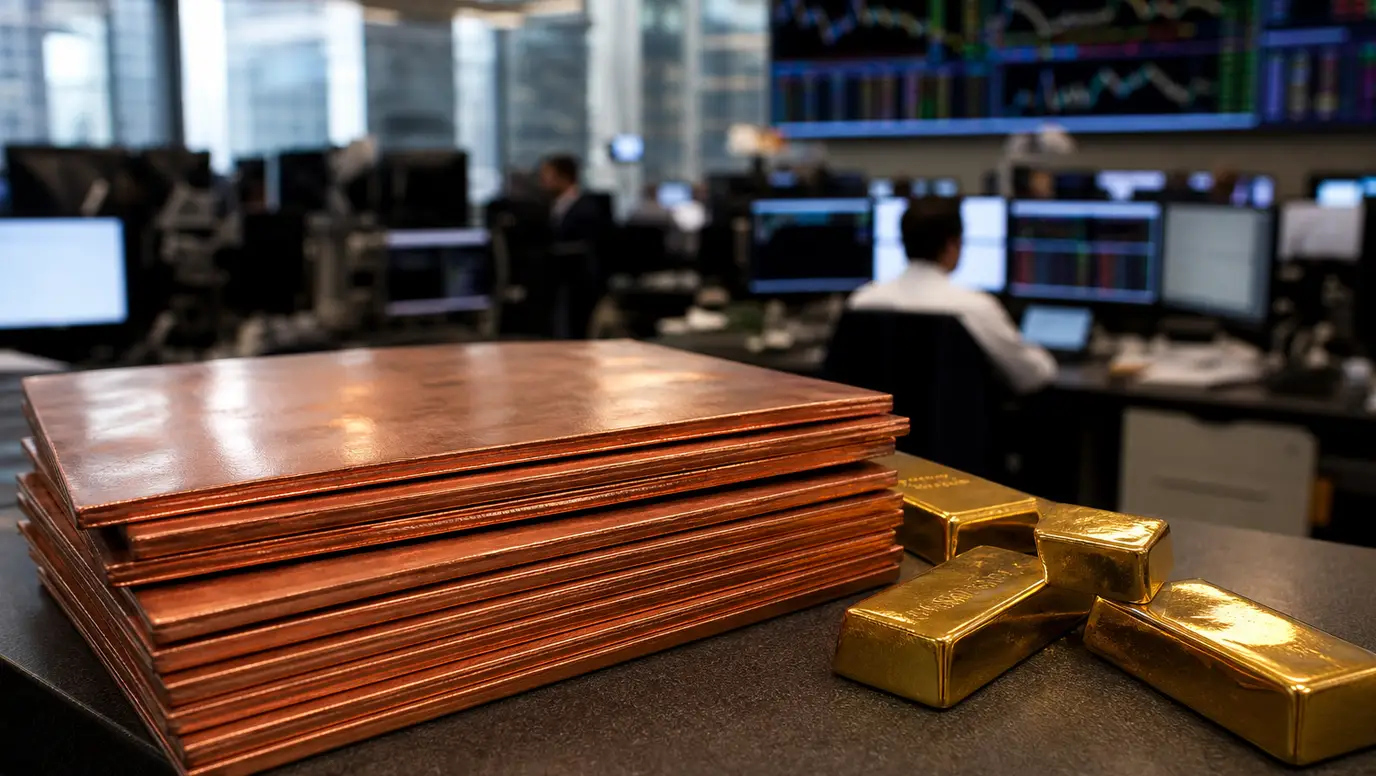
JUNE 28, 2026
Copper Tariff Deadline Overtakes Gold Rebound as Metals Market Enters Quarter-End
JUNE 28, 2026
AI Stocks Keep Wall Street on Defense as Oil Relief Meets Quarter-End Positioning
JUNE 27, 2026
S&P 500 Slips Despite Better Breadth as AI Drag Reshapes Index Market
JUNE 26, 2026
Yen Finds Weekend Bid as Dollar Pullback Shifts Forex Focus to Intervention Risk
JUNE 25, 2026
Gold Break Below $4,000 Keeps Metals Market on Dollar and Rate Alert
JUNE 25, 2026
Euro Slides Below $1.14 as PCE Relief Fails to Break Dollar’s Forex Grip
JUNE 25, 2026
Nasdaq Rebound Puts Index Market Breadth Back in Focus as Chip Rally Meets Rate Risk
JUNE 23, 2026
Dollar Firms as Pound Whipsaws and Euro Slips on Fed Rate Premium
JUNE 23, 2026
Nasdaq Slide Tests S&P 500 as Dow Resilience Highlights Index Rotation
JUNE 22, 2026
Copper Leads Metals Watch as Gold Waits for Dollar and Yield Break
JUNE 22, 2026
Yen Carry Trade Stays Hot as Dollar Bulls Test Tokyo’s Limits