
OCTOBER 12, 2026
UnitedHealth Stock Slips as Traders Brace for Q3 Earnings and Medical-Cost GuidanceUnitedHealth stock eases as investors focus on Q3 earnings, medical costs, pricing updates and 2027 health insurance guidance.

© 1box.site 2026
JUNE 30, 2026
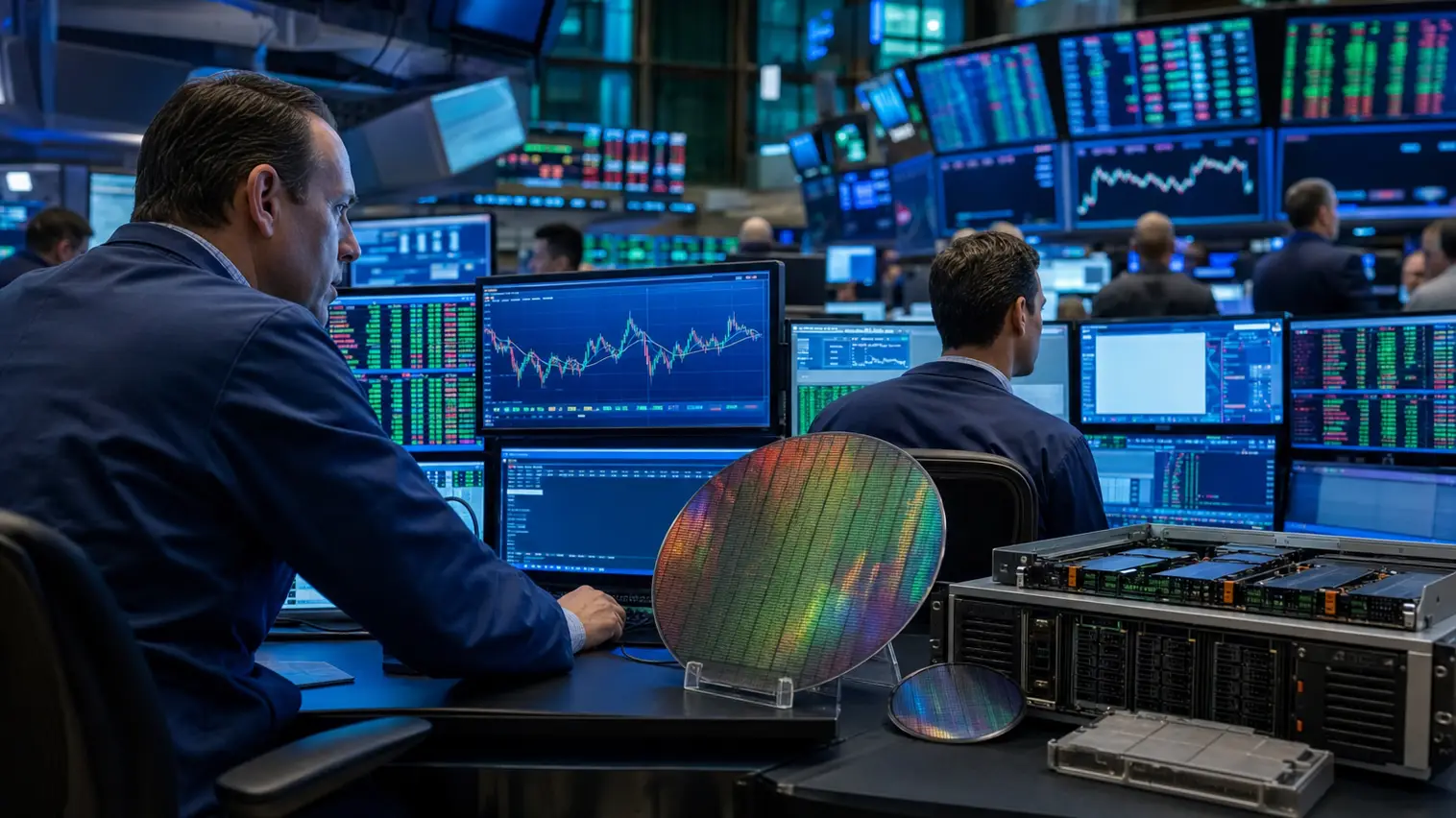
The stock market delivered the strongest fresh news signal among major asset classes as the final session of June put technology leadership, artificial intelligence valuations and quarter-end positioning back at the center of trading. After a volatile stretch marked by doubts over stretched AI multiples, buyers returned to selected megacap and semiconductor names, helping Wall Street stabilize without fully erasing concerns about crowded positioning.
Nvidia and Micron remained central to the rebound narrative. Nvidia’s modest advance helped calm fears that the AI trade was turning into a broader de-risking event, while Micron continued to draw attention after its recent earnings update reinforced demand for high-bandwidth memory and advanced data-center components. The result was not a clean return to euphoria, but it was enough to shift the stock-market tone from defensive to selective risk-taking.
The most important change in tone came from the semiconductor complex. Investors have spent the past week testing whether AI-linked revenue growth can justify the scale of the rally in chip stocks, software infrastructure names and data-center suppliers. Micron’s recent results and guidance offered fresh evidence that memory demand tied to artificial intelligence remains robust, which helped support the idea that the AI cycle is still translating into real orders rather than only speculative enthusiasm.
That distinction matters for the wider stock market because the AI trade now carries an unusually large influence over index direction, sector rotation and investor psychology. When Nvidia and other chip leaders weaken, pressure often spreads quickly into cloud, networking, power equipment and high-growth software names. When they stabilize, dip buyers tend to return to the broader technology basket, even if they remain more selective than earlier in the year.
The rebound also showed that investors are separating companies with visible AI-linked demand from those that have been lifted mainly by theme exposure. That creates a more demanding tape for stock pickers. Strong earnings, credible order books and pricing power are being rewarded, while companies relying on distant AI monetization stories may face sharper pullbacks if market breadth narrows again.
Despite the improved tone, the rally still carries clear limits. Treasury yields held firm enough to keep pressure on long-duration growth valuations, and investors remain sensitive to signs that inflation or Federal Reserve policy could stay restrictive for longer. In that backdrop, even strong AI companies may struggle to extend gains if earnings expectations move too far ahead of deliverable results.
Quarter-end flows also complicate the signal. Some of the buying may reflect portfolio rebalancing after a difficult stretch for growth stocks rather than a broad reset in conviction. That makes follow-through important. A durable rebound would likely require stronger market breadth, continued semiconductor earnings support and a calmer bond market. Without those conditions, the stock market could remain vulnerable to another round of profit-taking in the same crowded AI leaders that powered the recovery.
For now, the stock-market message is cautiously constructive. Nvidia and Micron have helped restore confidence in the AI supply chain, and the rebound suggests investors are not ready to abandon the trade. But the next phase may be less about chasing every AI headline and more about proving which companies can convert heavy demand into sustained margins, cash flow and guidance upgrades.
OCTOBER 12, 2026
UnitedHealth Stock Slips as Traders Brace for Q3 Earnings and Medical-Cost Guidance
OCTOBER 11, 2026
Hang Seng Index Rebounds as Tech Stocks Lift Hong Kong Market Before China Data
OCTOBER 11, 2026
Bank Stocks Face Earnings Test as S&P 500 Rally Puts Federal Reserve in Focus
OCTOBER 10, 2026
Telecom Stocks Sink as SpaceX Spectrum Deal Resets Wireless Competition Risk
OCTOBER 10, 2026
Russell 2000 Stocks Rebound as Treasury Yields Keep Small-Cap Index on Alert
OCTOBER 9, 2026
Delta Air Lines Stock Falls as Fuel Costs Cut Into Airline Profit Outlook
OCTOBER 8, 2026
PepsiCo Stock Climbs as Earnings Beat Meets North America Warning
OCTOBER 4, 2026
Nvidia Stock Hits Record as AI Buyback Puts Cash Returns in Focus
OCTOBER 3, 2026
Synaptics Stock Jumps as onsemi Semiconductor Deal Turns to $5.7 Billion Cash Offer
OCTOBER 2, 2026
Nike Stock Slides as Revenue Miss and China Weakness Deepen Turnaround Test
OCTOBER 1, 2026
Stacks STX Jumps as Bitcoin DeFi Yield Narrative Revives Crypto Market Rotation
SEPTEMBER 30, 2026
Carnival CCL Stock Holds Rally as Record Earnings Put Cruise Shares Back in Focus
SEPTEMBER 28, 2026
Vail Resorts Stock Faces Earnings Test as Investors Watch Pass Sales and Weather Risk
SEPTEMBER 23, 2026
IonQ Stock Rally Puts Quantum Stocks Back on Wall Street's Growth Radar
SEPTEMBER 22, 2026
AMD Holds $1 Trillion Value as AI Chip Rally Keeps Stock Market Bid
SEPTEMBER 20, 2026
Berkshire Hathaway Stock Faces Succession Test as Buffett Leaves Chair
SEPTEMBER 17, 2026
Tokenized Stocks Get SEC Green Light as Stock Market Tests Onchain Trading
SEPTEMBER 5, 2026
Lululemon Stock Slumps as Guidance Cut Puts Retail Stocks on Demand Watch
AUGUST 31, 2026
GameStop Stock Jumps as Preliminary Profit Outlook Offsets Sales Drop
AUGUST 29, 2026
PayPal Stock Slide Puts Fintech Stocks on Takeover Premium Watch After Stripe Walkaway
AUGUST 28, 2026
Broadcom Earnings Put AI Stocks and Semiconductors on Demand Watch
AUGUST 27, 2026
Russell 2000 Stalls as Treasury Yields Revive Federal Reserve Risk for Small-Cap Stocks
AUGUST 26, 2026
Intuit Stock Slide Puts Software Stocks on Guidance Watch After Fiscal 2027 Outlook
AUGUST 25, 2026
Dick's Sporting Goods Stock Slide Puts Retail Stocks on Foot Locker Watch
AUGUST 24, 2026
Nikkei 225 Index Slide Puts AI Stocks and Semiconductors on Yield Watch
AUGUST 24, 2026
PDD Stock Volatility Puts China Growth Stocks on Temu Margin Watch
AUGUST 23, 2026
Marvell Stock Faces AI Infrastructure Test as Traders Weigh Rich Chip Valuations
AUGUST 22, 2026
Ross Stores Stock Rally Puts Growth Stocks Back on Retail Watch
AUGUST 21, 2026
Nvidia Stock Rebound Puts AI Stocks on Earnings Watch as Yields Test Semiconductors
AUGUST 20, 2026
Stocks Watch Walmart Selloff as Slower US Sales Offset Raised Earnings Outlook