
OCTOBER 24, 2026
Alphabet, Microsoft and Amazon Put Stock Market AI Spending Trade on TrialAlphabet, Microsoft and Amazon earnings could reset Wall Street’s AI trade as oil-driven inflation worries pressure stocks before the Fed.

© 1box.site 2026

JULY 15, 2026
ASML put the stock market’s artificial intelligence trade back under the spotlight on Wednesday after stronger second-quarter results and a higher 2026 outlook signaled that chipmakers are still spending heavily on advanced manufacturing capacity.
The Dutch semiconductor equipment supplier reported quarterly net sales of about €9.3 billion and net income of roughly €2.9 billion, topping market expectations. More importantly for equity investors, the company lifted its full-year 2026 revenue forecast to a range of €43 billion to €45 billion and guided for a stronger gross margin profile than previously expected.
The update gave traders a fresh reason to revisit AI-linked stocks after several sessions in which inflation data, oil-market risk and valuation concerns had competed for attention. Unlike a broad relief rally driven only by lower rate expectations, ASML’s results offered a company-specific signal from the supply chain that demand for the most advanced chipmaking tools remains firm.
ASML is closely watched because its lithography systems sit near the center of the advanced semiconductor production cycle. When orders and guidance improve, investors often read the message beyond one stock: major chip manufacturers may still be planning capacity additions for AI processors, high-bandwidth memory and next-generation logic chips.
That makes the latest outlook especially important for the wider stock-market debate. Bulls can argue that the AI capital spending cycle remains supported by real infrastructure demand, not only by enthusiasm for software and model development. Bears, however, will focus on whether the sector is already priced for exceptional execution, leaving limited room for disappointment in margins, delivery schedules or customer orders.
The company also pointed to capacity expansion plans, reinforcing the idea that demand visibility extends beyond the current quarter. For semiconductor investors, that is a meaningful shift because the market has recently become more selective, rewarding companies with clearer order books while punishing names exposed to slower enterprise demand or weaker guidance.
The stronger outlook does not remove all pressure from AI stocks. Export restrictions, China sales uncertainty and geopolitical tension remain key risks for chip equipment makers and their customers. Any tightening in trade rules could complicate shipment timing or reduce addressable demand in sensitive markets.
Valuation is another restraint. Many semiconductor shares have already rallied sharply in anticipation of years of AI infrastructure spending. That means earnings beats are no longer judged only by whether results exceed estimates; investors are also asking whether guidance is strong enough to justify premium multiples into 2027 and 2028.
For now, ASML’s update shifts the near-term tone in favor of the AI supply chain. The next test for the stock market is whether other chip bellwethers confirm the same demand picture, especially around foundry utilization, memory capacity and hyperscale customer spending plans. If they do, the semiconductor trade could regain leadership. If they do not, Wednesday’s optimism may narrow quickly to the highest-quality names.
The broader takeaway for equities is that earnings quality is becoming more important than macro relief alone. A softer inflation backdrop may help growth-stock valuations, but companies still need to show durable revenue growth, margin discipline and credible guidance.
ASML’s raised outlook gives investors one of the clearest mid-July signals that the AI buildout remains active at the manufacturing-equipment level. That should keep semiconductors near the center of stock-market rotation, even as traders continue to watch interest rates, energy prices and geopolitical headlines for the next volatility trigger.
OCTOBER 24, 2026
Alphabet, Microsoft and Amazon Put Stock Market AI Spending Trade on Trial
OCTOBER 22, 2026
Nasdaq Leads Index Market Lower as AI Stocks and Oil Shock Hit Wall Street
OCTOBER 18, 2026
S&P 500 Stocks Face Breadth Test as AI Rout Collides With Earnings Week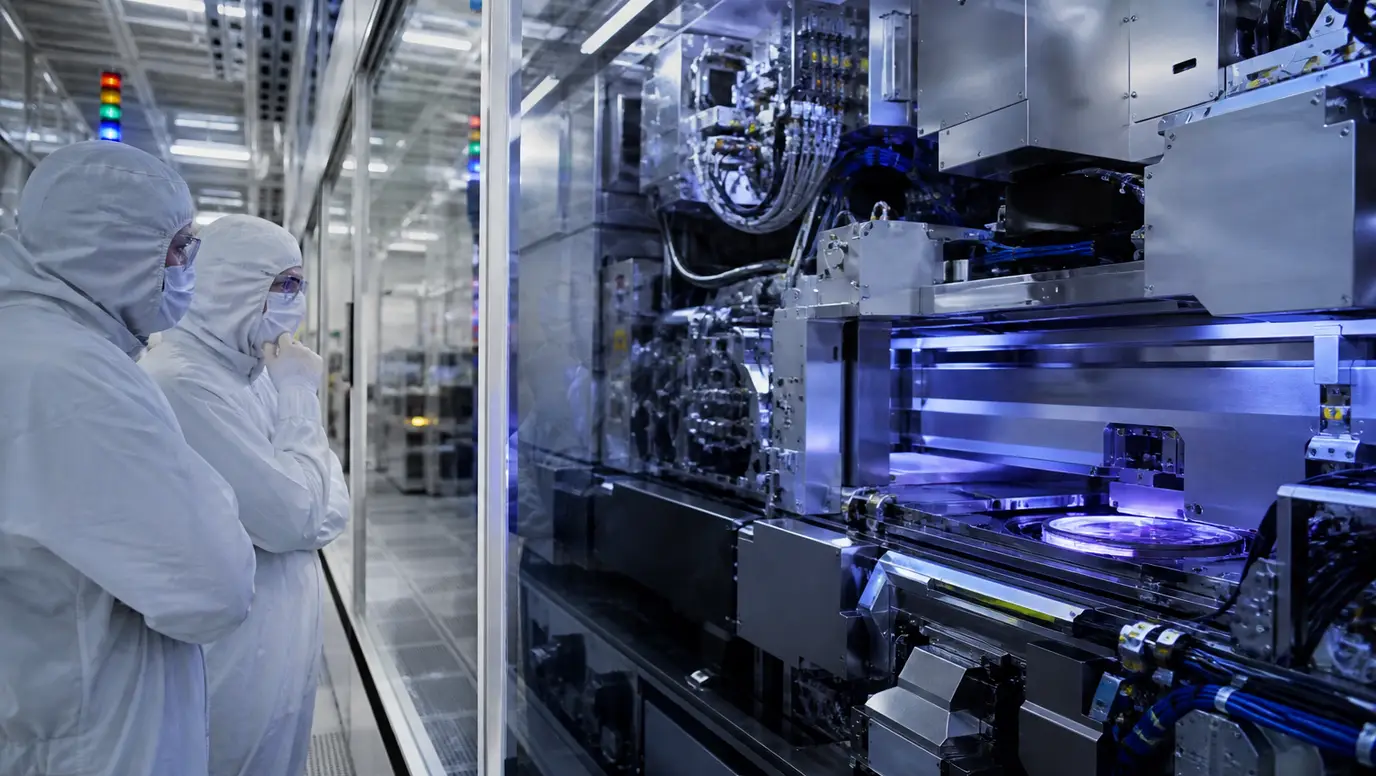
OCTOBER 14, 2026
ASML Stock Swings as AI Demand Lifts Sales Outlook and Supply Warning Caps Rally
OCTOBER 13, 2026
Semiconductors Slide as Wall Street Weighs Bank Earnings and AI Rally Risk
OCTOBER 7, 2026
Marvell Stock Rally Puts AI Semiconductors Back in Focus as Treasury Yields Return
OCTOBER 6, 2026
Broadcom Stock Rises as Anthropic AI Financing Puts Semiconductors in Focus
OCTOBER 5, 2026
Qualcomm Stock Puts Semiconductors on Watch as Huawei AI Patent Deal Meets Arm Trial Risk
OCTOBER 4, 2026
Nvidia Stock Hits Record as AI Buyback Puts Cash Returns in Focus
OCTOBER 3, 2026
Synaptics Stock Jumps as onsemi Semiconductor Deal Turns to $5.7 Billion Cash Offer
SEPTEMBER 22, 2026
AMD Holds $1 Trillion Value as AI Chip Rally Keeps Stock Market Bid
SEPTEMBER 9, 2026
Qualcomm Stock Climbs as Amazon AI Chip Deal Lifts Semiconductors
SEPTEMBER 3, 2026
Broadcom Stock Slips as AI Semiconductors Surge but Guidance Tests Bulls
AUGUST 30, 2026
Marvell Technology Stock Pullback Puts AI Stocks and Semiconductors on Margin Watch
AUGUST 28, 2026
Broadcom Earnings Put AI Stocks and Semiconductors on Demand Watch
AUGUST 24, 2026
Nikkei 225 Index Slide Puts AI Stocks and Semiconductors on Yield Watch
AUGUST 23, 2026
Marvell Stock Faces AI Infrastructure Test as Traders Weigh Rich Chip Valuations
AUGUST 21, 2026
Nvidia Stock Rebound Puts AI Stocks on Earnings Watch as Yields Test Semiconductors
AUGUST 19, 2026
AMD Stock Slides as AI Semiconductors Face Federal Reserve Minutes Test
AUGUST 17, 2026
Marvell Stock Jumps as AI Semiconductors Face Data Center Earnings Test
AUGUST 15, 2026
CoreWeave Stock Rally Puts AI Stocks on Margin Watch as Backlog Tops $100 Billion
AUGUST 13, 2026
Applied Materials Earnings Put AI Stocks and Semiconductors on Equipment Demand Watch
AUGUST 12, 2026
Super Micro Surge Puts AI Stocks and Semiconductors Back in Market Lead
AUGUST 10, 2026
CoreWeave Earnings Put AI Stocks on Margin Watch as Market Holds Near Records
AUGUST 9, 2026
Nvidia Stock Faces Earnings Test as AI Software Push Extends Semiconductors Rally
AUGUST 8, 2026
Atlassian Stock Surge Puts AI Stocks Back in Software Spotlight
AUGUST 7, 2026
SpaceX Stock Rebounds as AI Spending and Share Unlock Test Wall Street
AUGUST 6, 2026
AMD Stock Rebounds as AI Semiconductors Test Margin Expectations
AUGUST 5, 2026
Palantir Stock Surge Puts AI Stocks Back on Earnings Watch
AUGUST 4, 2026
Caterpillar Stock Rally Fades as AI Power Demand Tests Industrial Stocks