
OCTOBER 20, 2026
GE Aerospace and RTX Lift Industrial Stocks as Earnings Beats Reset Wall StreetGE Aerospace and RTX earnings put industrial stocks back in focus as guidance upgrades counter oil shock and tech-sector volatility.

© 1box.site 2026
AUGUST 4, 2026
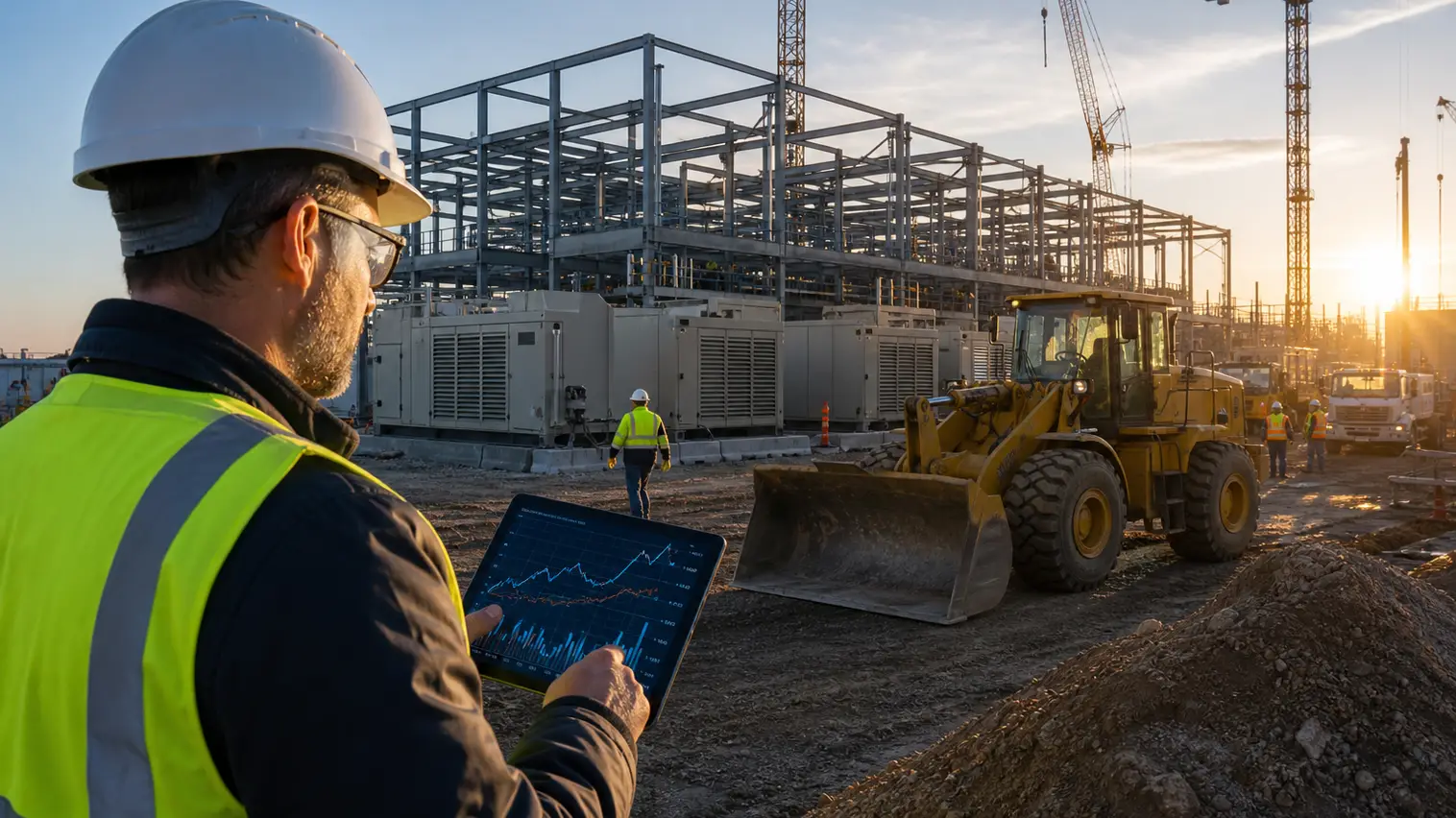
Caterpillar became one of the more closely watched U.S. stock-market movers on Tuesday as an early earnings-driven surge gave way to a more cautious advance. The move captured a broader debate running through Wall Street: whether old-economy industrial stocks can keep benefiting from artificial-intelligence infrastructure spending without becoming priced for flawless execution.
The stock opened sharply higher and briefly traded near the upper end of its intraday range before paring much of that move by late morning. Even after the fade, Caterpillar remained above its prior close, leaving traders focused on whether buyers would defend the post-earnings gap or treat the rally as another opportunity to reduce exposure after a strong multimonth run.
The setup was helped by a firmer tone across U.S. equities. Corporate earnings momentum and a pullback in oil prices reduced some of the inflation pressure that had recently weighed on risk appetite. That backdrop gave cyclical shares room to recover, but the uneven action in Caterpillar showed that investors are still separating genuine profit acceleration from stocks that may already discount a lot of good news.
Caterpillar is no longer being viewed only as a construction and mining-equipment bellwether. Its energy and transportation exposure has become a central part of the investment case as data centers, grid upgrades and backup-power systems drive demand for engines, turbines and related equipment. That link to the AI buildout has pulled the company into a market narrative that is usually dominated by semiconductor and cloud-computing names.
For stock-market investors, the key question is whether AI-related power demand can extend Caterpillar’s growth cycle even if traditional construction activity cools. Strong order trends in power generation would support the bull case, especially if margins remain firm despite higher input, labor and logistics costs. However, a stock that already trades at a premium to many industrial peers leaves less room for disappointment in guidance, backlog conversion or pricing.
The intraday reversal suggested that some investors were unwilling to chase the stock after the opening spike. That does not necessarily weaken the long-term case, but it does show that the market is demanding more evidence that AI-linked infrastructure demand can translate into sustained earnings growth rather than a short burst of enthusiasm.
Caterpillar’s latest move also matters because industrial stocks have become an important counterweight to the megacap technology trade. When investors look beyond software and chips for AI beneficiaries, companies tied to electricity supply, heavy equipment, cooling systems and physical construction have gained more attention. That rotation has helped broaden market leadership, but it has also raised the risk of crowded positioning in a smaller group of perceived infrastructure winners.
Traders will now watch whether Caterpillar can hold above its early-August support area after the earnings reaction. A close near the upper half of Tuesday’s range would signal that buyers are still willing to pay for the AI power-demand story. A deeper retreat, by contrast, would point to profit-taking and could pressure other industrial stocks that have rallied on similar themes.
The broader message for the stock market is that earnings strength remains powerful, but selectivity is increasing. Caterpillar’s business appears well placed to benefit from infrastructure spending and energy demand tied to AI expansion. Yet the fading rally shows that investors are no longer rewarding the theme automatically; they want confirmation through margins, cash flow, orders and guidance.
For now, Caterpillar remains a stock-market barometer for the intersection of industrial demand and the AI capital-spending boom. If the company can show that power systems and construction equipment demand are durable, the shares could regain momentum. If expectations keep rising faster than the underlying numbers, Tuesday’s fade may become a warning sign for a wider group of industrial stocks.
OCTOBER 20, 2026
GE Aerospace and RTX Lift Industrial Stocks as Earnings Beats Reset Wall Street
OCTOBER 18, 2026
S&P 500 Stocks Face Breadth Test as AI Rout Collides With Earnings Week
OCTOBER 18, 2026
Bank Stocks Find Earnings Support as Consumer Spending Eases Credit Fears
OCTOBER 17, 2026
Airline Stocks Face Fuel-Cost Test as Earnings Season Moves Beyond AI
OCTOBER 16, 2026
Tesla Stock Rises as Roadster Reveal Gives EV Stocks a Break From AI Rout
OCTOBER 15, 2026
Morgan Stanley Stock Slips as Record Wealth Revenue Fails to Offset Cost Worries
OCTOBER 14, 2026
ASML Stock Swings as AI Demand Lifts Sales Outlook and Supply Warning Caps Rally
OCTOBER 13, 2026
FTSE 100 Hits Three-Week High as Bank Stocks and Lower Gilt Yields Lift London Index
OCTOBER 13, 2026
Semiconductors Slide as Wall Street Weighs Bank Earnings and AI Rally Risk
OCTOBER 12, 2026
UnitedHealth Stock Slips as Traders Brace for Q3 Earnings and Medical-Cost Guidance
OCTOBER 11, 2026
Hang Seng Index Rebounds as Tech Stocks Lift Hong Kong Market Before China Data
OCTOBER 11, 2026
Bank Stocks Face Earnings Test as S&P 500 Rally Puts Federal Reserve in Focus
OCTOBER 10, 2026
Telecom Stocks Sink as SpaceX Spectrum Deal Resets Wireless Competition Risk
OCTOBER 10, 2026
Russell 2000 Stocks Rebound as Treasury Yields Keep Small-Cap Index on Alert
OCTOBER 9, 2026
Delta Air Lines Stock Falls as Fuel Costs Cut Into Airline Profit Outlook
OCTOBER 8, 2026
PepsiCo Stock Climbs as Earnings Beat Meets North America Warning
OCTOBER 4, 2026
Nvidia Stock Hits Record as AI Buyback Puts Cash Returns in Focus
OCTOBER 3, 2026
Synaptics Stock Jumps as onsemi Semiconductor Deal Turns to $5.7 Billion Cash Offer
OCTOBER 2, 2026
Nike Stock Slides as Revenue Miss and China Weakness Deepen Turnaround Test
OCTOBER 1, 2026
Stacks STX Jumps as Bitcoin DeFi Yield Narrative Revives Crypto Market Rotation
SEPTEMBER 30, 2026
Carnival CCL Stock Holds Rally as Record Earnings Put Cruise Shares Back in Focus
SEPTEMBER 28, 2026
Vail Resorts Stock Faces Earnings Test as Investors Watch Pass Sales and Weather Risk
SEPTEMBER 23, 2026
IonQ Stock Rally Puts Quantum Stocks Back on Wall Street's Growth Radar
SEPTEMBER 22, 2026
AMD Holds $1 Trillion Value as AI Chip Rally Keeps Stock Market Bid
SEPTEMBER 20, 2026
Berkshire Hathaway Stock Faces Succession Test as Buffett Leaves Chair
SEPTEMBER 17, 2026
Tokenized Stocks Get SEC Green Light as Stock Market Tests Onchain Trading
SEPTEMBER 5, 2026
Lululemon Stock Slumps as Guidance Cut Puts Retail Stocks on Demand Watch
AUGUST 31, 2026
GameStop Stock Jumps as Preliminary Profit Outlook Offsets Sales Drop
AUGUST 29, 2026
PayPal Stock Slide Puts Fintech Stocks on Takeover Premium Watch After Stripe Walkaway
AUGUST 28, 2026
Broadcom Earnings Put AI Stocks and Semiconductors on Demand Watch