
OCTOBER 20, 2026
GE Aerospace and RTX Lift Industrial Stocks as Earnings Beats Reset Wall StreetGE Aerospace and RTX earnings put industrial stocks back in focus as guidance upgrades counter oil shock and tech-sector volatility.

© 1box.site 2026

JULY 28, 2026
Semiconductor stocks became the clearest pressure point in the stock market on Tuesday as investors reacted to reports that a Chinese state-backed manufacturer has begun producing domestic immersion DUV lithography tools. The development hit ASML first, then spread across chip equipment names and AI-linked shares as traders reassessed how much long-term growth is already priced into the sector.
ASML’s U.S.-listed shares were down about 5% in late morning trading, while Applied Materials, Lam Research and KLA also posted sharp losses. Nvidia traded lower but was steadier than the equipment group, showing that investors were targeting the companies most directly exposed to chipmaking tools and China supply-chain risk.
The selloff made the stock-market section the strongest current news area among major market categories. Energy prices were easing after recent geopolitical spikes, metals were comparatively quieter, and index action was largely being shaped by the semiconductor drag rather than a standalone benchmark catalyst.
The concern is not that China has immediately matched the most advanced lithography technology. DUV machines are less advanced than EUV systems, and reported Chinese tools may still face performance, reliability and customer-qualification hurdles before they can replace imported equipment at scale. Still, the report matters because DUV systems are used in many layers of chip production and have been a major part of China’s equipment demand.
ASML has long traded at a premium because of its critical role in semiconductor manufacturing, especially in EUV lithography. The latest move shows how sensitive that premium can become when investors see even an early challenge to Western equipment dominance. For stock traders, the immediate question is whether the report represents a durable competitive threat or a short-term valuation reset after a powerful run in chip-related shares.
Equipment suppliers with China exposure were hit hardest because their growth outlook depends on both global fab spending and access to Chinese customers. If domestic Chinese tools gradually gain acceptance, investors may demand a larger discount for future sales into that market. If the technology proves difficult to scale, Tuesday’s decline could look more like a risk-off reaction than a fundamental earnings reset.
Nvidia’s move was smaller than the declines in chip equipment stocks, but its participation in the selloff mattered for market psychology. The stock has become a benchmark for AI risk appetite, and even modest weakness can pressure funds that are heavily exposed to the same semiconductor and data-center theme.
The timing also raises the stakes for upcoming earnings and guidance across the technology complex. Investors are no longer rewarding every AI-related headline automatically. They are separating companies with visible orders, pricing power and free cash flow from those that depend more heavily on future capacity expansion, China demand or elevated market multiples.
That distinction could define the next phase of the stock market. If chip leaders defend margins and management teams frame China competition as manageable, bargain hunters may return quickly. If executives signal softer equipment demand, rising localization pressure or more cautious customer spending, the semiconductor pullback could broaden into a larger rotation away from crowded growth trades.
For the broader stock market, the key issue is containment. A focused decline in ASML and semiconductor equipment shares would be painful for the sector but manageable for diversified indexes. A wider retreat in Nvidia, memory stocks, foundry suppliers and software names tied to AI infrastructure would be more difficult for the market to absorb.
Traders are also watching Treasury yields and Federal Reserve expectations because expensive growth stocks are especially sensitive to changes in discount rates. Lower yields can soften valuation pressure, but they may not fully offset company-specific concerns if investors believe China’s semiconductor push is accelerating faster than expected.
The near-term test is whether semiconductor stocks can stabilize above Tuesday’s lows. A rebound would suggest investors still see the China DUV report as an early-stage risk rather than a direct earnings shock. Continued selling would signal that the market is starting to price a more competitive chip equipment landscape, with ASML and Nvidia likely remaining at the center of the debate.
OCTOBER 20, 2026
GE Aerospace and RTX Lift Industrial Stocks as Earnings Beats Reset Wall Street
OCTOBER 18, 2026
S&P 500 Stocks Face Breadth Test as AI Rout Collides With Earnings Week
OCTOBER 18, 2026
Bank Stocks Find Earnings Support as Consumer Spending Eases Credit Fears
OCTOBER 17, 2026
Airline Stocks Face Fuel-Cost Test as Earnings Season Moves Beyond AI
OCTOBER 16, 2026
Tesla Stock Rises as Roadster Reveal Gives EV Stocks a Break From AI Rout
OCTOBER 15, 2026
Morgan Stanley Stock Slips as Record Wealth Revenue Fails to Offset Cost Worries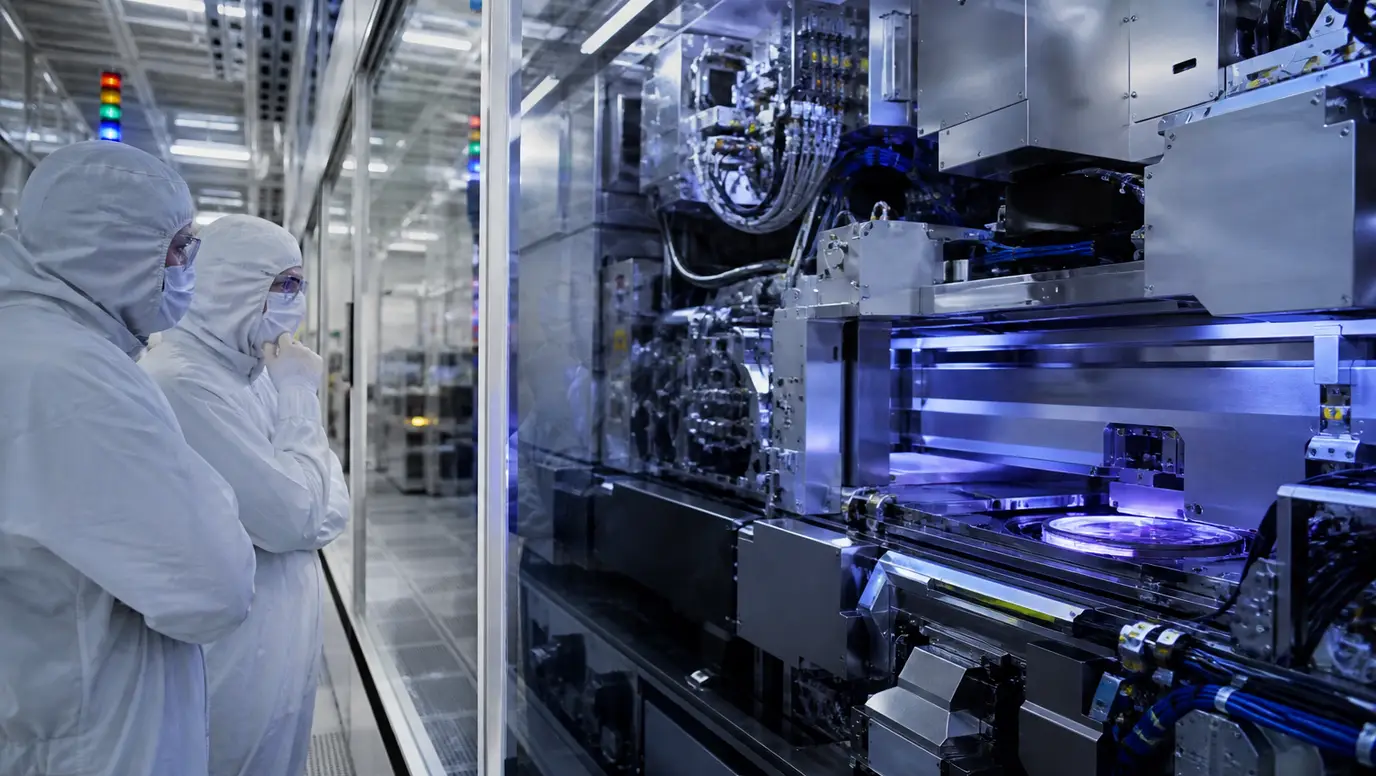
OCTOBER 14, 2026
ASML Stock Swings as AI Demand Lifts Sales Outlook and Supply Warning Caps Rally
OCTOBER 13, 2026
FTSE 100 Hits Three-Week High as Bank Stocks and Lower Gilt Yields Lift London Index
OCTOBER 13, 2026
Semiconductors Slide as Wall Street Weighs Bank Earnings and AI Rally Risk
OCTOBER 12, 2026
UnitedHealth Stock Slips as Traders Brace for Q3 Earnings and Medical-Cost Guidance
OCTOBER 11, 2026
Hang Seng Index Rebounds as Tech Stocks Lift Hong Kong Market Before China Data
OCTOBER 11, 2026
Bank Stocks Face Earnings Test as S&P 500 Rally Puts Federal Reserve in Focus
OCTOBER 10, 2026
Telecom Stocks Sink as SpaceX Spectrum Deal Resets Wireless Competition Risk
OCTOBER 10, 2026
Russell 2000 Stocks Rebound as Treasury Yields Keep Small-Cap Index on Alert
OCTOBER 9, 2026
Delta Air Lines Stock Falls as Fuel Costs Cut Into Airline Profit Outlook
OCTOBER 8, 2026
PepsiCo Stock Climbs as Earnings Beat Meets North America Warning
OCTOBER 4, 2026
Nvidia Stock Hits Record as AI Buyback Puts Cash Returns in Focus
OCTOBER 3, 2026
Synaptics Stock Jumps as onsemi Semiconductor Deal Turns to $5.7 Billion Cash Offer
OCTOBER 2, 2026
Nike Stock Slides as Revenue Miss and China Weakness Deepen Turnaround Test
OCTOBER 1, 2026
Stacks STX Jumps as Bitcoin DeFi Yield Narrative Revives Crypto Market Rotation
SEPTEMBER 30, 2026
Carnival CCL Stock Holds Rally as Record Earnings Put Cruise Shares Back in Focus
SEPTEMBER 28, 2026
Vail Resorts Stock Faces Earnings Test as Investors Watch Pass Sales and Weather Risk
SEPTEMBER 23, 2026
IonQ Stock Rally Puts Quantum Stocks Back on Wall Street's Growth Radar
SEPTEMBER 22, 2026
AMD Holds $1 Trillion Value as AI Chip Rally Keeps Stock Market Bid
SEPTEMBER 20, 2026
Berkshire Hathaway Stock Faces Succession Test as Buffett Leaves Chair
SEPTEMBER 17, 2026
Tokenized Stocks Get SEC Green Light as Stock Market Tests Onchain Trading
SEPTEMBER 5, 2026
Lululemon Stock Slumps as Guidance Cut Puts Retail Stocks on Demand Watch
AUGUST 31, 2026
GameStop Stock Jumps as Preliminary Profit Outlook Offsets Sales Drop
AUGUST 29, 2026
PayPal Stock Slide Puts Fintech Stocks on Takeover Premium Watch After Stripe Walkaway
AUGUST 28, 2026
Broadcom Earnings Put AI Stocks and Semiconductors on Demand Watch