
OCTOBER 13, 2026
FTSE 100 Hits Three-Week High as Bank Stocks and Lower Gilt Yields Lift London IndexFTSE 100 rises to a three-week high as bank stocks, softer gilts and resilient defensives offset global technology pressure.

© 1box.site 2026
OCTOBER 14, 2026
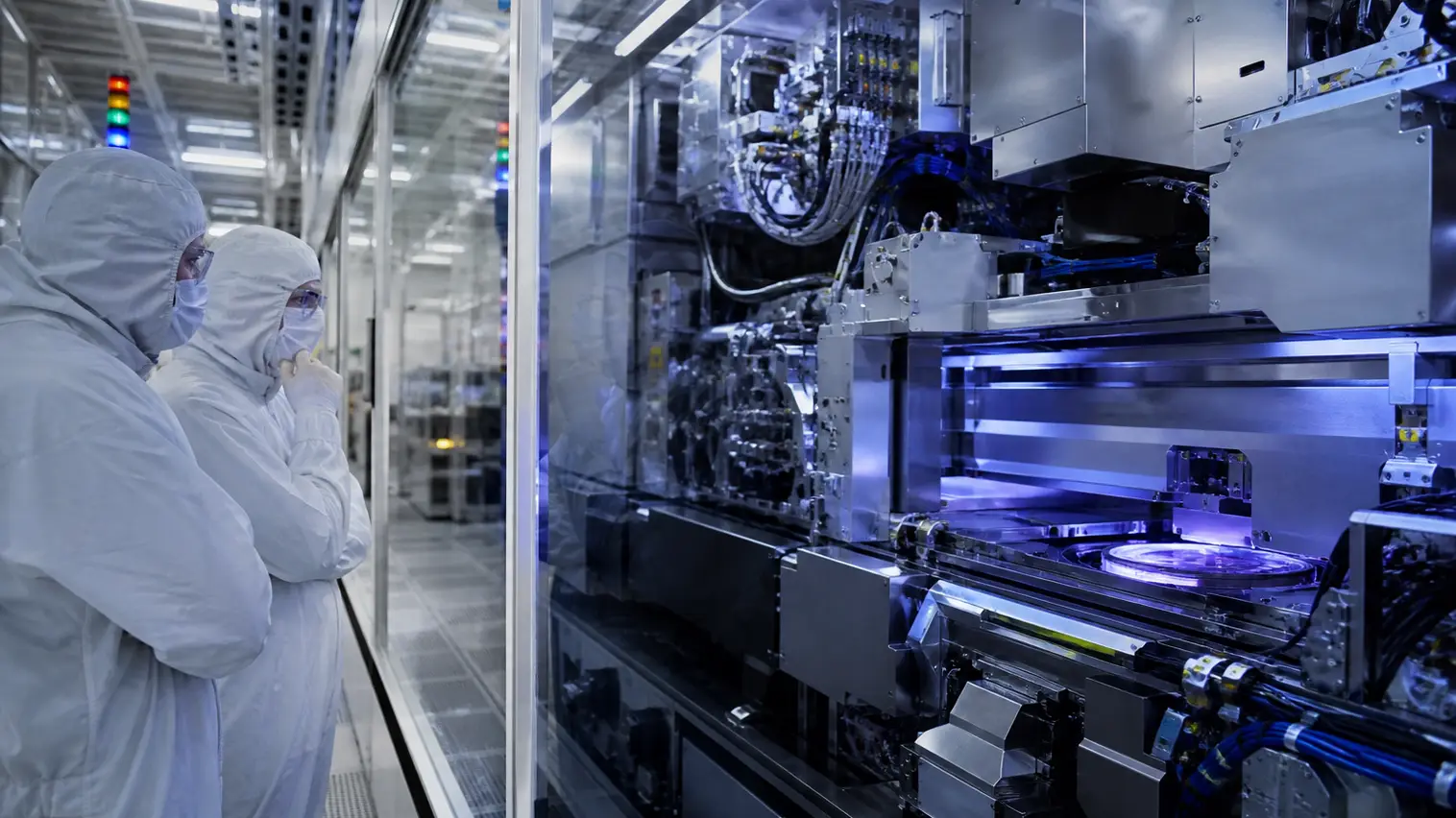
ASML stock moved into the center of the global equity market debate on Wednesday after the Dutch lithography equipment leader delivered record third-quarter earnings, lifted its 2026 sales outlook and signaled that artificial intelligence demand is stretching industry capacity.
The update gave investors a fresh read on one of the most important supply-chain bottlenecks behind the AI infrastructure buildout. ASML reported third-quarter total net sales of €11.7 billion, net income of €5.0 billion and a gross margin of 57.5%, underscoring how aggressively chipmakers are still investing in advanced manufacturing tools despite higher interest rates and a more cautious market backdrop.
Management now expects full-year 2026 total net sales of €44 billion to €45 billion, with a gross margin around 56%. For the fourth quarter, the company guided for sales of €14.2 billion to €15.2 billion and a gross margin around 57%, keeping the focus on whether equipment demand can continue to outrun concerns about valuation across AI-linked stocks.
The strongest part of the report was the message on customer demand. ASML said clients are increasing short- and medium-term equipment forecasts, driven mainly by expectations for the size and duration of AI-related chip investment. That language is important for stock market investors because ASML sits upstream from the major foundries, memory producers and logic-chip manufacturers that supply the AI ecosystem.
Installed Base Management sales reached €3.3 billion, above guidance, as customers sought productivity upgrades for existing tools. That suggests the AI cycle is not only about buying new systems, but also about extracting more output from machines already installed at customer fabs. For equity investors, that creates a recurring-revenue angle that can soften worries about the traditional boom-and-bust pattern in semiconductor capital spending.
The company also reported basic earnings per share of €12.95, up from €7.59 in the prior quarter. New lithography systems sold rose to 113 units from 86 in the second quarter, while used systems sold increased to eight from five. Those figures point to broad execution during a period when investors have been highly sensitive to any sign of slowing AI infrastructure spending.
The stock reaction was less straightforward than the headline numbers. ASML shares were volatile as traders weighed the stronger profit and guidance against concerns that capacity constraints could limit near-term upside. The company indicated that customer demand for some systems is rising faster than supply can fully satisfy, a dynamic that supports pricing power but can also cap shipment growth if production cannot scale quickly enough.
That tension explains why the report matters beyond one company. AI stocks have been a major driver of market gains, but the rally increasingly depends on evidence that earnings can justify elevated valuations. ASML’s results provide support for the long-term spending case, while also reminding investors that the supply chain for advanced chips remains complex and vulnerable to bottlenecks.
Cash returns added another shareholder-friendly element to the update. ASML said it purchased about €4.1 billion of shares during the third quarter under its 2026–2028 buyback program and declared an interim dividend of €1.88 per ordinary share, payable in November. Those actions may help long-term holders look past short-term trading swings, especially if AI-related demand remains visible into future years.
For the broader stock market, the key question is whether ASML’s results can stabilize sentiment toward AI infrastructure names after a choppy stretch for chip-linked shares. The report offers evidence that demand is still robust at the equipment level, but investors are likely to keep testing whether the sector can keep delivering earnings growth without relying on ever-higher valuation multiples.
ASML stock may therefore remain a bellwether for the next phase of the AI trade. A sustained move higher would suggest investors are willing to reward companies with real order visibility and margin strength. Continued volatility, by contrast, would show that the market is becoming more selective, even when earnings are strong.
For now, the balance of the report is constructive but not risk-free. ASML confirmed that AI-driven demand is still powerful, raised its sales outlook and delivered record profitability. Yet the same demand surge is creating capacity questions that traders cannot ignore. That combination makes the stock one of the clearest tests of whether the AI investment cycle still has enough earnings momentum to support the next leg of the market rally.
OCTOBER 13, 2026
FTSE 100 Hits Three-Week High as Bank Stocks and Lower Gilt Yields Lift London Index
OCTOBER 13, 2026
Semiconductors Slide as Wall Street Weighs Bank Earnings and AI Rally Risk
OCTOBER 12, 2026
UnitedHealth Stock Slips as Traders Brace for Q3 Earnings and Medical-Cost Guidance
OCTOBER 11, 2026
Hang Seng Index Rebounds as Tech Stocks Lift Hong Kong Market Before China Data
OCTOBER 11, 2026
Bank Stocks Face Earnings Test as S&P 500 Rally Puts Federal Reserve in Focus
OCTOBER 10, 2026
Telecom Stocks Sink as SpaceX Spectrum Deal Resets Wireless Competition Risk
OCTOBER 10, 2026
Russell 2000 Stocks Rebound as Treasury Yields Keep Small-Cap Index on Alert
OCTOBER 9, 2026
Delta Air Lines Stock Falls as Fuel Costs Cut Into Airline Profit Outlook
OCTOBER 8, 2026
PepsiCo Stock Climbs as Earnings Beat Meets North America Warning
OCTOBER 4, 2026
Nvidia Stock Hits Record as AI Buyback Puts Cash Returns in Focus
OCTOBER 3, 2026
Synaptics Stock Jumps as onsemi Semiconductor Deal Turns to $5.7 Billion Cash Offer
OCTOBER 2, 2026
Nike Stock Slides as Revenue Miss and China Weakness Deepen Turnaround Test
OCTOBER 1, 2026
Stacks STX Jumps as Bitcoin DeFi Yield Narrative Revives Crypto Market Rotation
SEPTEMBER 30, 2026
Carnival CCL Stock Holds Rally as Record Earnings Put Cruise Shares Back in Focus
SEPTEMBER 28, 2026
Vail Resorts Stock Faces Earnings Test as Investors Watch Pass Sales and Weather Risk
SEPTEMBER 23, 2026
IonQ Stock Rally Puts Quantum Stocks Back on Wall Street's Growth Radar
SEPTEMBER 22, 2026
AMD Holds $1 Trillion Value as AI Chip Rally Keeps Stock Market Bid
SEPTEMBER 20, 2026
Berkshire Hathaway Stock Faces Succession Test as Buffett Leaves Chair
SEPTEMBER 17, 2026
Tokenized Stocks Get SEC Green Light as Stock Market Tests Onchain Trading
SEPTEMBER 5, 2026
Lululemon Stock Slumps as Guidance Cut Puts Retail Stocks on Demand Watch
AUGUST 31, 2026
GameStop Stock Jumps as Preliminary Profit Outlook Offsets Sales Drop
AUGUST 29, 2026
PayPal Stock Slide Puts Fintech Stocks on Takeover Premium Watch After Stripe Walkaway
AUGUST 28, 2026
Broadcom Earnings Put AI Stocks and Semiconductors on Demand Watch
AUGUST 27, 2026
Russell 2000 Stalls as Treasury Yields Revive Federal Reserve Risk for Small-Cap Stocks
AUGUST 26, 2026
Intuit Stock Slide Puts Software Stocks on Guidance Watch After Fiscal 2027 Outlook
AUGUST 25, 2026
Dick's Sporting Goods Stock Slide Puts Retail Stocks on Foot Locker Watch
AUGUST 24, 2026
Nikkei 225 Index Slide Puts AI Stocks and Semiconductors on Yield Watch
AUGUST 24, 2026
PDD Stock Volatility Puts China Growth Stocks on Temu Margin Watch
AUGUST 23, 2026
Marvell Stock Faces AI Infrastructure Test as Traders Weigh Rich Chip Valuations
AUGUST 22, 2026
Ross Stores Stock Rally Puts Growth Stocks Back on Retail Watch