
OCTOBER 22, 2026
Nasdaq Leads Index Market Lower as AI Stocks and Oil Shock Hit Wall StreetNasdaq leads Wall Street lower as AI stock doubts and a fresh oil price spike test index market confidence after Wednesday’s rebound.

© 1box.site 2026

JUNE 28, 2026
The index market is heading into the final two trading sessions of June with a broader story than the headline weakness in mega-cap technology. After the Friday, June 26 close, the S&P 500 slipped less than 0.1% to 7,354.02, the Dow Jones Industrial Average eased 0.1% to 51,876.11, and the Nasdaq Composite lost 0.2% to 25,297.62. Yet the Russell 2000 added 0.1% to 3,010.08, keeping attention on a small-cap bid that has become a key counterweight to pressure in growth-heavy benchmarks.
That split makes index positioning more important than usual before quarter-end. The S&P 500 ended the week down 2%, while the Nasdaq dropped 4.6%, reflecting the drag from high-multiple technology and AI-linked shares. The Dow rose 0.6% for the week and the Russell 2000 gained 1%, suggesting investors are still willing to rotate rather than abandon equities outright.
The latest index reconstitution data reinforces the view that market participation has improved beneath the largest stocks. The broad U.S. equity universe expanded to about $75.6 trillion in market capitalization at the April 30 ranking date, up 29% from the prior year’s rebalance. The breakpoint separating large-cap and small-cap membership climbed 24% to $5.7 billion, a sign that gains were not confined to a narrow group of market leaders.
The Russell 2000’s total market value increased to about $3.5 trillion from $2.7 trillion a year earlier, while the smallest company in the benchmark also moved higher in size. For index investors, that matters because small-cap strength can soften the message from a falling Nasdaq. A market where the S&P 500 is slipping but the Russell 2000 is still advancing usually points to rotation, not a broad liquidity shock.
The other side of the index market remains concentration. The ten largest U.S. companies in the broad benchmark universe grew to roughly $26.4 trillion in combined market value, up nearly 48% from a year earlier. All of the top ten exceeded $1 trillion, leaving the S&P 500 and Nasdaq highly sensitive to relatively small changes in sentiment toward the biggest technology and communication services names.
This is why the next move in Treasury yields and the U.S. dollar may carry extra weight for index traders. Lower yields helped ease some pressure late last week, but any rebound in real rates could quickly revive valuation concerns in the Nasdaq and spill back into the S&P 500. Conversely, a stable rates backdrop would give cyclical and small-cap shares more room to extend the rotation.
With U.S. markets set to reopen on Monday, June 29, investors face a practical question: whether quarter-end rebalancing supports lagging areas of the market or forces another reduction in crowded winners. The answer could determine whether the S&P 500 stabilizes near recent levels or whether Nasdaq weakness becomes a broader index-market problem.
For now, the setup is mixed rather than decisively bearish. The S&P 500 has lost momentum, the Nasdaq remains the weakest major U.S. benchmark over the latest week, and the Dow is showing defensive resilience. But the Russell 2000’s year-to-date gain of more than 21% signals that domestic breadth has not disappeared. That makes small-cap follow-through the most important confirmation signal for the index market as June closes and the second half begins.
OCTOBER 22, 2026
Nasdaq Leads Index Market Lower as AI Stocks and Oil Shock Hit Wall Street
OCTOBER 22, 2026
Tesla Stock Falls as Profit Drop and SpaceX Merger Questions Eclipse Robotaxi Progress
OCTOBER 21, 2026
Russell 2000 Index Outruns Wall Street as Earnings Breadth Counters Tech Drag
OCTOBER 21, 2026
Netflix Stock Slide Puts Media Stocks on Wall Street Alert as Ad Forecast Is Cut
OCTOBER 20, 2026
GE Aerospace and RTX Lift Industrial Stocks as Earnings Beats Reset Wall Street
OCTOBER 18, 2026
S&P 500 Stocks Face Breadth Test as AI Rout Collides With Earnings Week
OCTOBER 18, 2026
Bank Stocks Find Earnings Support as Consumer Spending Eases Credit Fears
OCTOBER 17, 2026
Airline Stocks Face Fuel-Cost Test as Earnings Season Moves Beyond AI
OCTOBER 16, 2026
Tesla Stock Rises as Roadster Reveal Gives EV Stocks a Break From AI Rout
OCTOBER 15, 2026
Morgan Stanley Stock Slips as Record Wealth Revenue Fails to Offset Cost Worries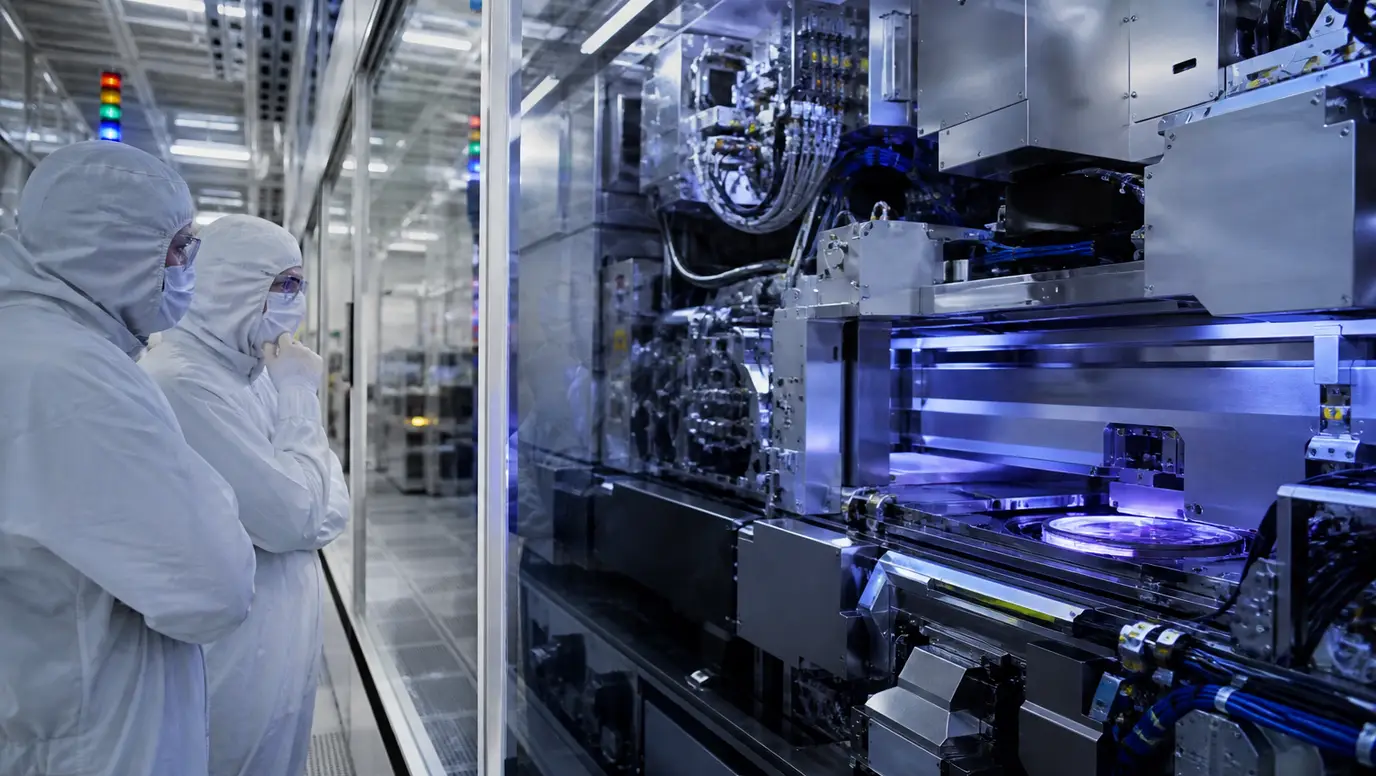
OCTOBER 14, 2026
ASML Stock Swings as AI Demand Lifts Sales Outlook and Supply Warning Caps Rally
OCTOBER 13, 2026
FTSE 100 Hits Three-Week High as Bank Stocks and Lower Gilt Yields Lift London Index
OCTOBER 13, 2026
Semiconductors Slide as Wall Street Weighs Bank Earnings and AI Rally Risk
OCTOBER 12, 2026
UnitedHealth Stock Slips as Traders Brace for Q3 Earnings and Medical-Cost Guidance
OCTOBER 11, 2026
Hang Seng Index Rebounds as Tech Stocks Lift Hong Kong Market Before China Data
OCTOBER 11, 2026
Bank Stocks Face Earnings Test as S&P 500 Rally Puts Federal Reserve in Focus
OCTOBER 10, 2026
Telecom Stocks Sink as SpaceX Spectrum Deal Resets Wireless Competition Risk
OCTOBER 10, 2026
Russell 2000 Stocks Rebound as Treasury Yields Keep Small-Cap Index on Alert
OCTOBER 9, 2026
Delta Air Lines Stock Falls as Fuel Costs Cut Into Airline Profit Outlook
OCTOBER 8, 2026
PepsiCo Stock Climbs as Earnings Beat Meets North America Warning
OCTOBER 4, 2026
Nvidia Stock Hits Record as AI Buyback Puts Cash Returns in Focus
OCTOBER 3, 2026
Synaptics Stock Jumps as onsemi Semiconductor Deal Turns to $5.7 Billion Cash Offer
OCTOBER 2, 2026
Nike Stock Slides as Revenue Miss and China Weakness Deepen Turnaround Test
OCTOBER 1, 2026
Stacks STX Jumps as Bitcoin DeFi Yield Narrative Revives Crypto Market Rotation
SEPTEMBER 30, 2026
Carnival CCL Stock Holds Rally as Record Earnings Put Cruise Shares Back in Focus
SEPTEMBER 28, 2026
Vail Resorts Stock Faces Earnings Test as Investors Watch Pass Sales and Weather Risk
SEPTEMBER 23, 2026
IonQ Stock Rally Puts Quantum Stocks Back on Wall Street's Growth Radar
SEPTEMBER 22, 2026
AMD Holds $1 Trillion Value as AI Chip Rally Keeps Stock Market Bid
SEPTEMBER 20, 2026
Berkshire Hathaway Stock Faces Succession Test as Buffett Leaves Chair
SEPTEMBER 17, 2026
Tokenized Stocks Get SEC Green Light as Stock Market Tests Onchain Trading