
OCTOBER 7, 2026
Marvell Stock Rally Puts AI Semiconductors Back in Focus as Treasury Yields ReturnMarvell stock keeps AI semiconductors in focus after bold 2031 revenue targets, but rising Treasury yields test the tech rally.

© 1box.site 2026

JUNE 19, 2026
U.S. equity traders returned their attention to growth and semiconductor leadership after the Federal Reserve’s latest policy signals briefly unsettled risk appetite. The strongest fresh activity across major market coverage is in stocks, where the post-Fed repricing, a sharp chip-stock bid and renewed debate over market breadth are driving the most immediate trading narrative.
The latest available market action showed technology-linked exposure outperforming broader blue-chip benchmarks. Nasdaq-tracking shares advanced strongly, while S&P 500 exposure also improved and Dow-linked trading lagged, highlighting a familiar split between AI-led momentum and more rate-sensitive cyclical stocks.
Semiconductor stocks moved back to the center of the equity trade as investors looked past the immediate discomfort caused by the Fed’s rate outlook. Nvidia extended its role as the market’s primary AI bellwether, while Micron posted an even larger advance as traders continued to price robust demand for memory tied to data centers, accelerators and high-performance computing infrastructure.
The move matters because the broader stock market has leaned heavily on a relatively concentrated group of technology leaders. When chip stocks rise, they can quickly repair sentiment across the Nasdaq and parts of the S&P 500. When they stall, concerns about narrow leadership and stretched valuations tend to return just as quickly.
For now, buyers appear willing to defend the AI infrastructure theme, but the bar for continued upside is rising. Investors are watching whether revenue growth, margins and capital spending plans can justify valuations that already discount several years of strong demand. That makes upcoming corporate commentary especially important for any sustained breakout in the sector.
The Fed remains the main counterweight to the equity rally. Policymakers’ latest projections reinforced the idea that inflation risks have not fully disappeared, limiting confidence that lower borrowing costs will arrive quickly. That message hit rate-sensitive areas of the market and kept traders cautious toward companies whose valuations depend heavily on long-duration earnings assumptions.
Higher-for-longer rate expectations can affect stocks in two ways. First, elevated Treasury yields increase the discount rate applied to future profits, a challenge for expensive growth shares. Second, tighter financial conditions can pressure consumer demand and corporate investment, which matters for industrials, banks, retailers and smaller companies that need broader economic momentum.
Still, the equity market’s reaction has not been uniformly negative. The resilience of AI-linked shares suggests investors are distinguishing between companies exposed to structural demand and those more dependent on the business cycle. That selectivity is likely to define trading into the next earnings updates.
The immediate question for Wall Street is whether the Nasdaq’s recovery can broaden beyond the largest chip and platform names. A healthy rally would include stronger participation from software, financials, industrials and consumer shares. A narrower rally would leave indexes more vulnerable to profit-taking if one or two mega-cap leaders lose momentum.
Traders are also watching the relationship between the Nasdaq and the Dow. Recent performance shows growth leadership returning, but it also underscores that the wider market has not fully embraced the move. If the Dow and equal-weighted benchmarks continue to trail, portfolio managers may view the rally as powerful but fragile.
Near term, the stock-market setup remains constructive but uneven. AI demand, semiconductor pricing power and strong balance sheets continue to support the bullish case, while Fed uncertainty and concentration risk argue against complacency. The next leg for the Nasdaq may depend less on whether chip stocks can rise again and more on whether the rest of the market can finally join them.
OCTOBER 7, 2026
Marvell Stock Rally Puts AI Semiconductors Back in Focus as Treasury Yields Return
OCTOBER 6, 2026
Broadcom Stock Rises as Anthropic AI Financing Puts Semiconductors in Focus
OCTOBER 5, 2026
Qualcomm Stock Puts Semiconductors on Watch as Huawei AI Patent Deal Meets Arm Trial Risk
OCTOBER 3, 2026
Synaptics Stock Jumps as onsemi Semiconductor Deal Turns to $5.7 Billion Cash Offer
SEPTEMBER 9, 2026
Qualcomm Stock Climbs as Amazon AI Chip Deal Lifts Semiconductors
SEPTEMBER 7, 2026
Nikkei 225 Jumps as Semiconductors Lift Indexes in Holiday-Thinned Trade
SEPTEMBER 6, 2026
Nasdaq 100 Faces Indexes Test as Semiconductors Fade Before Federal Reserve Inflation Data
SEPTEMBER 3, 2026
Broadcom Stock Slips as AI Semiconductors Surge but Guidance Tests Bulls
AUGUST 30, 2026
Marvell Technology Stock Pullback Puts AI Stocks and Semiconductors on Margin Watch
AUGUST 28, 2026
Broadcom Earnings Put AI Stocks and Semiconductors on Demand Watch
AUGUST 24, 2026
Nikkei 225 Index Slide Puts AI Stocks and Semiconductors on Yield Watch
AUGUST 21, 2026
Nvidia Stock Rebound Puts AI Stocks on Earnings Watch as Yields Test Semiconductors
AUGUST 19, 2026
AMD Stock Slides as AI Semiconductors Face Federal Reserve Minutes Test
AUGUST 17, 2026
Marvell Stock Jumps as AI Semiconductors Face Data Center Earnings Test
AUGUST 13, 2026
Applied Materials Earnings Put AI Stocks and Semiconductors on Equipment Demand Watch
AUGUST 12, 2026
Super Micro Surge Puts AI Stocks and Semiconductors Back in Market Lead
AUGUST 9, 2026
Nvidia Stock Faces Earnings Test as AI Software Push Extends Semiconductors Rally
AUGUST 6, 2026
AMD Stock Rebounds as AI Semiconductors Test Margin Expectations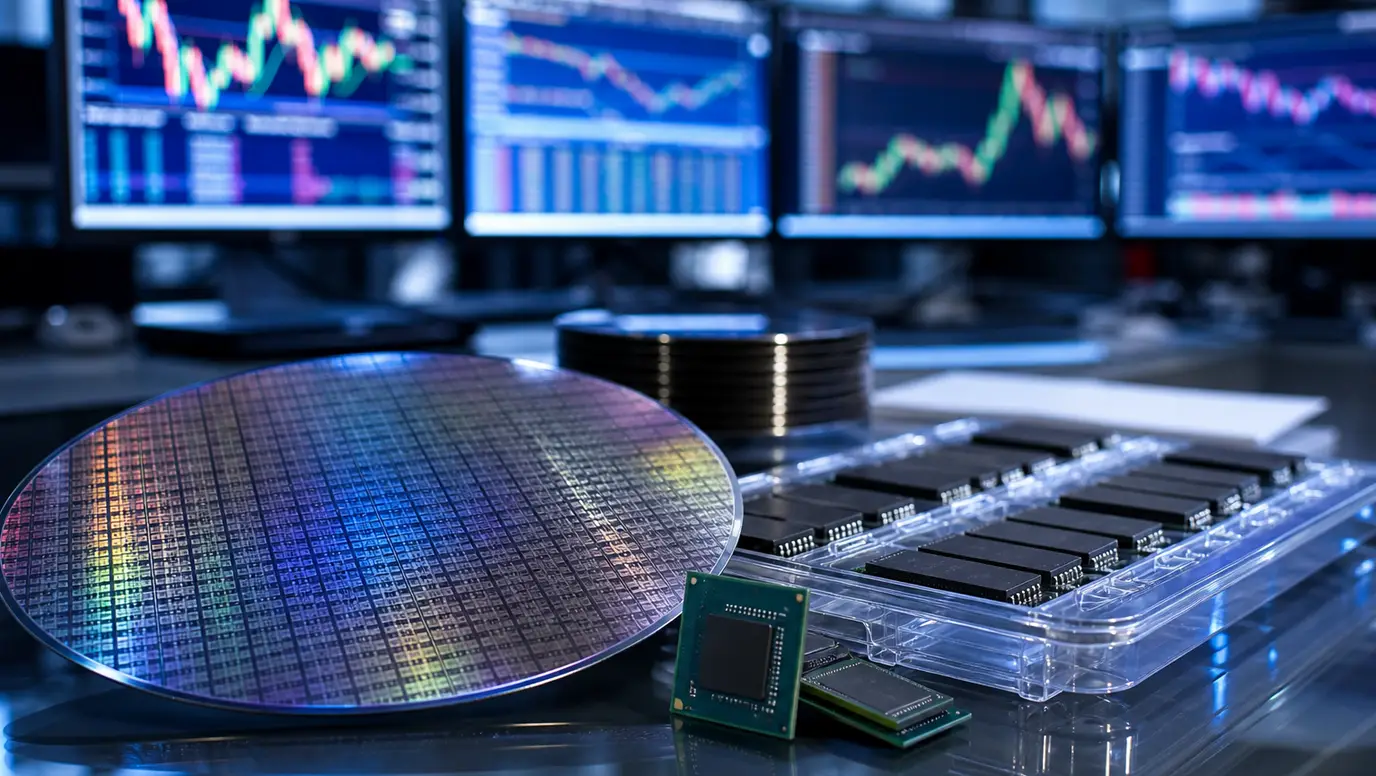
AUGUST 3, 2026
Micron Slide Tests Semiconductors and AI Stocks as Earnings Rotation Builds
JULY 28, 2026
ASML and Nvidia Selloff Drags Semiconductors as China DUV Report Hits Stocks
JULY 20, 2026
Intel and Texas Instruments Put Semiconductors in Focus as Stocks Enter Earnings Crunch
JULY 15, 2026
ASML Outlook Lifts AI Stocks as Semiconductors Reprice 2026 Demand
JULY 13, 2026
Micron and Sandisk Slide as AI Memory Boom Faces Earnings Test
JULY 12, 2026
Meta’s AI Cloud Push Gives Stock Market a New Test for Capex Payoff
JULY 10, 2026
SK Hynix Nasdaq Debut Puts AI Memory Trade Back at Center of Stock Market
JULY 9, 2026
Broadcom’s Apple Chip Deal Gives Stock Market a Hard-Cash Test for AI Supplier Valuations
JULY 8, 2026
Nasdaq Futures Slip as Chip Rout and Fed Minutes Put Index Market on Alert
JULY 7, 2026
AI Chip Reversal Tests Index Market Rally as S&P 500 Retreats From Record Zone
JULY 7, 2026
AI Chip Rout Puts Stock Market Back on Valuation Watch as Nasdaq Futures Slide
JULY 6, 2026
Stock Market Faces Earnings Breadth Test as Fed Minutes Loom After Chip Rout