
JUNE 1, 2026
Dollar Finds Support as Oil Risk and Payrolls Week Reset Forex TradeThe US dollar steadied as oil risk, Treasury yields and US labor data kept forex traders cautious before a heavy policy week.

© 1box.site 2026
JUNE 1, 2026
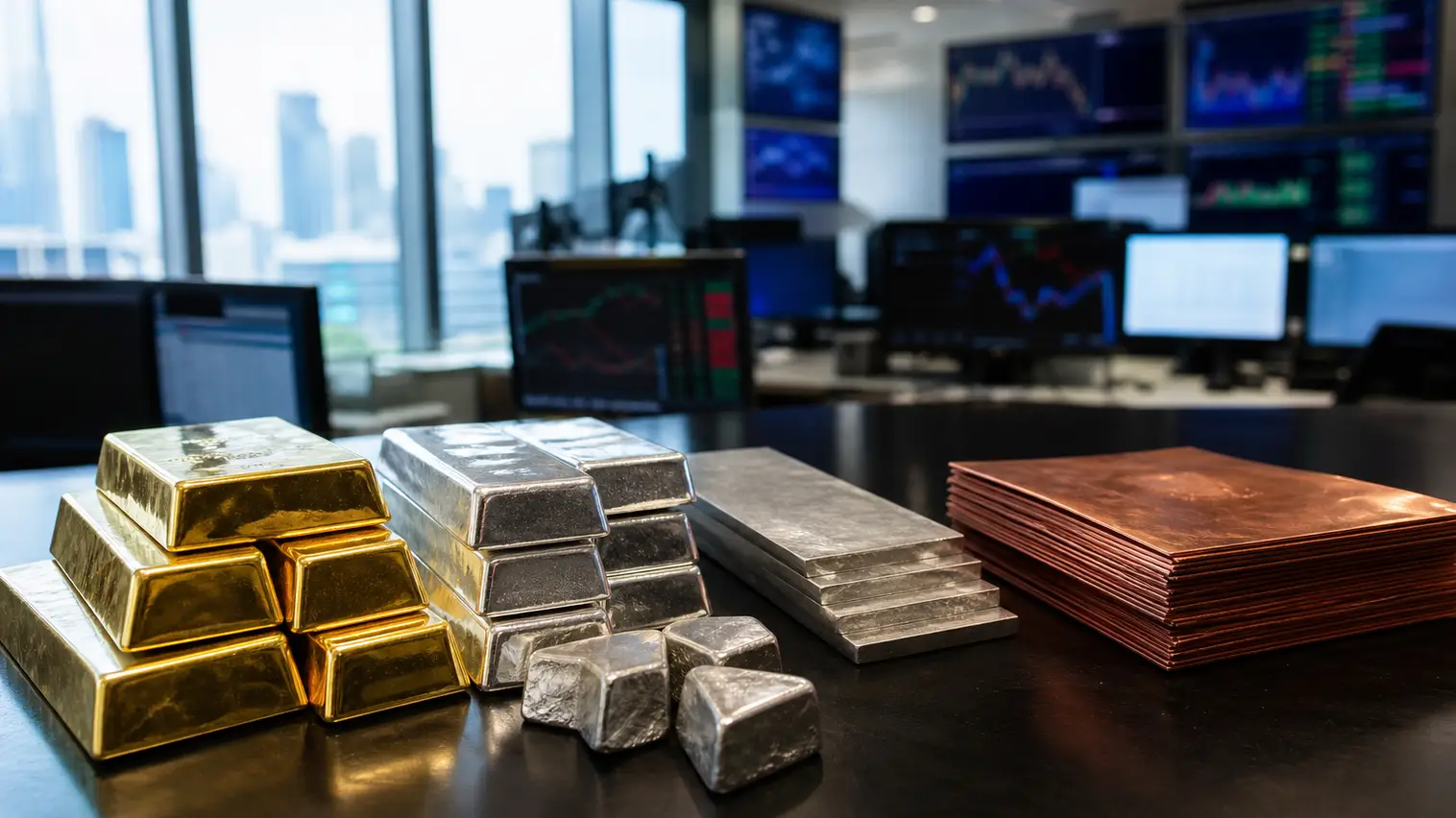
Gold edged lower on Monday, June 1, as the metals market opened the new month with a sharper split between rate-sensitive precious metals and supply-linked industrial contracts. The move came as traders weighed renewed inflation concerns from Middle East tensions against the possibility that central banks may keep policy restrictive for longer.
Spot gold traded around $4,527 an ounce in early dealing, slipping from a two-week high reached in the previous session. U.S. gold futures were also softer, reflecting a market that is still willing to hold bullion as a hedge but is becoming more selective when bond yields and the U.S. dollar remain firm.
The broader complex was less defensive. Silver held near the mid-$75 area, platinum advanced toward the mid-$1,900s, and palladium was broadly steady to slightly weaker. Copper also ticked higher in London trading, with gains limited by questions over Chinese demand and the potential effect of trade policy on refined metal flows.
Gold’s pullback shows how the metal is being pulled in opposite directions. Geopolitical stress usually supports haven buying, but energy-price pressure can also lift inflation expectations and reduce the chance of near-term interest-rate relief. That combination can be difficult for non-yielding bullion, particularly when Treasury yields stay elevated.
For metals traders, the key issue is not simply whether risk appetite improves or deteriorates. The more important question is whether inflation risk forces the Federal Reserve and other major central banks to delay easing. If markets continue to price a higher-for-longer policy path, gold may struggle to extend rallies even when headline risk remains high.
The U.S. dollar remains another constraint. A steadier dollar makes dollar-priced metals more expensive for non-U.S. buyers and can slow momentum in gold and silver after sharp advances. That currency effect is especially important at current price levels, where investors are more sensitive to changes in real yields and short-term positioning.
Silver’s firmer tone suggests that traders are still treating the metal as more than a pure gold proxy. Industrial demand from electrification, solar equipment and electronics continues to support the medium-term narrative, even as high prices raise the risk of substitution and slower physical buying.
Platinum’s advance was also notable because it added strength outside the gold trade. The metal has benefited from a mix of supply concerns, relative-value buying and industrial exposure. With prices still well below gold on an absolute basis, some investors appear willing to rotate into platinum when the broader precious-metals basket remains active.
Palladium remains the more cautious part of the group. Demand uncertainty tied to automotive usage continues to limit enthusiasm, and the metal has not attracted the same breadth of buying seen in silver or platinum. That divergence keeps platinum-group metals volatile and highly sensitive to shifts in industrial sentiment.
Copper’s modest rise kept base metals in focus, but the move lacked the conviction of a full breakout. Traders continue to monitor Chinese factory and construction signals, as well as the possibility of U.S. trade measures that could alter regional premiums and physical flows.
On the supply side, copper still has support from tight mine conditions and strong long-term demand expectations linked to power grids, data centers and clean-energy infrastructure. However, short-term demand indicators remain uneven, leaving the contract vulnerable to profit-taking when macro data disappoint.
Other base metals were mixed, reinforcing the message that this is not a uniform commodity rally. Aluminum and zinc showed slight firmness, while nickel lagged. That pattern points to a market driven by individual supply-demand stories rather than one broad inflation trade.
The next test for metals will be whether gold can hold its recent range while silver, platinum and copper retain independent support. A softer dollar or lower yields would likely revive bullish momentum across the complex, while stronger U.S. data could renew pressure on gold and expose leveraged long positions in silver.
For now, the metals market remains active but fragmented. Gold is trading as a cautious haven, silver and platinum are attracting relative-strength flows, and copper is balancing long-term scarcity against immediate demand doubts. That split may define the opening week of June unless central-bank signals or geopolitical headlines deliver a clearer catalyst.
JUNE 1, 2026
Dollar Finds Support as Oil Risk and Payrolls Week Reset Forex Trade
MAY 31, 2026
EUR/USD Faces June Data Test as Dollar Traders Shift From PCE to Payrolls
MAY 31, 2026
Copper Premium Keeps Metals Market Active as Gold Turns to June Jobs Data
MAY 30, 2026
Yen Intervention Tally Puts Dollar Bulls on Notice as Forex Market Enters June
MAY 30, 2026
Silver Holds the Spotlight as Month-End Metals Trade Splits After Inflation Data
MAY 29, 2026
Gold Rebounds as Softer Yields Lift Metals, While Copper Holds Monthly Advance
MAY 29, 2026
Dollar Softens as Cooler Core PCE and Easing Haven Demand Shift Forex Focus to Euro and Yen
MAY 28, 2026
Gold Tests Two-Month Low as PCE Countdown Keeps Metals on Defensive
MAY 28, 2026
Dollar Rally Faces PCE Test as Yen Intervention Risk Returns to FX Desks
MAY 27, 2026
Dollar Breakout Bets Build as Fed Inflation Focus Pressures Yen and Euro
MAY 27, 2026
Silver Leads Metals Lower as Copper Resilience Highlights Split in Demand
MAY 26, 2026
Gold Slips as Oil Shock Revives Rate-Risk Trade in Precious Metals
MAY 26, 2026
Pound Slips as Dollar Rate Premium Returns to Center of FX Trading
MAY 25, 2026
Gold Rebounds as Lower Yields Bring Buyers Back to Precious Metals
MAY 25, 2026
Dollar Loses Haven Bid as Middle East Deal Hopes Lift Risk Currencies
MAY 24, 2026
Crypto Market Tries to Stabilize as ETF Flow Split and Leverage Flush Keep Traders Defensive
MAY 23, 2026
Euro Under Pressure Near 1.16 as Dollar Holds Policy Advantage
MAY 23, 2026
Silver Takes Lead in Metals as Gold Holds Near Late-Week Support
MAY 21, 2026
Dollar Rally Pauses as Yen Intervention Risk and Fed Caution Grip FX Markets