
MAY 27, 2026
Dollar Breakout Bets Build as Fed Inflation Focus Pressures Yen and EuroThe dollar draws fresh support as higher Treasury yields and Fed inflation concerns pressure the yen, euro and other low-yield currencies.

© 1box.site 2026
MAY 27, 2026
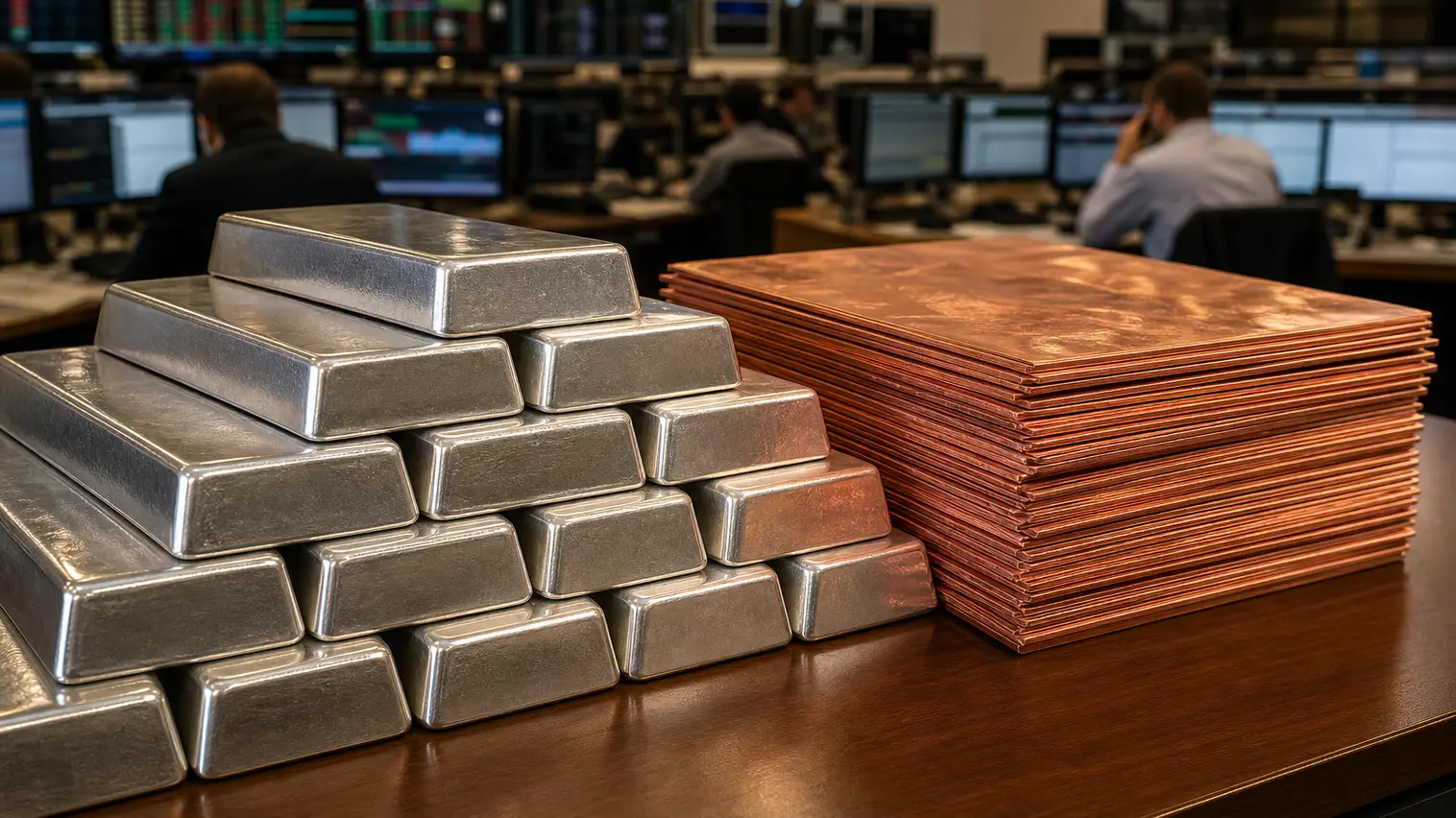
Silver came under renewed pressure on Wednesday as metals traders reassessed the balance between high interest rates, a firm US dollar and still-resilient industrial demand. The move stood out because copper held comparatively steady, leaving the metals complex divided between precious-metal caution and base-metal support.
Spot silver traded near the mid-$75 area per troy ounce in European dealing, down almost 2% on the day, while gold remained confined to the broad range that has contained bullion since its earlier-year surge. The gold-to-silver ratio widened, signaling that investors were again favoring gold’s relative stability over silver’s higher-beta exposure to both investment flows and industrial demand.
The latest decline reflects a familiar challenge for precious metals: elevated Treasury yields increase the opportunity cost of holding assets that do not generate income. That pressure has been particularly important for silver, which often amplifies moves in gold when macro traders reduce exposure to non-yielding assets.
The US dollar also remains a key headwind. A firmer dollar makes dollar-priced metals more expensive for buyers using other currencies and can limit the appeal of gold and silver during sessions when investors are not aggressively seeking havens. With Federal Reserve policy still viewed as restrictive, traders are reluctant to price a decisive upside breakout in bullion without clearer evidence of softer inflation or weaker growth.
Gold has avoided a deeper setback because central-bank buying, geopolitical uncertainty and long-term diversification demand continue to offer a floor. Silver, however, is more exposed to short-term swings in risk appetite because it sits between the precious and industrial metals camps.
Copper’s steadier tone prevented the session from becoming a uniform metals selloff. Prices held near recent highs, supported by expectations that mine supply constraints, grid investment and electrification demand will keep the physical market tighter than the headline macro backdrop suggests.
That split is important for investors. When silver falls while copper holds firm, the market is not necessarily rejecting commodities as a whole. Instead, traders appear to be separating metals tied mainly to real rates and the dollar from those with stronger links to infrastructure, manufacturing and energy-transition demand.
The divergence also complicates the outlook for silver. Strong industrial use in electronics and solar applications remains a supportive medium-term factor, but near-term price action is still being driven by dollar strength, bond yields and positioning after a sharp run earlier in the year.
Metals traders are now watching upcoming US economic releases for clues on whether the yield pressure can ease. Softer inflation or labor-market data would likely improve sentiment toward gold and silver by reviving expectations for eventual Federal Reserve rate cuts. Stronger data, by contrast, could keep real yields elevated and extend the consolidation in precious metals.
For now, the metals market is sending a mixed signal. Precious metals are struggling to regain upward momentum, but copper’s resilience suggests that demand-sensitive commodities have not lost investor support. That leaves silver at the center of the debate, caught between macro pressure from rates and the dollar on one side and industrial demand on the other.
MAY 27, 2026
Dollar Breakout Bets Build as Fed Inflation Focus Pressures Yen and Euro
MAY 26, 2026
Gold Slips as Oil Shock Revives Rate-Risk Trade in Precious Metals
MAY 26, 2026
Pound Slips as Dollar Rate Premium Returns to Center of FX Trading
MAY 25, 2026
Gold Rebounds as Lower Yields Bring Buyers Back to Precious Metals
MAY 25, 2026
Dollar Loses Haven Bid as Middle East Deal Hopes Lift Risk Currencies
MAY 24, 2026
Crypto Market Tries to Stabilize as ETF Flow Split and Leverage Flush Keep Traders Defensive
MAY 23, 2026
Euro Under Pressure Near 1.16 as Dollar Holds Policy Advantage
MAY 23, 2026
Silver Takes Lead in Metals as Gold Holds Near Late-Week Support
MAY 21, 2026
Dollar Rally Pauses as Yen Intervention Risk and Fed Caution Grip FX Markets