
MAY 26, 2026
Pound Slips as Dollar Rate Premium Returns to Center of FX TradingSterling eases as dollar resilience returns, with Fed rate risk, euro stability and yen sensitivity shaping forex market sentiment.

© 1box.site 2026
MAY 26, 2026
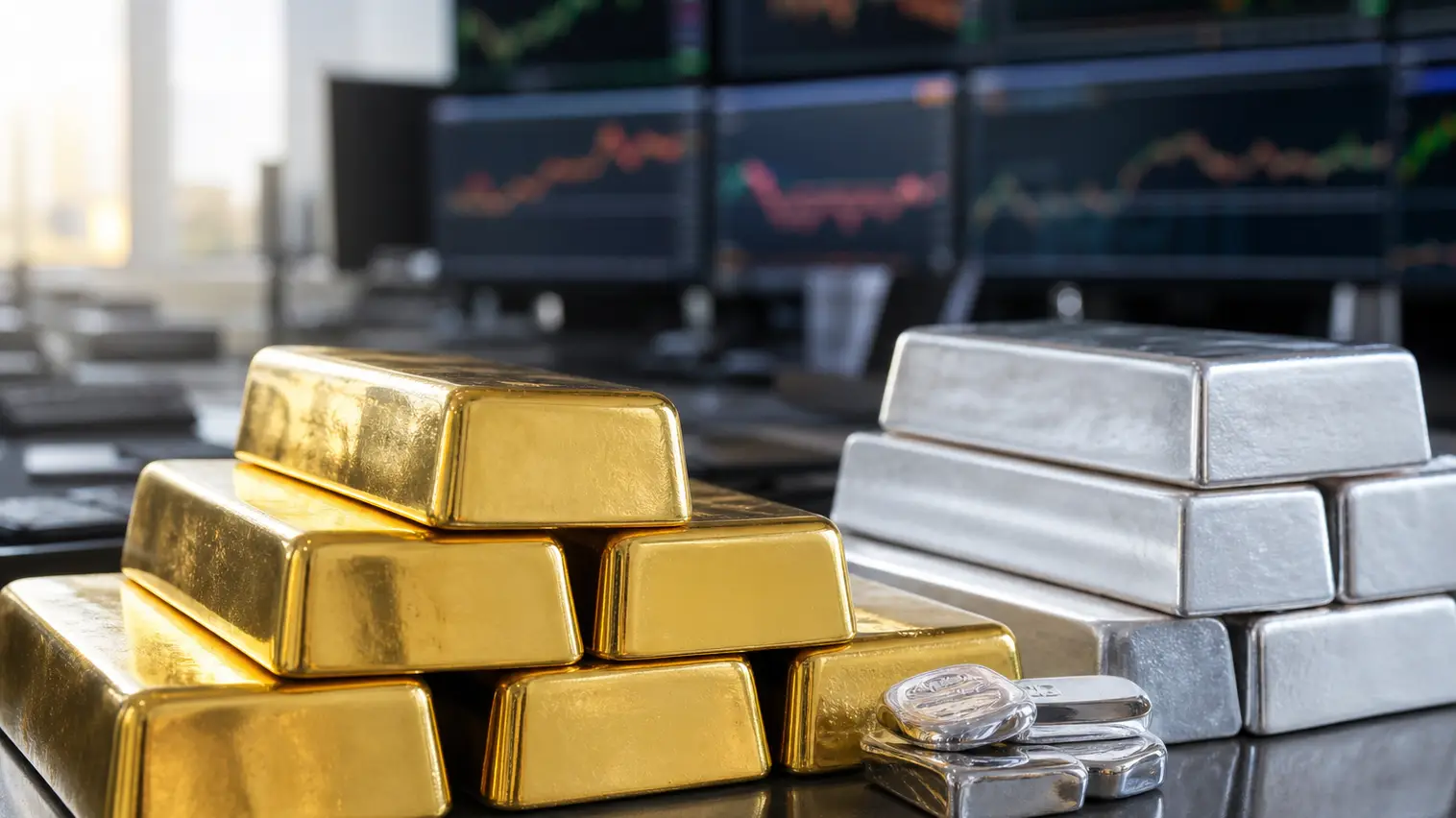
Gold turned lower on Tuesday as renewed oil volatility pushed inflation and interest-rate concerns back to the center of precious metals trading, interrupting the rebound that had followed last week’s easing in yields.
Spot bullion slipped roughly 1% toward the $4,530 an ounce area during the session, while gold futures held nearer the mid-$4,500s. Silver traded around the mid-$76 per ounce zone, with platinum close to $1,950, leaving the broader metals complex mixed rather than uniformly defensive.
The move showed that gold’s safe-haven status is not the only force driving prices. Traders have increasingly treated bullion as a rates-sensitive asset when energy prices jump, because a sustained oil shock can harden inflation expectations and reduce the room for central banks to ease policy. That combination tends to lift real-yield anxiety and raise the opportunity cost of holding non-yielding assets.
The latest pressure came after hopes for a quick de-escalation in the Middle East were tempered by fresh military developments and uncertainty over the timing of any durable agreement. Oil prices responded with renewed strength, and that was enough to change the tone across precious metals.
For gold, the immediate question is whether the market is pricing geopolitical risk as a haven catalyst or as an inflation shock. Earlier in the year, escalation supported bullion during flight-to-safety flows. More recently, however, spikes in crude have often strengthened the dollar and pushed bond yields higher, both of which can work against precious metals in the short run.
The U.S. dollar remains a key transmission channel. A firmer dollar makes dollar-denominated metals more expensive for non-U.S. buyers and can curb physical demand at the margin. That effect is especially important with gold still trading at historically elevated levels, where jewelry and retail investment demand can become more price-sensitive.
Bond yields are the second pressure point. If investors conclude that higher energy costs could keep inflation sticky, they may reduce expectations for future rate cuts or even price in a longer period of restrictive policy. That is a direct headwind for gold, silver and platinum, even when geopolitical headlines keep a risk premium in the market.
Technically, gold remains trapped in a broad consolidation band after failing to build a sustained move above recent resistance. Traders are watching the $4,500 area as a near-term support zone, with a break below it likely to invite momentum selling and a test of deeper support levels. On the upside, the market may need a cleaner move through the $4,800 to $4,900 area before buyers regain full control.
That range-bound structure helps explain why intraday headlines are producing sharp but uneven moves. Bullion is still supported by central-bank diversification, geopolitical uncertainty and concern about fiscal deficits. At the same time, rallies are being checked by the dollar, yield swings and the risk that high prices reduce spot demand in key consuming markets.
Silver’s setup is more complicated because it carries both monetary and industrial characteristics. The metal has held above important support near the low-$70s, but repeated failures to extend toward the high-$80s have kept short-term traders cautious. Industrial demand from electrification and solar supply chains remains a longer-term support, yet silver can underperform gold when risk appetite fades and liquidity tightens.
Platinum is also drawing attention after a volatile month. Prices near the $1,950 area suggest investors are still willing to hold exposure to supply-constrained metals, but the market remains vulnerable to swings in auto-sector demand expectations and broader commodity sentiment.
The next major test for precious metals is whether U.S. inflation data and Federal Reserve commentary validate the market’s renewed focus on rate risk. Softer data would likely help gold stabilize by easing yield pressure, while stronger inflation readings could make it harder for bullion to reclaim upside momentum.
For now, the metals market is not trading as a simple haven story. It is trading as a three-way contest between geopolitical demand, energy-led inflation fears and the direction of the dollar. Until one of those forces clearly dominates, gold may remain volatile around the mid-$4,000s, with silver and platinum taking their cues from both macro rates and commodity-specific demand signals.
MAY 26, 2026
Pound Slips as Dollar Rate Premium Returns to Center of FX Trading
MAY 25, 2026
Gold Rebounds as Lower Yields Bring Buyers Back to Precious Metals
MAY 25, 2026
Dollar Loses Haven Bid as Middle East Deal Hopes Lift Risk Currencies
MAY 24, 2026
Crypto Market Tries to Stabilize as ETF Flow Split and Leverage Flush Keep Traders Defensive
MAY 23, 2026
Euro Under Pressure Near 1.16 as Dollar Holds Policy Advantage
MAY 23, 2026
Silver Takes Lead in Metals as Gold Holds Near Late-Week Support
MAY 21, 2026
Dollar Rally Pauses as Yen Intervention Risk and Fed Caution Grip FX Markets