
OCTOBER 4, 2026
Nvidia Stock Hits Record as AI Buyback Puts Cash Returns in FocusNvidia stock reaches a fresh record as its historic buyback plan sharpens the stock market debate over AI growth, cash flow and valuation.

© 1box.site 2026

JUNE 5, 2026
U.S. equity benchmarks came under pressure on Friday after a much stronger May employment report forced index traders to reassess the interest-rate backdrop behind Wall Street’s spring rally.
The S&P 500 was down about 1% in late-morning trading in New York, putting the benchmark at risk of its first weekly loss after a long winning run. The Nasdaq Composite fell more sharply as expensive technology and semiconductor shares absorbed the brunt of the yield move, while the Dow Jones Industrial Average showed a smaller decline and continued to reflect stronger demand for value and cyclical components.
The trigger was the May jobs report, which showed nonfarm payrolls rising by 172,000, with the unemployment rate unchanged at 4.3%. The gain was well above market expectations and was reinforced by upward revisions to the prior two months. Average hourly earnings rose 0.3% in May and were up 3.4% from a year earlier, adding to the sense that the economy remains too firm for investors to count confidently on near-term monetary easing.
For the index market, the immediate result was a familiar but important split: stronger growth data helped reduce recession fears, yet it also lifted Treasury yields and compressed the valuation cushion for long-duration equity assets. The 10-year Treasury yield moved to roughly 4.54% from about 4.47% in the prior session, a jump large enough to unsettle the Nasdaq 100 and the growth-heavy side of the S&P 500.
The Nasdaq’s underperformance reflected the market’s sensitivity to the rate used to value future earnings. AI-linked megacaps and semiconductor leaders had carried much of the recent index advance, leaving the group more vulnerable when bond yields rose and traders reduced the probability of rate cuts later this year.
Nvidia and Broadcom were among the major technology weights under pressure, with chip stocks again acting as the swing factor for the broader tape. Their weakness mattered because the S&P 500’s capitalization structure gives a small group of large technology companies an outsized role in daily benchmark performance. Even when market breadth is steadier beneath the surface, losses in the largest AI and semiconductor names can pull the headline index lower.
That distinction made Friday’s move more nuanced than a simple risk-off session. More stocks in the S&P 500 were rising than falling during the morning, suggesting that investors were not abandoning equities across the board. Instead, the selloff was concentrated in the high-valuation segments most exposed to higher yields, while parts of the market tied to domestic demand, industrial activity and financial conditions held up better.
The Dow’s relative resilience underscored that rotation. The blue-chip benchmark had just benefited from demand for mature industrial, financial and defensive names, and Friday’s session showed that index investors are still willing to own earnings streams viewed as less dependent on aggressive valuation multiples. That rotation may not be enough to keep the broader market positive, but it changes the character of the pullback.
The employment report arrived just before the Federal Reserve’s mid-June policy meeting, making it especially important for index positioning. A softer labor reading could have strengthened the case for rate relief and extended the multiple expansion behind the S&P 500’s advance. Instead, the data pointed to continued hiring momentum, stable unemployment and wage growth that remains relevant for inflation-sensitive policymakers.
Investors are now weighing whether the strong payrolls number is mainly a signal of durable economic demand or a warning that policy may need to stay restrictive for longer. That balance is crucial for equity benchmarks. If earnings expectations continue to improve, the S&P 500 can absorb some yield pressure. If yields rise faster than profit forecasts, the index becomes more dependent on rotation away from expensive technology and into sectors with cheaper valuations.
Friday’s trade also raises the stakes for upcoming inflation data. A hot labor market combined with sticky price pressures would make it harder for bond yields to retreat, keeping pressure on Nasdaq leadership. A cooler inflation reading, by contrast, could help stabilize duration-sensitive growth stocks and allow the S&P 500 to defend its recent breakout zone.
For now, the index market is sending a clear message: economic strength is welcome, but not at any price. The payroll beat reduced fears of a sudden labor-market slowdown, yet it also challenged the rate-cut assumptions that helped lift valuations. Until yields settle, the S&P 500’s long winning streak and the Nasdaq’s AI-led leadership are likely to face a tougher test.
After several sessions focused on record highs, traders are shifting attention to support levels, sector breadth and whether buyers return to technology on weakness. The S&P 500’s ability to limit losses despite pressure from its largest components will be watched closely into the close, as will the Nasdaq’s reaction if Treasury yields hold near the upper end of their recent range.
A shallow pullback with improving breadth would suggest a healthy rotation inside a broader uptrend. A deeper decline led by megacap technology, especially if accompanied by another rise in yields, would point to a more difficult phase for index investors heading into the next round of macro data. Friday’s payroll shock has not ended the bull case, but it has made the path to fresh highs more dependent on rates than on momentum alone.
OCTOBER 4, 2026
Nvidia Stock Hits Record as AI Buyback Puts Cash Returns in Focus
SEPTEMBER 24, 2026
Nvidia, Intel and Marvell Lead AI Chip Stocks Lower as Yields Pressure Wall Street
SEPTEMBER 13, 2026
Nvidia Stock Puts AI Stocks on Wall Street Watch as Federal Reserve Risk Builds
SEPTEMBER 4, 2026
Nvidia Stock Rises as Hugging Face Deal Expands AI Platform Bet
AUGUST 26, 2026
Dow Jones and Nvidia Keep Indexes on Federal Reserve Watch After Hotter Inflation
AUGUST 21, 2026
Nvidia Stock Rebound Puts AI Stocks on Earnings Watch as Yields Test Semiconductors
AUGUST 9, 2026
Nvidia Stock Faces Earnings Test as AI Software Push Extends Semiconductors Rally
JULY 28, 2026
ASML and Nvidia Selloff Drags Semiconductors as China DUV Report Hits Stocks
JULY 18, 2026
Apple Overtakes Nvidia as Stocks Brace for AI Rotation and Earnings Test
JULY 17, 2026
Netflix Forecast Deepens Stocks Selloff as Nvidia and Micron Extend AI Rout
JULY 16, 2026
SK Hynix Selloff Hits Nvidia as AI Stocks Face Fresh Valuation Test
JULY 13, 2026
Nasdaq Leads Index Pullback as Oil-Yield Shock Hits AI Trade
JULY 13, 2026
Micron and Sandisk Slide as AI Memory Boom Faces Earnings Test
JULY 12, 2026
Meta’s AI Cloud Push Gives Stock Market a New Test for Capex Payoff
JULY 7, 2026
AI Chip Rout Puts Stock Market Back on Valuation Watch as Nasdaq Futures Slide
JULY 1, 2026
Nvidia and Micron Pullback Tests Stock Market After Record Chip Rally
JUNE 30, 2026
AI Stocks Lead Wall Street Rebound as Nvidia and Micron Steady Chip Trade
JUNE 26, 2026
Rate-Sensitive Growth Stocks Falter as PCE Keeps Fed Risk Alive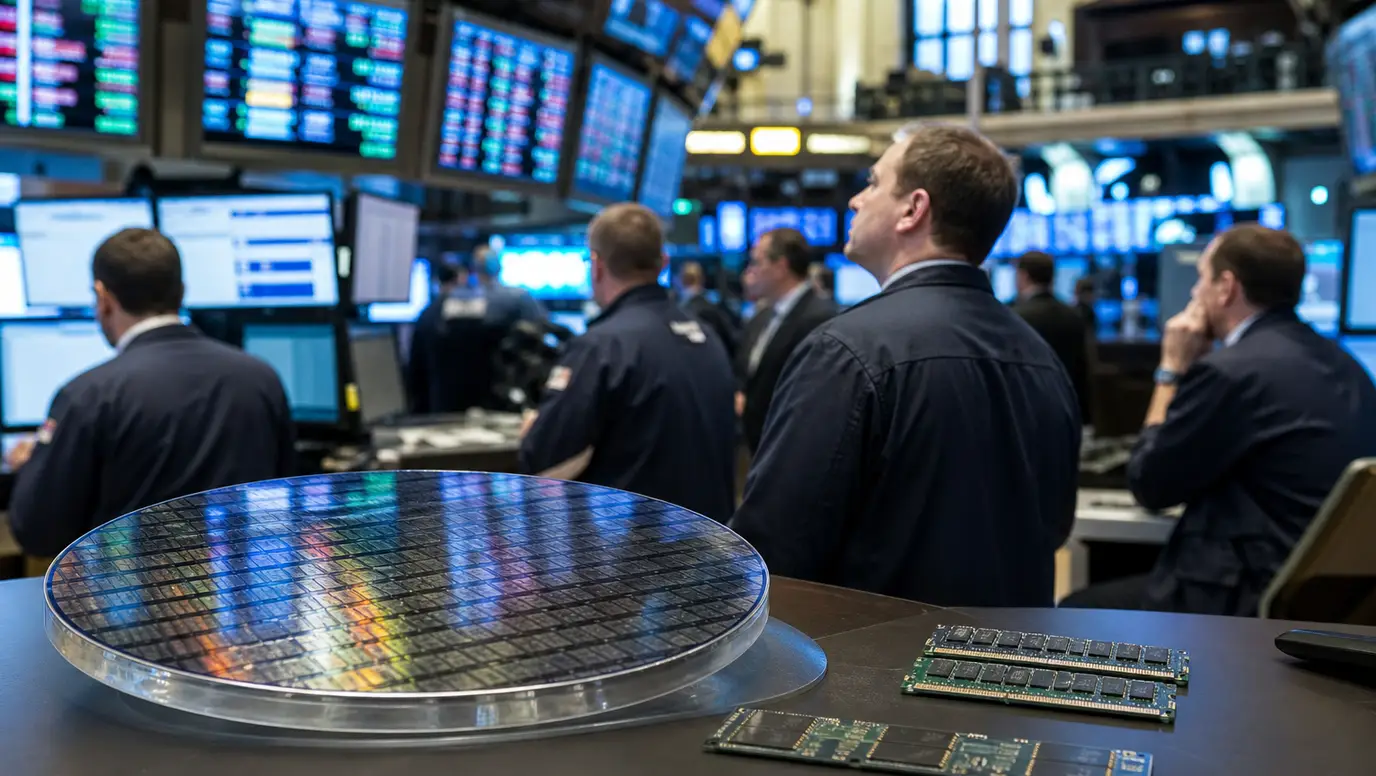
JUNE 24, 2026
Micron Volatility Turns AI Memory Into Wall Street’s Key Stock Market Test
JUNE 23, 2026
AI Stock Selloff Hits Wall Street as Rate Fears Challenge Tech Valuations
JUNE 22, 2026
Micron Earnings Put AI Memory Trade in Focus as Chip Stocks Reopen After Fed Shock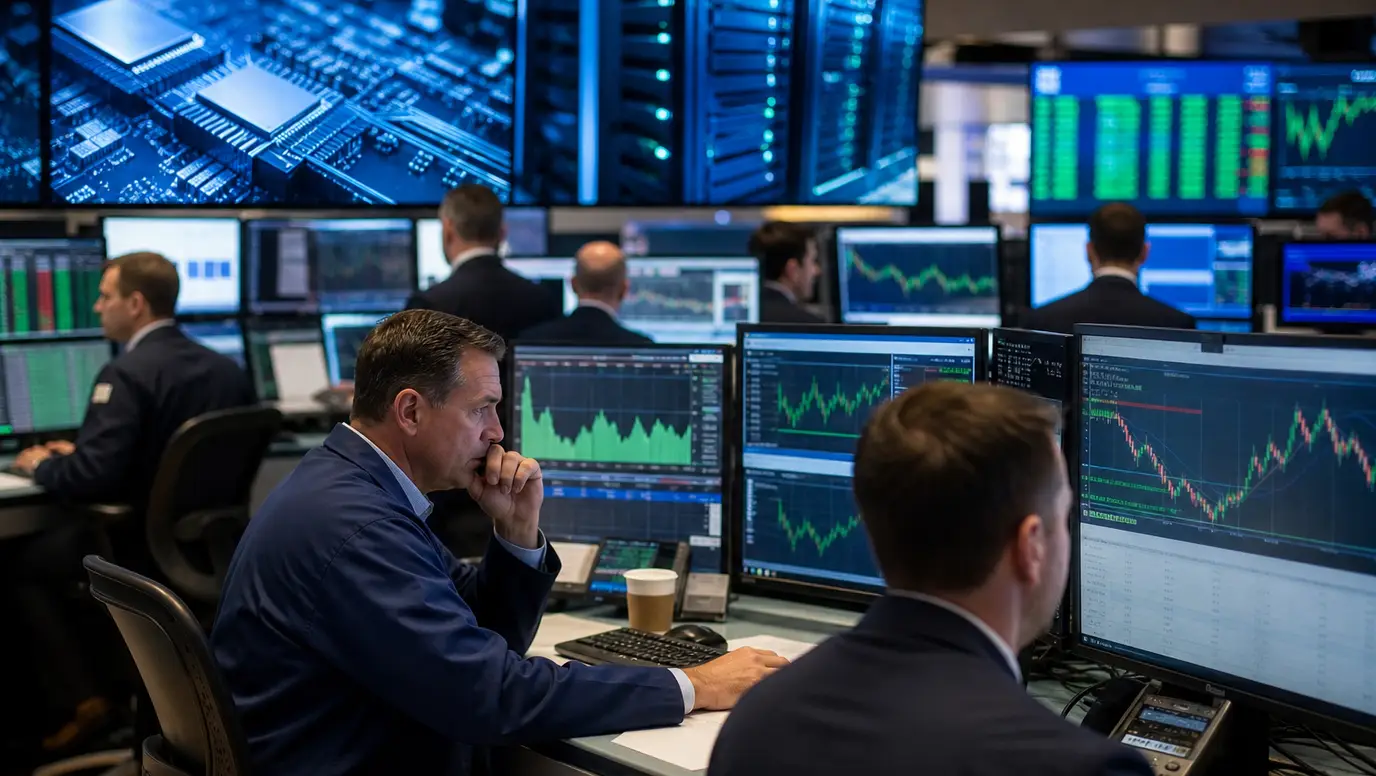
JUNE 19, 2026
Nasdaq Regains Leadership as Chip Stocks Cushion Fed Rate Jitters
JUNE 15, 2026
S&P 500 and Nasdaq Rally as Ceasefire Hopes Revive Risk Appetite
JUNE 9, 2026
Micron and Nvidia Fade Turns Stock Market’s AI Rebound Into a Breadth Test
JUNE 8, 2026
Chip Rebound Pulls Stock Market Higher as AI Dip Buyers Return
JUNE 6, 2026
Chip Rout Turns AI Trade Into Wall Street’s New Weekend Risk
JUNE 5, 2026
Strong Jobs Data Puts Stock Market Rally on Yield Watch as AI Leaders Slip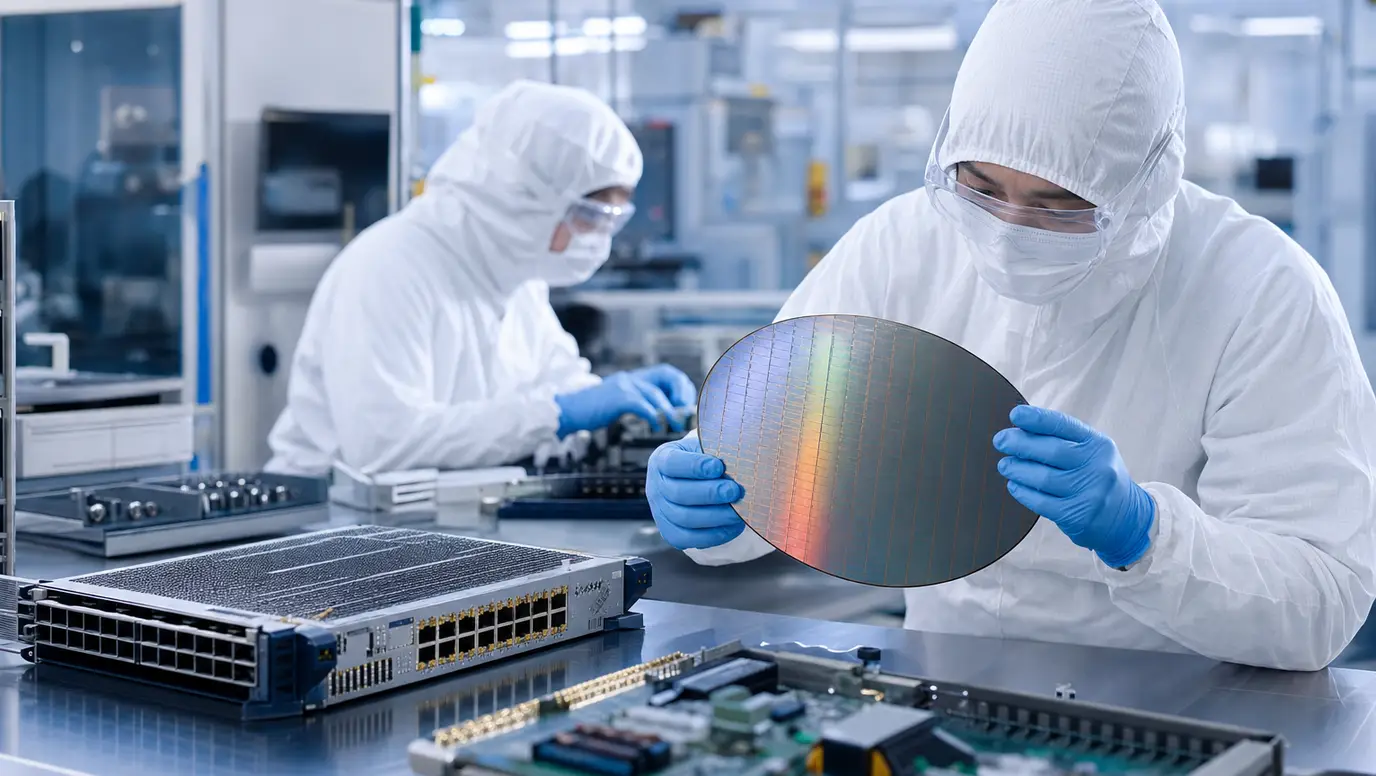
JUNE 4, 2026
Marvell Pullback Tests AI Stock Momentum After Nvidia-Fueled Breakout
JUNE 3, 2026
Stock Market Turns Selective as AI Earnings and Defensive Winners Split the Tape
JUNE 2, 2026
HPE Breakout Turns AI Infrastructure Spending Into Stock Market’s New Test