
AUGUST 26, 2026
Dow Jones and Nvidia Keep Indexes on Federal Reserve Watch After Hotter InflationDow Jones and broader indexes drift after hotter inflation data, with Nvidia earnings and Treasury yields shaping the next market test.

© 1box.site 2026

MAY 30, 2026
U.S. equity benchmarks enter June with fresh records, strong weekly momentum and a more demanding valuation debate after a late-May rally pushed the index market deeper into risk-on territory. The S&P 500 finished Friday at 7,580.06, up 0.2% on the session, extending its daily advance to seven straight sessions and closing a ninth consecutive winning week. That is the longest weekly run for the benchmark since 2023 and a clear signal that index buyers remain willing to look through sticky inflation, elevated yields and a narrow leadership profile.
The Dow Jones Industrial Average rose 0.7% to 51,032.46, while the Nasdaq Composite added 0.2% to 26,972.62, keeping the technology-heavy benchmark within reach of the 27,000 mark. Small-cap participation was less convincing: the Russell 2000 slipped 0.6% on Friday to 2,919.34, even though it still finished higher for the week. That split makes market breadth the central issue for index traders heading into the next trading month.
Weekly performance still looks constructive on the surface. The S&P 500 gained 1.4% for the week, the Nasdaq climbed 2.4%, the Dow advanced 0.9% and the Russell 2000 added 1.7%. Year to date, the Nasdaq remains the standout among the large U.S. benchmarks with a 16.1% gain, while the S&P 500 is up 10.7% and the Dow is higher by 6.2%. The Russell 2000, despite Friday’s pullback, is up 17.6% for the year, showing that the broader risk cycle has not completely abandoned smaller companies.
Still, the daily action suggests investors are becoming more selective. Index gains have leaned heavily on technology, AI infrastructure and a relatively small group of large-cap growth shares. That concentration can support headline benchmarks for long periods, but it also raises the bar for follow-through. If leadership does not broaden across industrials, financials, health care and consumer shares, the S&P 500 could become more sensitive to profit-taking in the largest technology constituents.
The Nasdaq’s resilience remains important because it has carried much of the market’s 2026 momentum. AI-linked earnings and spending guidance continue to provide the strongest equity narrative, but the rally’s durability now depends on whether investors treat those results as a sector-specific boom or as evidence of a broader capital-spending cycle. For index traders, that difference matters: the first case supports momentum, while the second would justify a wider advance across the benchmark.
The latest inflation figures did not offer a clean green light for a policy-easing trade. The April PCE price index rose 0.4% from the previous month and 3.8% from a year earlier, while the core measure rose 0.2% on the month and 3.3% year over year. Current-dollar consumer spending increased, but real spending rose only modestly, leaving investors with a familiar mix: nominal demand remains firm, but inflation is still high enough to limit the Federal Reserve’s flexibility.
That backdrop helps explain why the index market has rallied without fully embracing a lower-rate story. Equities are being supported more by earnings momentum, AI enthusiasm and easing geopolitical risk than by a decisive drop in the expected path for rates. Treasury yields therefore remain a key swing factor. A renewed rise in long-dated yields would challenge valuation multiples, particularly for growth-heavy benchmarks such as the Nasdaq 100 and the broader Nasdaq Composite.
For now, investors appear comfortable with the idea that strong corporate earnings can offset a slower path toward rate cuts. But the margin for disappointment has narrowed. With the S&P 500 at record levels, even modestly weaker labor data, hotter inflation surprises or softer corporate guidance could trigger a sharper rotation than the calm headline indexes imply.
The immediate June setup is a contest between momentum and exhaustion. Bulls can point to a nine-week advance, record closes, strong large-cap earnings and persistent demand for AI-related exposure. Bears can point to stretched short-term positioning, uneven breadth, sticky inflation and the risk that a long winning streak has pulled returns forward.
A healthy continuation would likely require the S&P 500 to hold above its recent breakout zone while participation improves beneath the surface. Watch whether the Russell 2000 stabilizes after Friday’s decline, whether equal-weight indexes can keep pace with cap-weighted benchmarks, and whether cyclical sectors can attract fresh flows if technology pauses. Without that support, the rally may remain vulnerable to a narrow-leadership pullback.
The base case for the index market is not necessarily bearish, but it is more conditional than the record closes suggest. The trend remains higher, and buyers have repeatedly stepped in during short-lived setbacks. Yet after nine consecutive weekly gains, June is likely to test whether the rally has become a broad market advance or remains a high-conviction bet on a small group of earnings leaders.
AUGUST 26, 2026
Dow Jones and Nvidia Keep Indexes on Federal Reserve Watch After Hotter Inflation
AUGUST 21, 2026
Nvidia Stock Rebound Puts AI Stocks on Earnings Watch as Yields Test Semiconductors
AUGUST 9, 2026
Nvidia Stock Faces Earnings Test as AI Software Push Extends Semiconductors Rally
JULY 28, 2026
ASML and Nvidia Selloff Drags Semiconductors as China DUV Report Hits Stocks
JULY 18, 2026
Apple Overtakes Nvidia as Stocks Brace for AI Rotation and Earnings Test
JULY 17, 2026
Netflix Forecast Deepens Stocks Selloff as Nvidia and Micron Extend AI Rout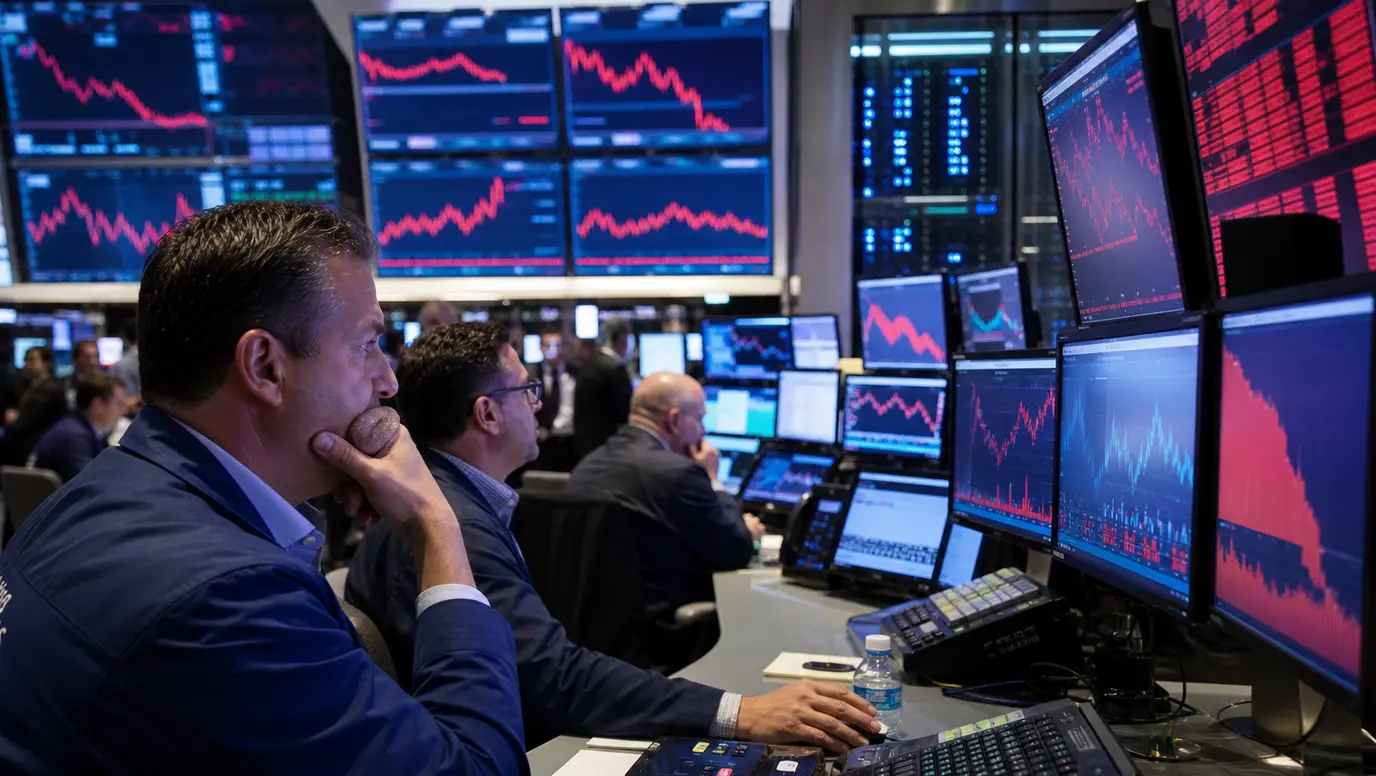
JULY 16, 2026
SK Hynix Selloff Hits Nvidia as AI Stocks Face Fresh Valuation Test
JULY 13, 2026
Nasdaq Leads Index Pullback as Oil-Yield Shock Hits AI Trade
JULY 13, 2026
Micron and Sandisk Slide as AI Memory Boom Faces Earnings Test
JULY 12, 2026
Meta’s AI Cloud Push Gives Stock Market a New Test for Capex Payoff
JULY 7, 2026
AI Chip Rout Puts Stock Market Back on Valuation Watch as Nasdaq Futures Slide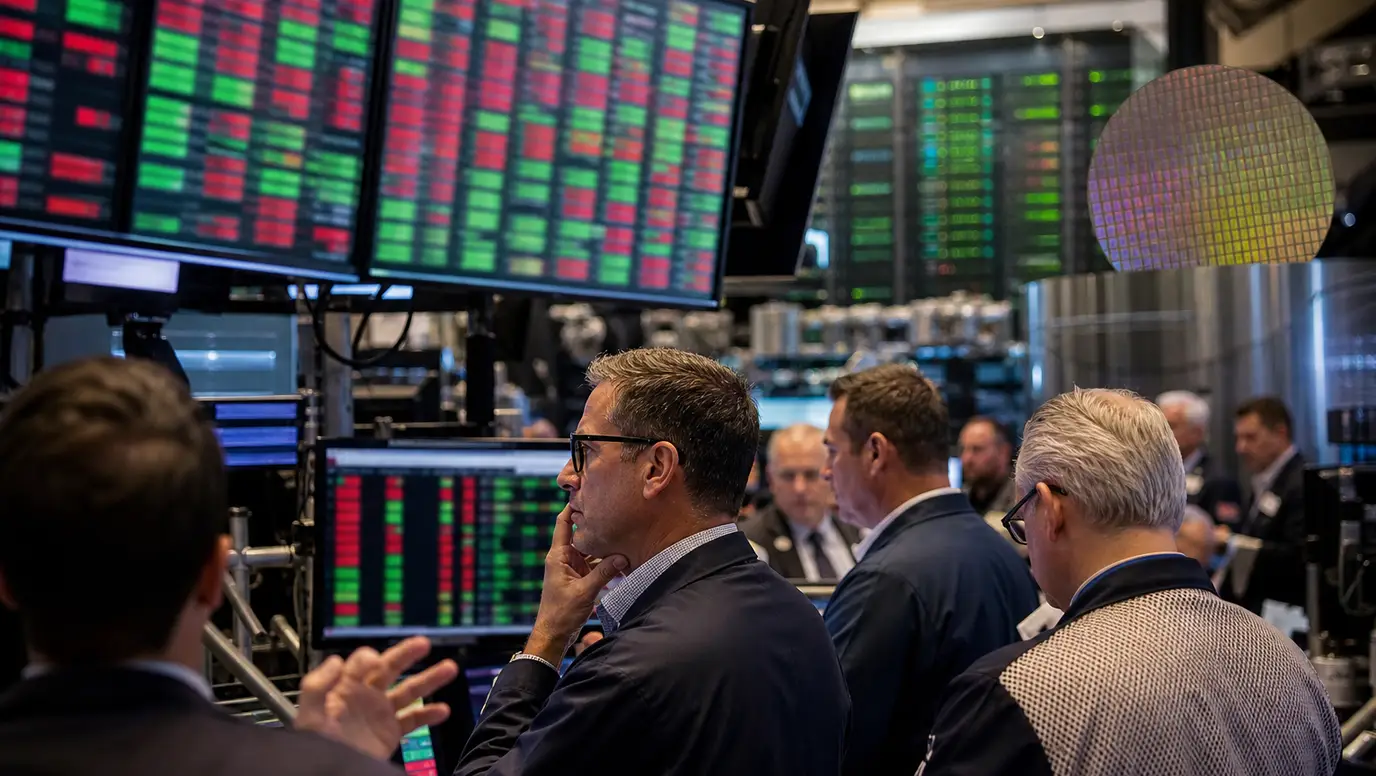
JULY 1, 2026
Nvidia and Micron Pullback Tests Stock Market After Record Chip Rally
JUNE 30, 2026
AI Stocks Lead Wall Street Rebound as Nvidia and Micron Steady Chip Trade
JUNE 26, 2026
Rate-Sensitive Growth Stocks Falter as PCE Keeps Fed Risk Alive
JUNE 24, 2026
Micron Volatility Turns AI Memory Into Wall Street’s Key Stock Market Test
JUNE 23, 2026
AI Stock Selloff Hits Wall Street as Rate Fears Challenge Tech Valuations
JUNE 22, 2026
Micron Earnings Put AI Memory Trade in Focus as Chip Stocks Reopen After Fed Shock
JUNE 19, 2026
Nasdaq Regains Leadership as Chip Stocks Cushion Fed Rate Jitters
JUNE 15, 2026
S&P 500 and Nasdaq Rally as Ceasefire Hopes Revive Risk Appetite
JUNE 9, 2026
Micron and Nvidia Fade Turns Stock Market’s AI Rebound Into a Breadth Test
JUNE 8, 2026
Chip Rebound Pulls Stock Market Higher as AI Dip Buyers Return
JUNE 6, 2026
Chip Rout Turns AI Trade Into Wall Street’s New Weekend Risk
JUNE 5, 2026
S&P 500 Winning Streak Wobbles as Payroll Beat Lifts Yields
JUNE 5, 2026
Strong Jobs Data Puts Stock Market Rally on Yield Watch as AI Leaders Slip
JUNE 4, 2026
Marvell Pullback Tests AI Stock Momentum After Nvidia-Fueled Breakout
JUNE 3, 2026
Stock Market Turns Selective as AI Earnings and Defensive Winners Split the Tape
JUNE 2, 2026
HPE Breakout Turns AI Infrastructure Spending Into Stock Market’s New Test
JUNE 1, 2026
Nvidia AI PC Push Lifts Hardware Stocks as Intel Feels New Pressure
MAY 31, 2026
Broadcom and CrowdStrike Earnings Put AI Stock Rally on June Watch
MAY 30, 2026
Micron’s Trillion-Dollar Run Shifts AI Stock Rally Toward Memory Chips