
MAY 25, 2026
U.S. Stocks Face Shortened-Week Test as Yields Challenge Earnings MomentumU.S. stocks enter a holiday-shortened week with earnings momentum intact but rising Treasury yields and Fed rate risk checking risk appetite.

© 1box.site 2026
MAY 25, 2026
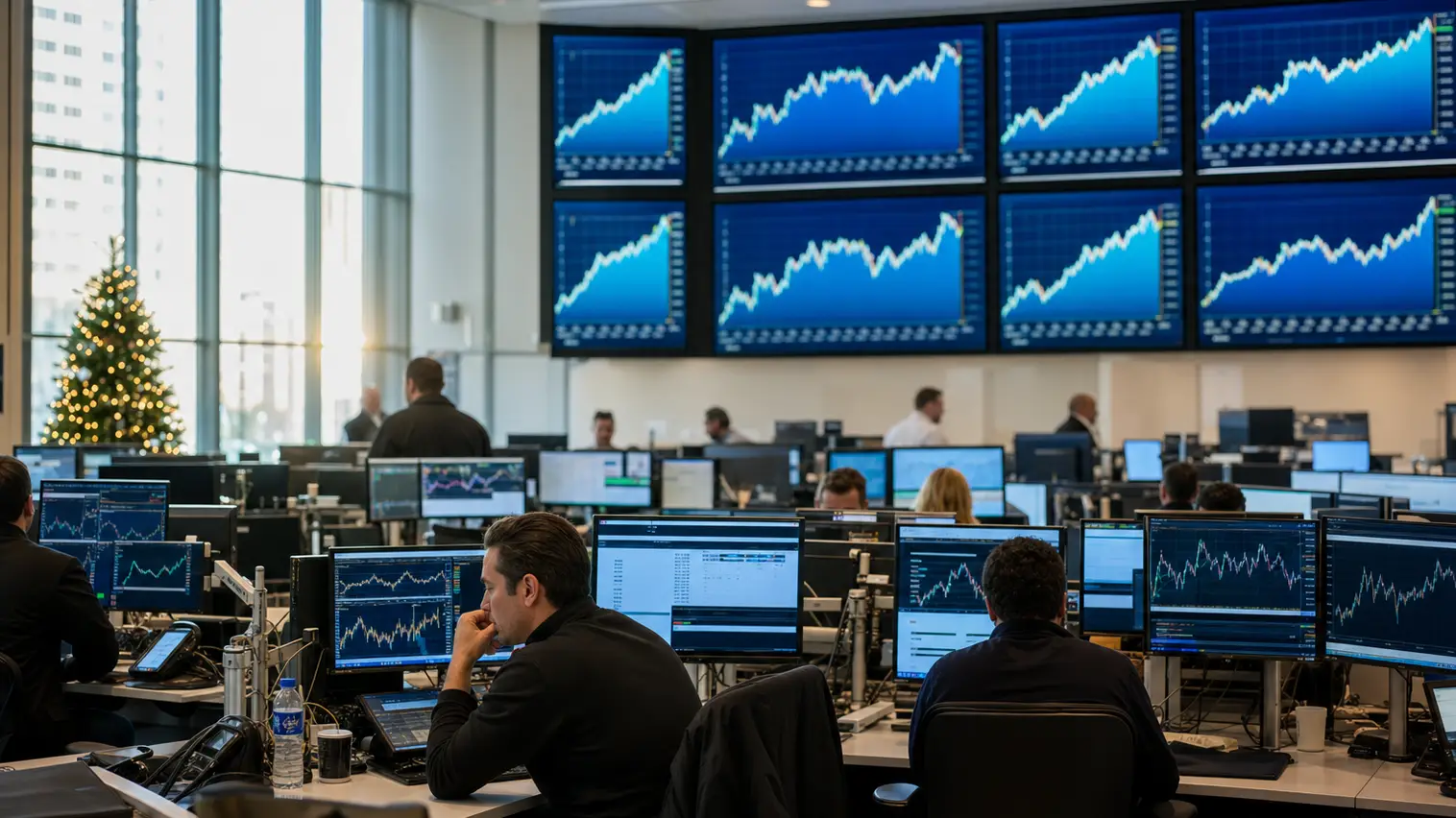
U.S. equity-index futures moved higher in holiday-thinned trading on Monday, May 25, as investors used the Memorial Day pause in cash markets to reassess a powerful late-May rally across major benchmarks. The tone remained constructive after the Dow Jones Industrial Average ended the previous session at a record closing high, while the S&P 500 and Nasdaq Composite also finished higher and extended their weekly gains.
The advance left benchmark indexes near elevated territory heading into a shortened week that will test whether buyers can keep paying for growth exposure while Treasury yields remain firm. With U.S. stock exchanges closed for the holiday, the clearest signal came from futures and overseas index trading, where technology-linked sentiment continued to support risk appetite.
S&P 500 futures and Nasdaq 100 futures were indicated higher in early trading, with the Nasdaq contract leading as investors continued to favor large technology and artificial intelligence-linked shares. Dow futures also pointed upward, suggesting that the broader market bid had not disappeared despite lighter volume and the absence of regular U.S. cash trading.
The current index rally has been shaped by two forces: resilient earnings expectations for megacap technology companies and a broader belief that artificial intelligence spending can keep lifting profit forecasts across semiconductors, cloud infrastructure and software. That has helped the Nasdaq maintain leadership, but the Dow’s latest record close shows that buyers have also rotated into industrial, financial and defensive blue-chip names.
Asian benchmarks added to the positive backdrop before the U.S. holiday session. Japan’s Nikkei 225 posted a strong gain in the prior session, helped by technology shares and renewed demand for export-oriented names. Hong Kong’s Hang Seng Index and mainland Chinese benchmarks also advanced, while Taiwan and South Korea remained supported by chip-sector optimism.
The global index picture matters because U.S. investors are entering a week with fewer trading days but several potential catalysts. A rally concentrated only in technology would leave the market vulnerable to profit-taking, especially after a long winning streak. Broader participation across regions and sectors, however, would strengthen the argument that investors are still willing to add equity exposure rather than merely chase a narrow AI trade.
The main restraint on the rally remains the bond market. Shorter-dated Treasury yields ended last week above levels that keep Federal Reserve policy expectations in focus, and any renewed rise could pressure rate-sensitive parts of the equity market. High-growth index components are particularly exposed because their valuations depend heavily on expectations for future earnings and discount rates.
For now, investors appear willing to tolerate higher yields as long as earnings momentum offsets valuation concerns. That balance could change quickly if incoming economic data revives worries that inflation is proving sticky or that the Federal Reserve will need to stay restrictive for longer than markets expect.
The shortened week also makes positioning more important. Thin holiday trading can exaggerate futures moves, and cash-market confirmation will not arrive until regular U.S. trading resumes. Traders will be watching whether early strength in futures translates into sustained buying in the S&P 500 and Nasdaq Composite, or whether the market fades once liquidity returns.
Market breadth will be a central test for index bulls. If the rally continues to depend on a small group of megacap technology stocks, investors may become more cautious near record levels. A healthier signal would be stronger participation from small caps, cyclicals and equal-weighted benchmarks, which would suggest confidence in the broader earnings cycle rather than a single theme.
The Russell 2000’s recent gain offered one encouraging sign, as smaller companies tend to respond more directly to domestic growth expectations and financing conditions. Still, smaller-cap shares remain sensitive to credit costs, and sustained leadership will likely require a steadier yield backdrop.
For the S&P 500, the next challenge is psychological as much as technical. The index has climbed far enough that investors may be reluctant to chase without fresh confirmation from earnings, inflation data or Federal Reserve commentary. Yet momentum remains difficult to ignore, especially with global benchmarks still drawing support from technology demand and improved risk sentiment.
In the near term, the index market appears to be in a constructive but more selective phase. Futures strength suggests buyers remain active, but the next leg higher will likely depend on whether the rally can broaden beyond AI leaders and whether Treasury yields stop competing with equities for investor capital.
MAY 25, 2026
U.S. Stocks Face Shortened-Week Test as Yields Challenge Earnings Momentum
MAY 25, 2026
Gold Rebounds as Lower Yields Bring Buyers Back to Precious Metals
MAY 24, 2026
Crypto Market Tries to Stabilize as ETF Flow Split and Leverage Flush Keep Traders Defensive
MAY 24, 2026
AI Stock Rally Faces Tougher Valuation Test After Nvidia’s Cash Return Surprise
MAY 24, 2026
U.S. Index Rally Faces Inflation Test After Dow Record and Eight-Week S&P 500 Run
MAY 23, 2026
Euro Under Pressure Near 1.16 as Dollar Holds Policy Advantage
MAY 23, 2026
Silver Takes Lead in Metals as Gold Holds Near Late-Week Support
MAY 22, 2026
U.S. Indexes Rise as Yield Relief Keeps Buyers Focused on Megacaps
MAY 22, 2026
Quantum Rally Lifts U.S. Stocks as Oil Reversal Eases Inflation Fears
MAY 21, 2026
Dollar Rally Pauses as Yen Intervention Risk and Fed Caution Grip FX Markets
MAY 21, 2026
Asian Benchmarks Jump as Chip Rally Restores Momentum to Global Indexes
MAY 21, 2026
Gold Stalls Below $4,550 as Fed Rate Risk Pressures Precious Metals
MAY 20, 2026
Oil Retreats as Traders Weigh U.S. Inventory Draw Against Hormuz Supply Risk
MAY 20, 2026
U.S. Stocks Rebound as Nvidia Earnings and Fed Minutes Take Center Stage