MAY 21, 2026
Dollar Rally Pauses as Yen Intervention Risk and Fed Caution Grip FX MarketsThe dollar steadied after hawkish Fed minutes as USD/JPY hovered near intervention-sensitive levels and euro buyers returned.

© 1box.site 2026
MAY 21, 2026
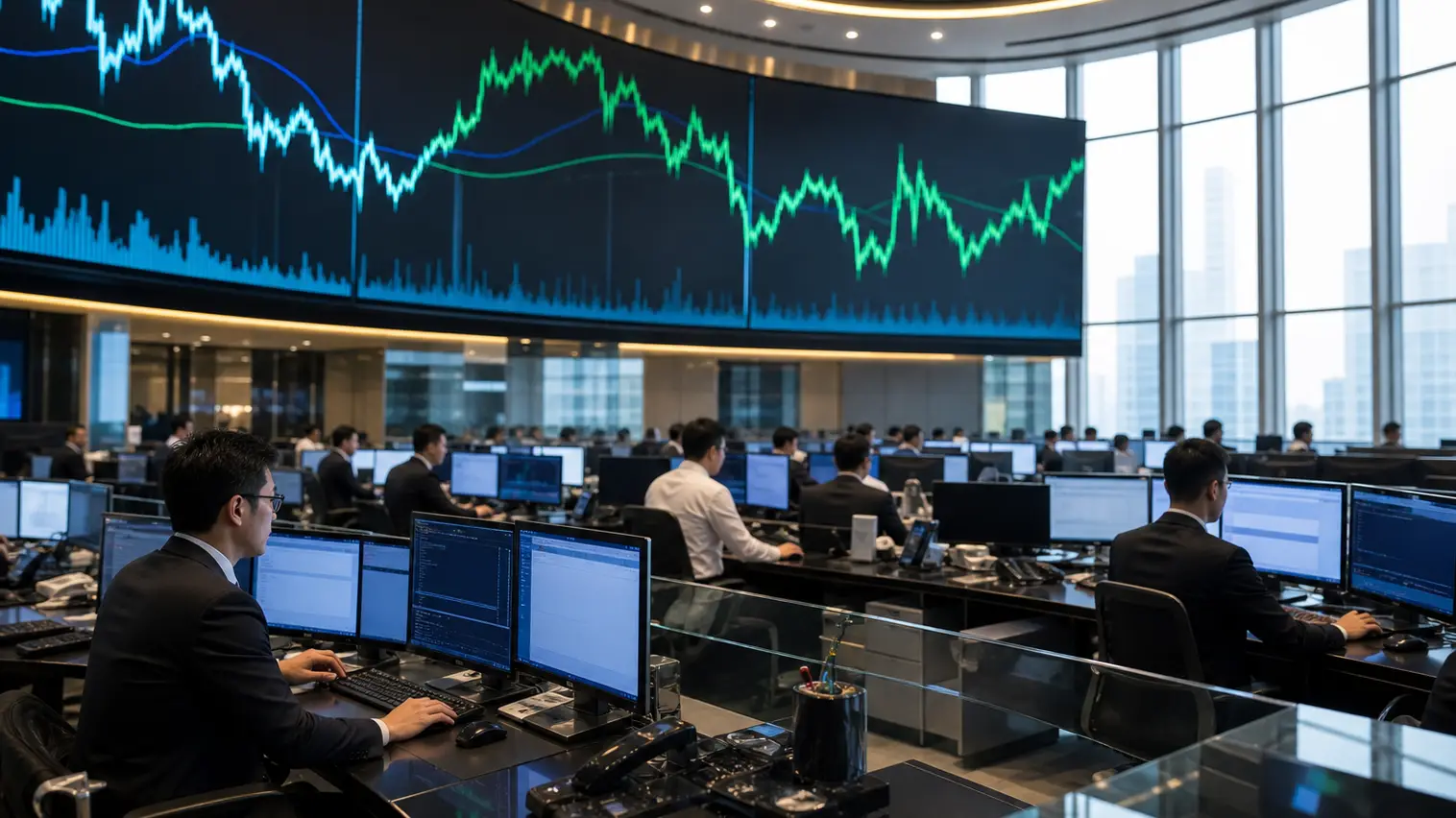
Asian equity benchmarks staged a sharp rebound on Thursday as renewed demand for semiconductor and artificial intelligence-linked shares helped reverse several sessions of pressure across regional indexes.
The strongest move came from South Korea, where the KOSPI surged more than 8% as technology shares rallied and investors welcomed signs of reduced disruption risk in the chip supply chain. Taiwan’s benchmark also advanced strongly, while Japan’s Nikkei 225 climbed more than 3% after fresh manufacturing data pointed to expansion in May.
The broader regional move stood out because it followed a period of index volatility driven by higher bond yields, energy-price concerns and uncertainty around the path of U.S. monetary policy. MSCI’s broad Asia-Pacific gauge outside Japan rose about 2.7%, snapping a four-day losing streak and signaling that buyers were willing to return to growth-sensitive benchmarks when earnings momentum improved.
The rally was led by large-cap technology and semiconductor names after upbeat results from Nvidia strengthened confidence that spending on AI infrastructure remains resilient. That helped lift benchmarks with heavy exposure to chipmakers, cloud hardware suppliers and electronics exporters.
South Korea’s move was amplified by company-specific relief after Samsung Electronics reached a tentative wage agreement with its union, easing concerns about a potential strike. The development added to the positive tone for chip-linked indexes and helped explain why Seoul outperformed other major Asian markets.
Japan’s Nikkei benefited from the same regional rotation into technology, but it also gained support from domestic data showing factory activity returning to expansion. That combination encouraged investors to look past recent geopolitical and yield-driven selling, at least in the near term.
The rebound was not uniform. Chinese blue-chip shares slipped, showing that the broader index recovery still depends on local growth expectations and policy confidence. Early signals from European futures were also softer, suggesting investors were not yet treating the Asian rally as a full global risk-on shift.
U.S. index futures were near flat after Wall Street’s previous-session rebound, leaving traders focused on whether technology leadership can broaden beyond a narrow group of AI-related stocks. The Nasdaq remains especially sensitive to chip-sector guidance, while the S&P 500 is balancing earnings support against higher-for-longer interest-rate expectations.
Federal Reserve minutes released this week reinforced the message that officials remain cautious about inflation, limiting the scope for aggressive rate-cut bets. That backdrop keeps Treasury yields important for equity valuations, particularly for growth indexes where long-duration earnings expectations carry more weight.
For index investors, Thursday’s move shows that earnings momentum can still overpower macro caution when leadership comes from strategically important sectors. However, the split between surging Asian technology benchmarks, softer Chinese shares and cautious European futures suggests the rally may remain selective.
The next test will be whether gains in chip-heavy markets can spread into financials, industrials and consumer shares. Without broader participation, major benchmarks may struggle to sustain new highs if bond yields rise again or geopolitical headlines revive demand for defensive positioning.
For now, the index-market signal is constructive but not conclusive: AI-linked earnings have revived risk appetite, yet global benchmarks are still trading in a landscape shaped by central-bank caution, energy-market uncertainty and uneven regional growth.
MAY 21, 2026
Dollar Rally Pauses as Yen Intervention Risk and Fed Caution Grip FX Markets
MAY 21, 2026
Gold Stalls Below $4,550 as Fed Rate Risk Pressures Precious Metals
MAY 20, 2026
Oil Retreats as Traders Weigh U.S. Inventory Draw Against Hormuz Supply Risk
MAY 20, 2026
U.S. Stocks Rebound as Nvidia Earnings and Fed Minutes Take Center Stage