
AUGUST 16, 2026
SpaceX Stock Rally Puts Growth Stocks on Lockup Supply WatchSpaceX stock turns into a test for growth stocks as lockup releases expand tradable supply after its first public earnings report.

© 1box.site 2026

JULY 5, 2026
U.S. index traders are returning from the Independence Day break with a fresh liquidity test as SpaceX prepares to enter the Nasdaq-100 before the market opens on Tuesday, July 7, 2026. The fast-tracked inclusion adds a new mechanical catalyst to a market already balancing weaker labor data, shifting Federal Reserve expectations and renewed pressure on the semiconductor complex.
The move is important because Nasdaq-100 trackers must adjust holdings to reflect the new constituent, creating expected passive demand around the rebalance window. That does not guarantee a straight-line gain for the stock or the benchmark, but it raises the risk of sharper closing-auction flows, wider intraday swings and temporary dislocations in exchange-traded products tied to the index.
The index-market focus has shifted from last week’s broad benchmark split toward the mechanics of fund positioning. The Dow Jones Industrial Average closed at a record in the holiday-shortened session, while the S&P 500 was little changed and the Nasdaq lagged as chip and AI-linked shares remained under pressure. That divergence leaves the Nasdaq-100 more sensitive to any large constituent change than the broader S&P 500.
SpaceX’s addition also arrives after a period of heavy debate over concentration risk in growth benchmarks. If passive funds absorb shares smoothly, the rebalance could support confidence in index liquidity. If demand meets limited available supply, traders may see a more volatile pattern, with strength into the event followed by profit-taking once the forced-buying window passes.
For Nasdaq-linked ETFs and futures, the key issue is not only the new stock’s opening weight but also what funds must trim to make room. Large technology and AI holdings remain the most likely funding source, so the rebalance could create pockets of selling in existing megacap leaders even if the headline effect appears supportive for the benchmark.
The second major test for indices comes from Federal Reserve minutes due in the coming week. A softer June payrolls report reduced the urgency of another rate increase, helping risk assets and pressuring the U.S. dollar, but investors remain cautious because inflation concerns have not disappeared. Index traders will be watching whether policymakers sounded more worried about price pressures or the cooling labor market at the latest meeting.
A less hawkish tone would likely help rate-sensitive growth shares and could stabilize the Nasdaq after the recent semiconductor pullback. A tougher message would risk lifting Treasury yields again, which would make high-valuation index constituents more vulnerable and could revive defensive rotation into the Dow and other value-heavy benchmarks.
That setup makes market breadth a central signal. If more sectors participate while the Nasdaq absorbs the SpaceX rebalance, the index market could extend its constructive July start. If gains remain concentrated in a few event-driven names, the S&P 500 may struggle to break away from recent levels even if headline index moves appear calm.
Semiconductors remain the swing factor for the Nasdaq and the broader index complex. The recent slide in chip shares has challenged the assumption that AI leadership can keep driving benchmarks higher without interruption. A stabilization in chip ETFs would make the SpaceX inclusion easier for the market to digest, while another leg lower could turn the rebalance into a volatility amplifier.
The near-term index playbook is therefore narrow but consequential: watch closing flows around the Nasdaq-100 adjustment, monitor Treasury yields after the Fed minutes and track whether the Dow’s record-setting strength can coexist with a steadier Nasdaq. Until those signals align, the index market may remain supported but uneven, with liquidity rather than earnings acting as the first major test of the new week.
AUGUST 16, 2026
SpaceX Stock Rally Puts Growth Stocks on Lockup Supply Watch
AUGUST 7, 2026
SpaceX Stock Rebounds as AI Spending and Share Unlock Test Wall Street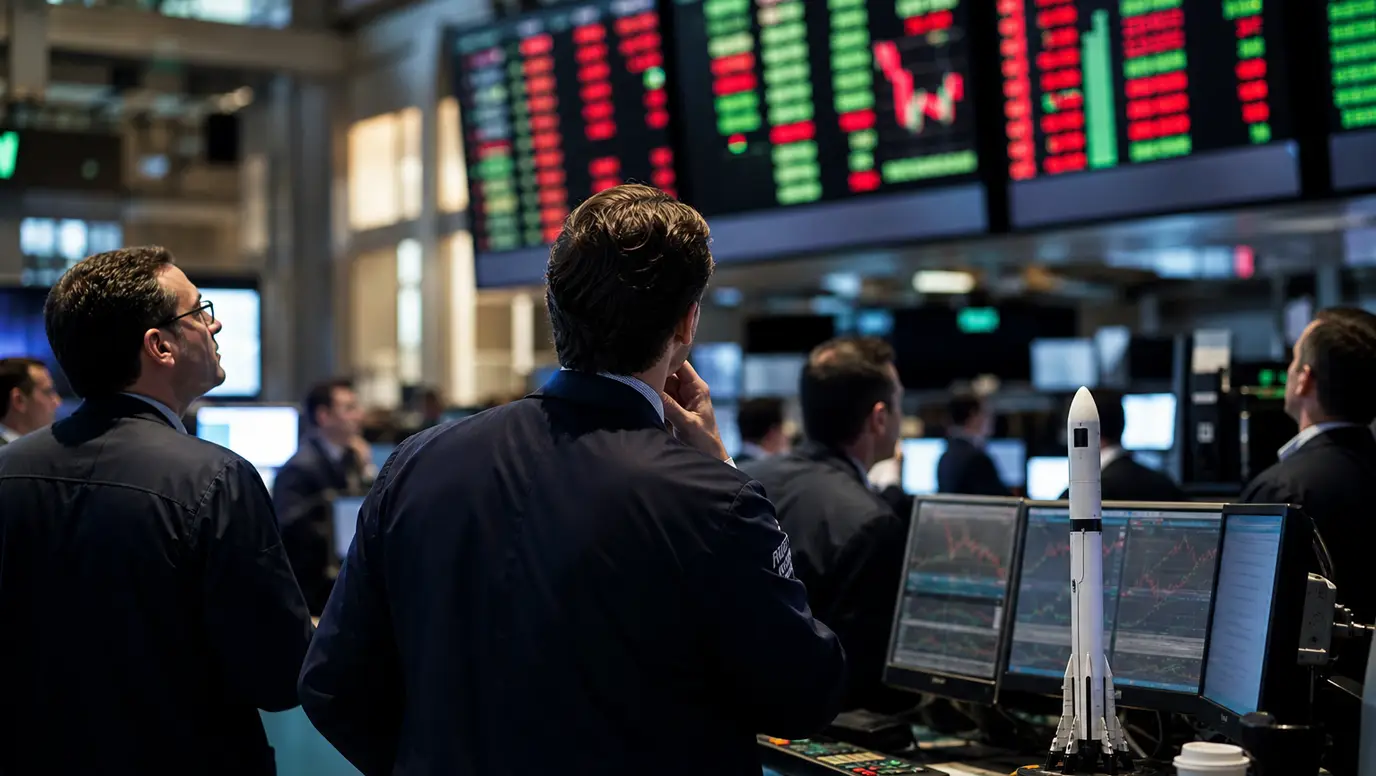
JUNE 12, 2026
Nasdaq Wavers as SpaceX Debut Tests Wall Street’s AI IPO Appetite