
OCTOBER 6, 2026
Nikkei 225 Clears 70,000 as AI Index Rally Defies Treasury Yield RiskNikkei 225 closes above 70,000 as AI shares, weaker oil and softer rate bets lift Japan’s benchmark despite elevated yields.

© 1box.site 2026
JULY 24, 2026
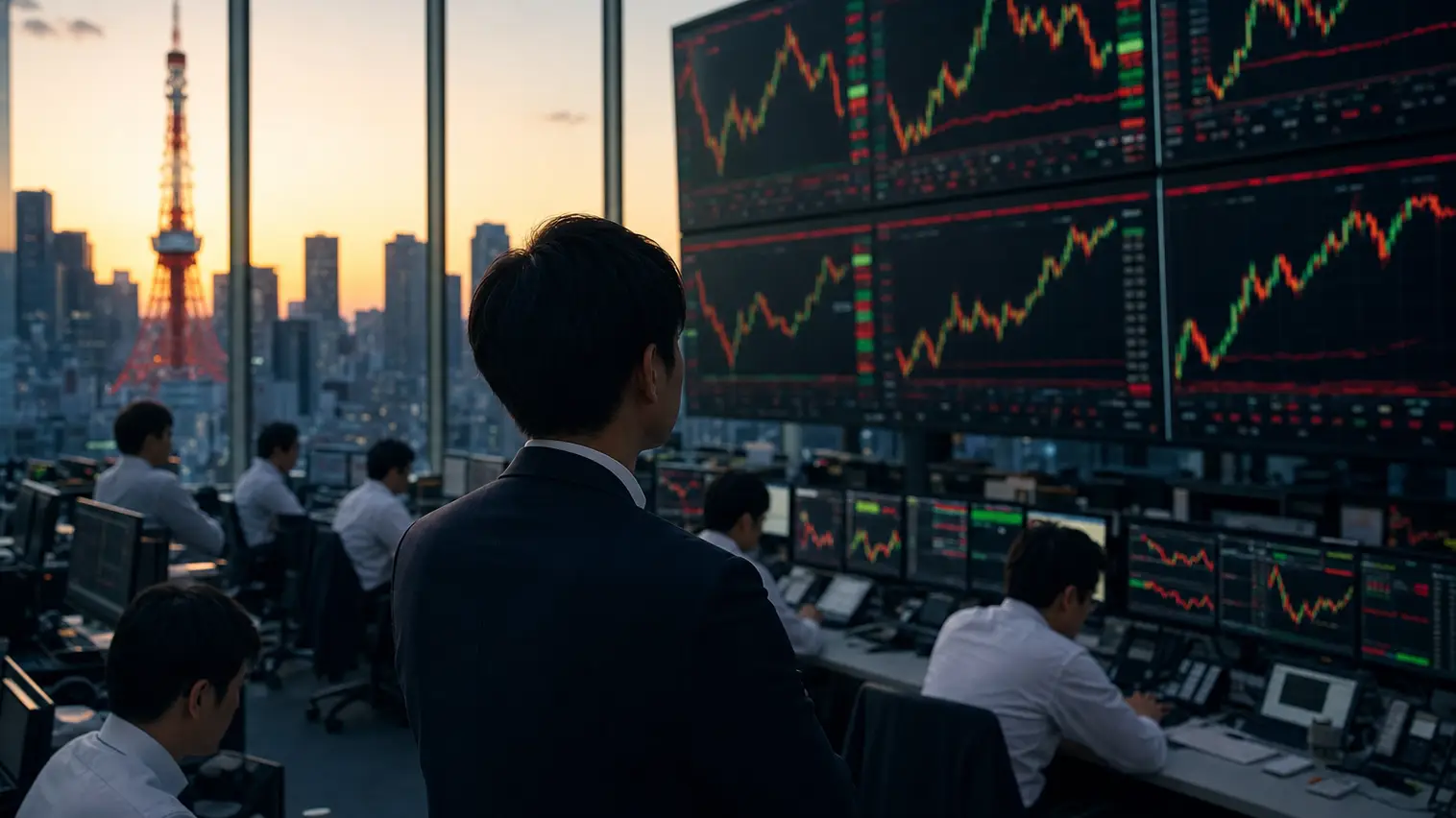
Asia’s equity benchmarks came under renewed pressure on Friday, July 24, as a sharp reversal in technology shares spilled across regional index markets and forced traders to reassess the durability of the latest global risk rally. The Nikkei 225 led the decline among major benchmarks, falling roughly 2.7% to near 64,611, while Hong Kong’s Hang Seng lost about 1% and South Korea’s Kospi suffered a steeper slide.
The move marks a notable change in tone for index investors after several weeks in which large-cap technology leadership, resilient earnings expectations and hopes for easier monetary conditions helped keep global benchmarks elevated. Friday’s session showed that index gains remain vulnerable when profit-taking hits the most crowded growth trades at the same time as bond yields, energy prices and earnings risk remain active concerns.
The Nikkei 225’s retreat stood out because the Japanese benchmark had previously been one of the stronger global index performers, supported by export strength, corporate governance reforms and overseas investor demand for Japan exposure. A fall of nearly 3% in a single session does not erase that broader uptrend, but it does signal that traders are becoming more selective after a powerful advance.
Technology and electronics-linked shares were at the center of the pressure, reflecting the same rotation that hit U.S. megacap growth stocks in the previous session. For index-level investors, the issue is less about one company and more about concentration risk. When a narrow group of high-momentum stocks carries a benchmark higher, the downside can accelerate quickly if those names begin to unwind together.
The Hang Seng’s decline added to the cautious tone, even though the Hong Kong benchmark has been more range-bound than Japan’s market. Weakness in China-linked equities continues to leave investors watching whether policy support, credit conditions and property-sector stabilization can translate into broader index momentum. Without stronger confirmation from domestic demand indicators, rallies in the Hang Seng may remain vulnerable to global risk-off moves.
U.S. index futures pointed to a modest rebound after Thursday’s selloff, with Dow-linked contracts rising more firmly than futures tied to the S&P 500 and Nasdaq 100. That pattern suggests traders are not abandoning equities altogether, but they are rotating toward benchmarks and sectors perceived as less exposed to stretched technology valuations.
The prior U.S. session was difficult for index bulls: the S&P 500 and Dow Jones Industrial Average both fell by about 1% or more, while the Nasdaq posted a sharper drop as technology selling intensified. Friday’s early futures bounce therefore looks more like a stabilization attempt than a decisive return to risk appetite. Investors will want to see whether buyers appear during regular cash trading rather than only in premarket positioning.
Market breadth is likely to be the key test. If gains are concentrated in a handful of defensive or earnings-driven names, the rebound may lack conviction. If participation expands across industrials, financials, consumer shares and smaller growth stocks, the pullback in Asia could be viewed as a short-term volatility event rather than the start of a broader index correction.
Friday’s index market setup is complicated by a dense mix of earnings updates, incoming economic data and elevated commodity prices. Flash business activity readings and housing data are expected to influence expectations for U.S. growth, while investors continue to monitor whether inflation-sensitive inputs are putting fresh pressure on interest-rate assumptions.
For the Nikkei 225, the next question is whether the decline attracts dip-buying from global allocators who still favor Japan’s structural equity story. For the Hang Seng, the challenge is different: the benchmark needs evidence that policy support and liquidity can create sustained earnings upgrades rather than brief tactical rallies. For U.S. indexes, the focus remains on whether the Nasdaq can regain leadership without forcing valuations to absorb another round of yield-driven pressure.
The most constructive outcome for global benchmarks would be a rotation rather than a retreat. If capital moves from overheated technology names into lagging sectors while headline indexes hold above recent support zones, the broader bull case can remain intact. But if selling pressure spreads from Asia into Europe and then back into U.S. cash trading, index investors may begin treating Friday’s action as a warning that the summer rally has become too dependent on narrow leadership.
OCTOBER 6, 2026
Nikkei 225 Clears 70,000 as AI Index Rally Defies Treasury Yield Risk
SEPTEMBER 14, 2026
Nikkei 225 Slumps as AI Stocks Put Japan Indexes on Bank of Japan Watch
SEPTEMBER 7, 2026
Nikkei 225 Jumps as Semiconductors Lift Indexes in Holiday-Thinned Trade
AUGUST 31, 2026
Hang Seng and Nikkei 225 Drag Global Indexes Lower as Oil Shock Revives Inflation Risk
AUGUST 24, 2026
Nikkei 225 Index Slide Puts AI Stocks and Semiconductors on Yield Watch
AUGUST 2, 2026
Nikkei 225 Pullback Puts Index Market on Bank of Japan Watch as Tech Rally Cools
JULY 18, 2026
Nasdaq, S&P 500 and Nikkei 225 Lead Indexes Lower as AI Stocks Reset