OCTOBER 16, 2026
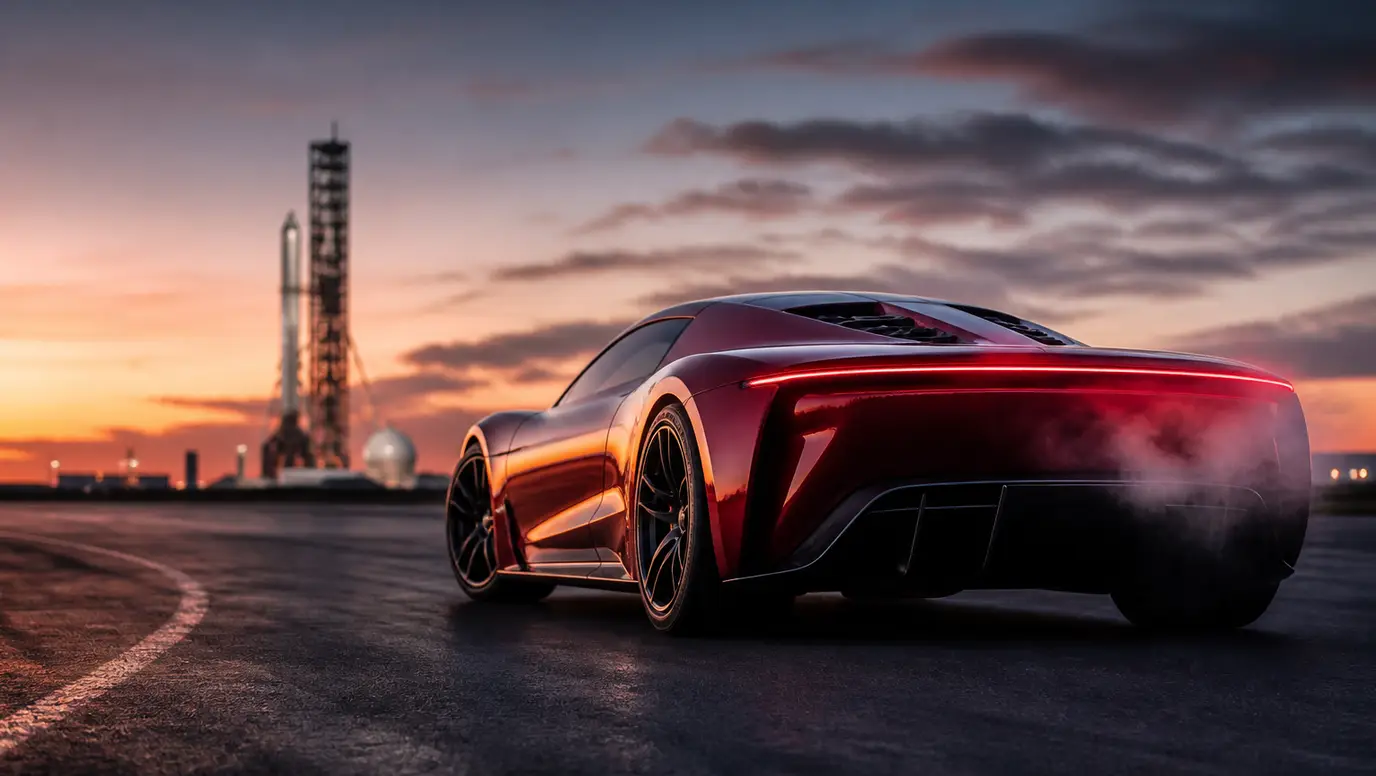
Tesla Stock Rises as Roadster Reveal Gives EV Stocks a Break From AI RoutTesla stock trades higher after the Roadster reveal, giving EV stocks a fresh catalyst as Wall Street rotates away from AI risk.

© 1box.site 2026
OCTOBER 22, 2026
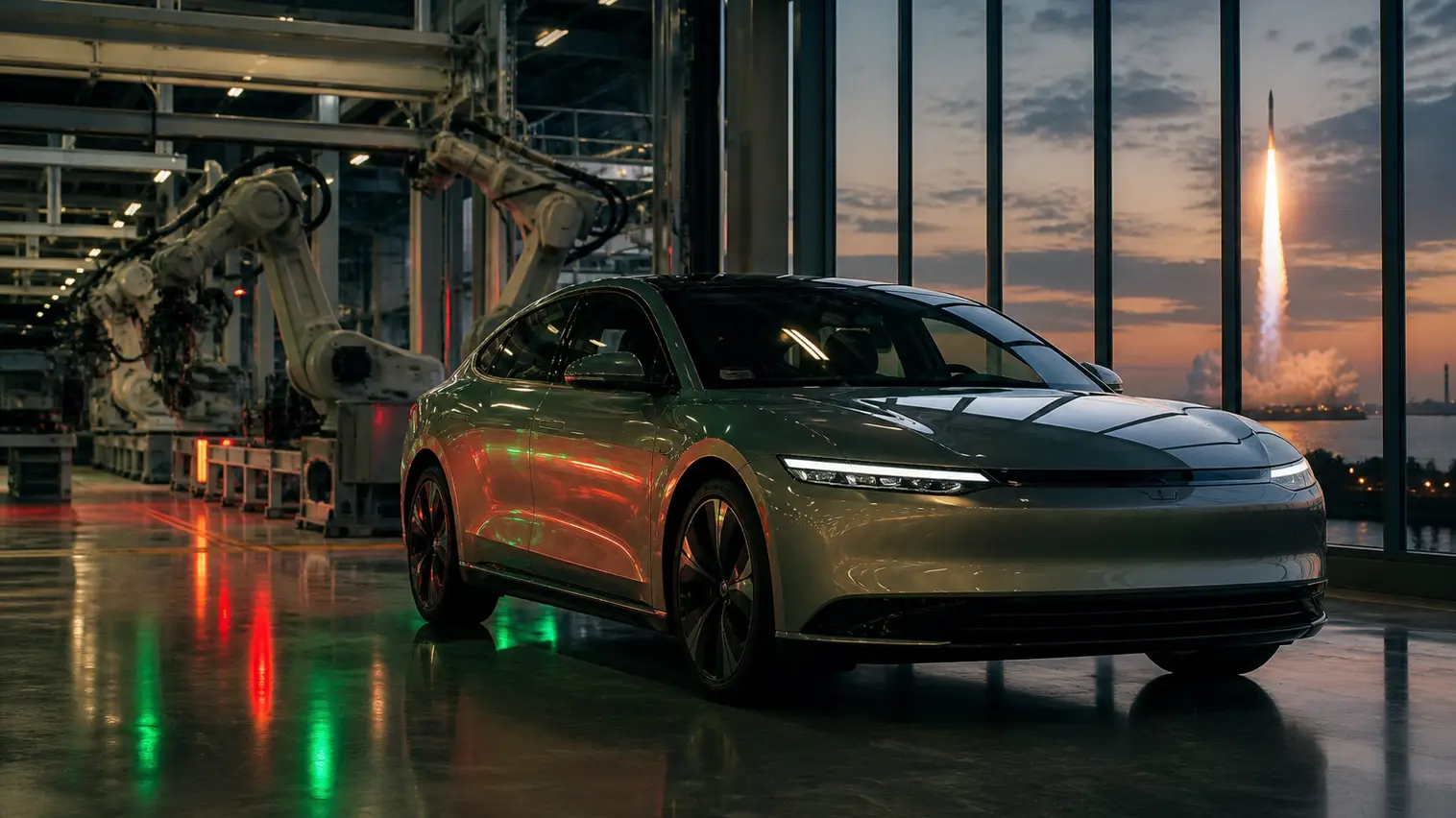
Tesla stock came under fresh pressure after the electric vehicle maker reported a weaker third-quarter profit, leaving Wall Street to balance progress in robotaxis and robotics against slower core earnings momentum and uncertainty around a possible SpaceX combination.
The company reported third-quarter revenue of $28.046 billion, little changed from $28.095 billion a year earlier. Net income attributable to common stockholders fell to $787 million from $1.373 billion in the prior-year period, while GAAP diluted earnings per share declined to $0.22 from $0.39. Adjusted diluted earnings per share came in at $0.48.
The mixed update arrived during a highly sensitive earnings week for growth stocks. Investors have been willing to pay premium valuations for companies tied to artificial intelligence, automation and next-generation mobility, but the latest results put Tesla’s operating leverage back under scrutiny.
Tesla’s top line showed limited year-over-year expansion, even as the company pointed to strength in several future-facing businesses. Automotive revenue was $20.560 billion, below the $21.205 billion reported a year earlier, while energy generation and storage revenue also declined from the prior-year quarter. Services and other revenue increased, but not enough to fully shift attention away from the softer vehicle picture.
Operating income fell to $718 million from $1.624 billion a year earlier. Research and development spending rose sharply, reflecting continued investment in robotics, self-driving systems, compute infrastructure and new manufacturing programs. That spending profile may support Tesla’s long-term story, but it also reduces the near-term earnings cushion investors often seek when vehicle demand is uneven.
Free cash flow offered a partial offset, rising to $1.531 billion after a negative reading in the previous quarter. Still, traders appeared more focused on the profit decline and on whether Tesla can convert its technology ambitions into consistently higher margins.
Tesla highlighted progress in autonomy, saying it launched Cybercab rides into its Austin robotaxi fleet during the quarter and saw a sharp increase in cumulative unsupervised robotaxi miles. The company also said it began Optimus production in Fremont and rolled out an updated Semi from its Nevada high-volume line.
Those milestones reinforce Tesla’s effort to move beyond a traditional electric vehicle valuation framework. However, the market reaction showed that investors still want clearer evidence that robotaxis, humanoid robots and AI-enabled services can materially lift earnings rather than only raise capital needs.
The other major overhang is the potential tie-up with SpaceX. A combination could deepen Tesla’s exposure to artificial intelligence infrastructure, satellite connectivity and advanced manufacturing, but it would also introduce significant questions around valuation, governance, regulation and capital allocation. For shareholders, the issue is whether such a deal would accelerate Tesla’s growth story or dilute focus at a time when the automotive business is still under pressure.
The latest earnings reaction suggests Tesla stock is being judged less on headline innovation and more on execution. Investors are likely to monitor vehicle backlog, battery supply, robotaxi expansion, spending plans and any formal details around a SpaceX transaction before assigning fresh upside to the shares.
For now, Tesla remains one of the stock market’s most closely watched growth names, but the burden of proof has risen. The company’s technology pipeline remains broad, yet the third-quarter numbers show that profitability, cash generation and clarity on strategic structure will be just as important as the next product milestone.
OCTOBER 16, 2026
Tesla Stock Rises as Roadster Reveal Gives EV Stocks a Break From AI Rout
SEPTEMBER 7, 2026
Tesla Stock Swings as Cybercab Probe Tests Robotaxi Stocks
JULY 19, 2026
Alphabet and Tesla Earnings Put Stocks on AI Reset Watch After Nasdaq Slide
JULY 3, 2026
Tesla Selloff Puts Stock Market on Margin Watch as Earnings Season Nears