
Puerto Rico Electricity Market Turns to Home Batteries as Costs Rise
NOVEMBER 17, 2026
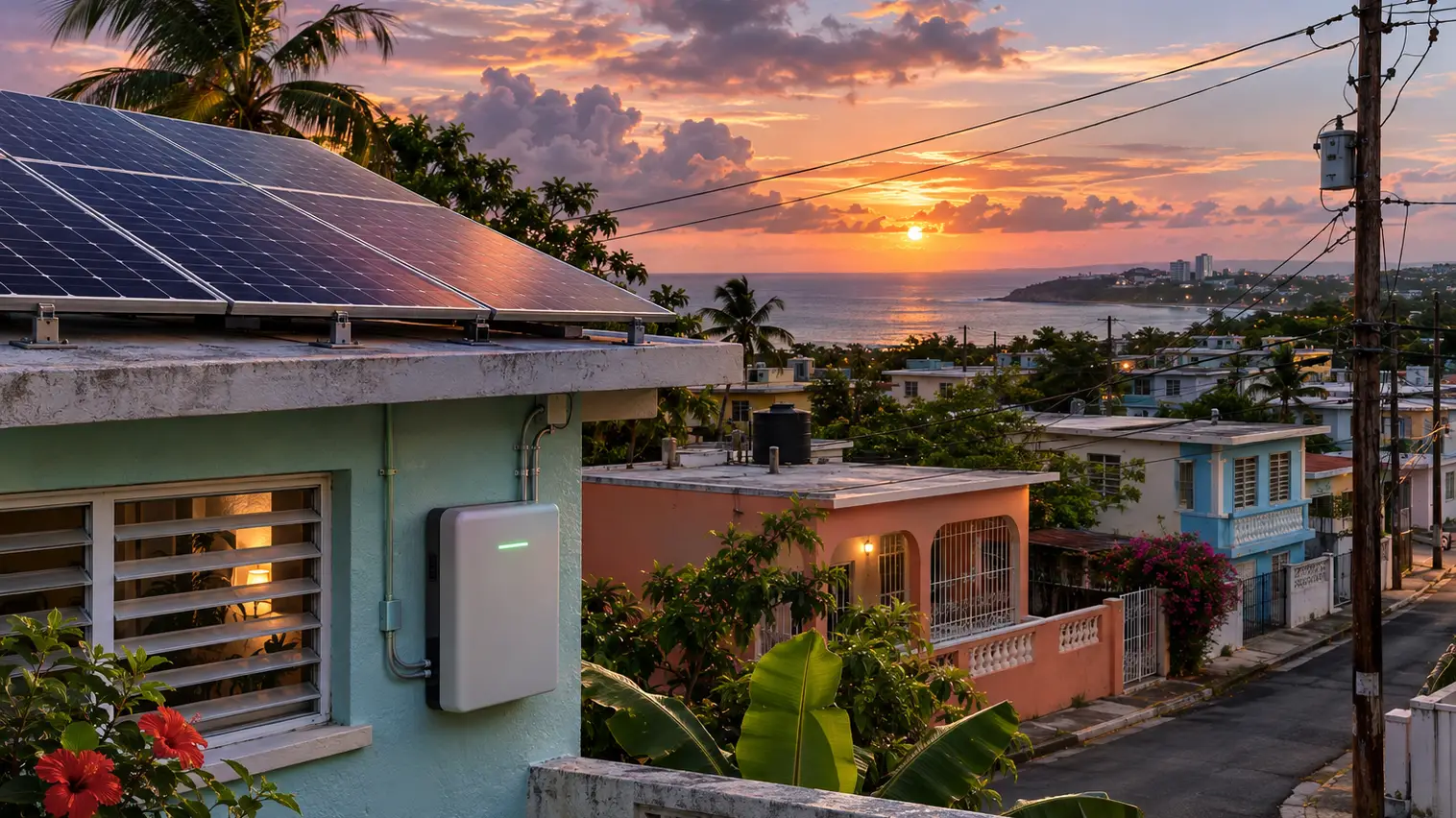
Puerto Rico is relying increasingly on household batteries to shore up its electricity grid, turning stored solar power into an emergency resource as customers face higher bills and persistent outages.
The territory's virtual power plant draws on batteries at nearly 115,000 homes when conventional generation falls short. Its growing use highlights both the value of distributed storage and the cost of keeping an aging power system running.
Home batteries become a grid resource
Under the battery-sharing program, participating households allow stored electricity to be sent to the grid during periods of shortage. Solar providers coordinate the batteries, and customers receive compensation for the energy they contribute.
One participating provider, Sunrun, said on November 3 that its Puerto Rico network had grown to more than 60,000 customers with nearly 70,000 batteries. It said the network was called on for 18 consecutive days beginning October 13 during a period of hot weather and power shortfalls.
The resource can help bridge gaps when demand rises, particularly after sunset, but its available output depends on batteries being charged and households remaining willing to share their reserves.
Reliability comes with a price
Grid operator Luma Energy says the system has helped prevent or mitigate outages more than 60 times since June 1. It also says frequent battery sharing contributed to recent electricity rate increases: the operator pays providers three times the residential electricity price for the battery energy it uses and recovers those costs through rates.
That expense is one of several pressures on customers. A residential rate increase took effect on October 1, with a household using 800 kilowatt-hours a month expected to see its bill rise from about $229 to $271. Higher fuel costs, electricity consumption and use of customer batteries were among the factors behind the increase.
The longer-term market test
For households with solar and storage, payments can offset some costs of owning a system. For the wider electricity market, the question is whether the reliability benefits justify the payments passed through to customers, especially if shortages require batteries to be used repeatedly.
Additional generation and grid investment could reduce reliance on emergency measures over time. Until then, the amount of stored energy available, the frequency of dispatches and future rate decisions will be important indicators of the program's cost and effectiveness.