
PJM Electricity Market Braces for Data Center Cost Shock as December Auction Nears
NOVEMBER 15, 2026
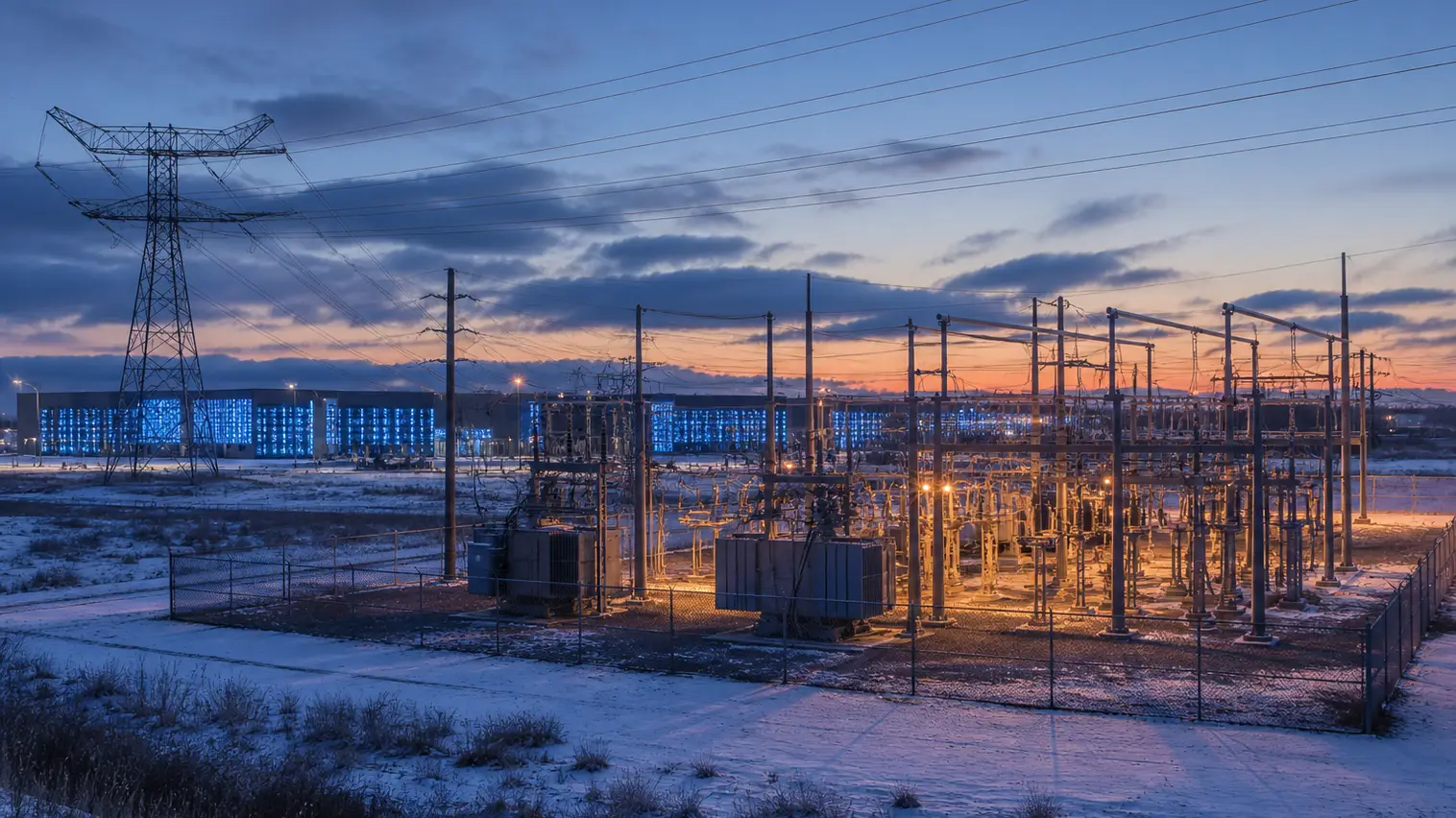
The PJM electricity market is moving back to the center of the energy trade as fast-growing data center demand collides with limited spare grid capacity and an approaching capacity auction. The latest market data point to a widening divide between relatively orderly real-time power trading and a much tighter forward capacity market, where generators are paid to be available during peak demand periods.
For investors, the issue is no longer just whether artificial intelligence and cloud computing will consume more power. The key question is who pays for the generation, transmission and reserve margin needed to serve that load. That debate is now influencing expectations for wholesale power prices, utility earnings, industrial electricity costs and the value of dispatchable generation across the largest U.S. grid region.
Data Center Demand Changes the Price Signal
PJM’s energy market has remained broadly competitive through the first nine months of the year, but the capacity side is sending a stronger warning. Market assessments released in recent days indicate that existing and forecast data center load has already added tens of billions of dollars to capacity market costs. In the third quarter, estimated wholesale power costs were materially higher when data center-related capacity effects were included.
That matters because capacity prices can move through the electricity value chain with a lag. Utilities and retail suppliers often absorb or pass on these costs through regulated rates, default service auctions or commercial power contracts. If the next auction clears at elevated levels, the result could be another round of upward pressure on customer bills and a stronger revenue outlook for power producers able to provide reliable capacity.
The pressure is especially acute because data centers are not normal industrial loads. They often require large, round-the-clock power commitments, tight reliability standards and rapid connection timelines. In a constrained grid, that can pull forward demand for new substations, transmission upgrades, gas-fired backup capacity, batteries and demand-response programs.
December Auction Becomes a Market Catalyst
The upcoming PJM capacity auction is therefore shaping up as a major energy-market event rather than a regional technical process. A high clearing price would reinforce the view that the grid is struggling to price the cost of new digital infrastructure. A softer result would ease near-term inflation concerns but would not remove the longer-term challenge of serving large new loads while maintaining reliability.
Power producers with flexible generation portfolios could benefit if capacity revenues remain high. Utilities may face a more complicated setup, with stronger investment opportunities offset by political pressure over customer bills. Large technology companies and data center developers are also exposed, because higher grid charges can change the economics of new campuses and encourage more behind-the-meter power deals.
Policy risk is rising alongside the price risk. Lawmakers have advanced energy legislation intended to accelerate infrastructure approvals while forcing large power users to shoulder more of the grid costs they create. If those provisions become law, the market could see a clearer separation between ordinary ratepayers and high-load customers, but implementation would likely take time and vary across jurisdictions.
Energy Traders Look Beyond Fuel Prices
The PJM story shows how the energy market is broadening beyond crude oil, natural gas and refined fuels. Electricity demand growth, grid congestion and capacity pricing are becoming tradable macro themes in their own right. That shift is drawing more attention from commodity desks, infrastructure funds and equity investors focused on utilities, independent power producers and equipment suppliers.
Near term, the market will watch auction results, winter peak demand, generator availability and any signs that data center developers are delaying projects because of interconnection costs. Until there is more confidence that supply can keep pace with load growth, PJM electricity prices are likely to remain highly sensitive to every new signal on capacity, regulation and grid investment.